We’ve been holding back from putting any plants in the ground on the allotment, due to the adverse weather conditions we’re experiencing, and are forecast for the next few days. The above collage shows some of the healthy looking plants Margaret and I have grown from seed and nurtured. We have baby Kale, Tomatoes, Leeks, Runner Beans, Beetroot, and many more tiny seedlings growing strongly. The larger green plantlets in the picture are Courgettes, looking extraordinarily healthy. Last year, for some unknown reason, our Courgettes weren’t very successful. Usually we have a glut of wonderful Courgettes that threaten to grow into quite large marrows. We usually give some of these excess fruits away. Margaret was puzzling about how to use them until she discovered a recipe for Courgette cake. This turned out to be relatively easy to make and tasted delicious. We plan to take a chance and plant the Courgettes and Kale on this coming Thursday, although they will still require protection from any late frost. It would be tragic if we lost any of our tender plants to Jack Frost.
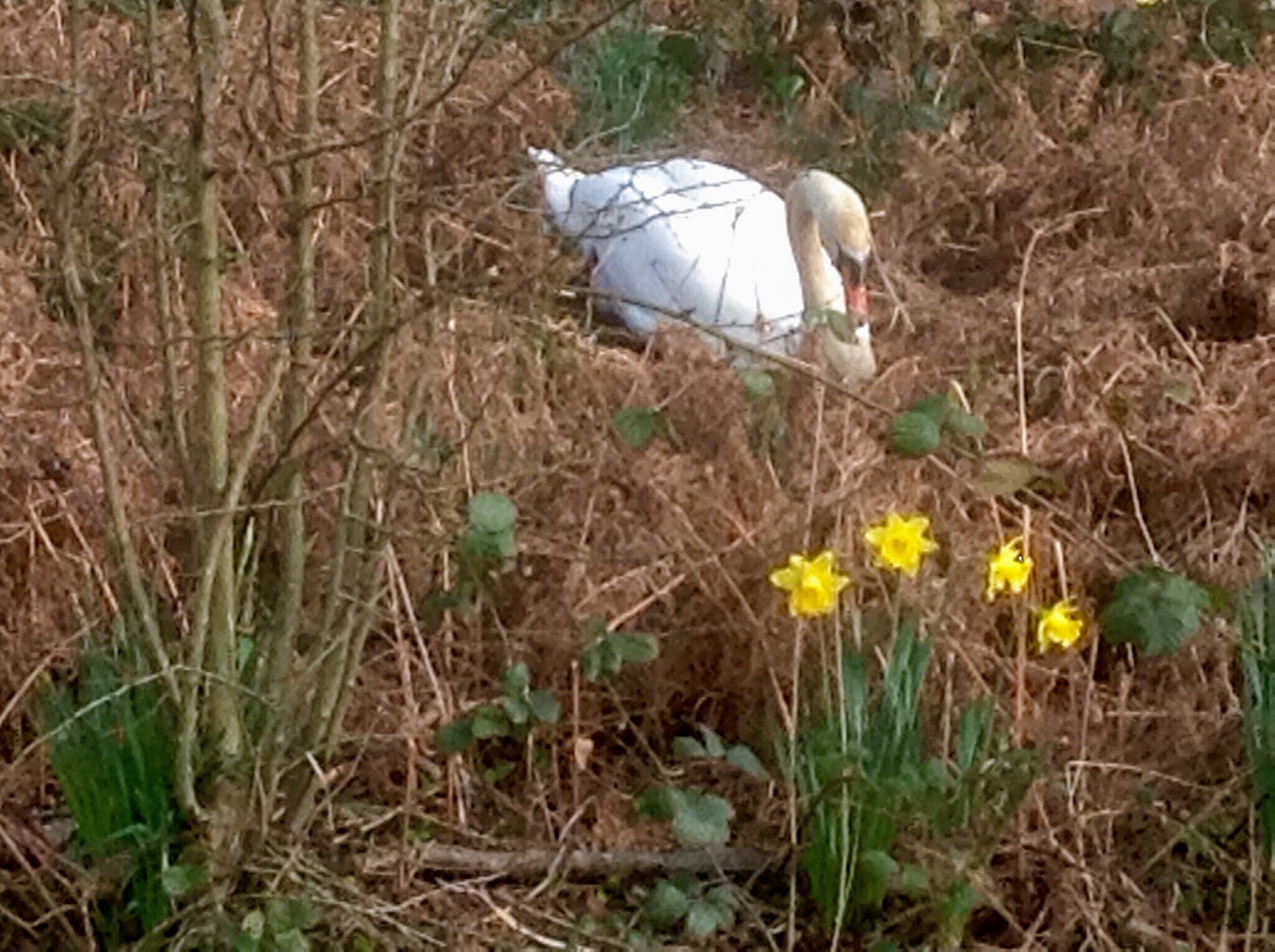
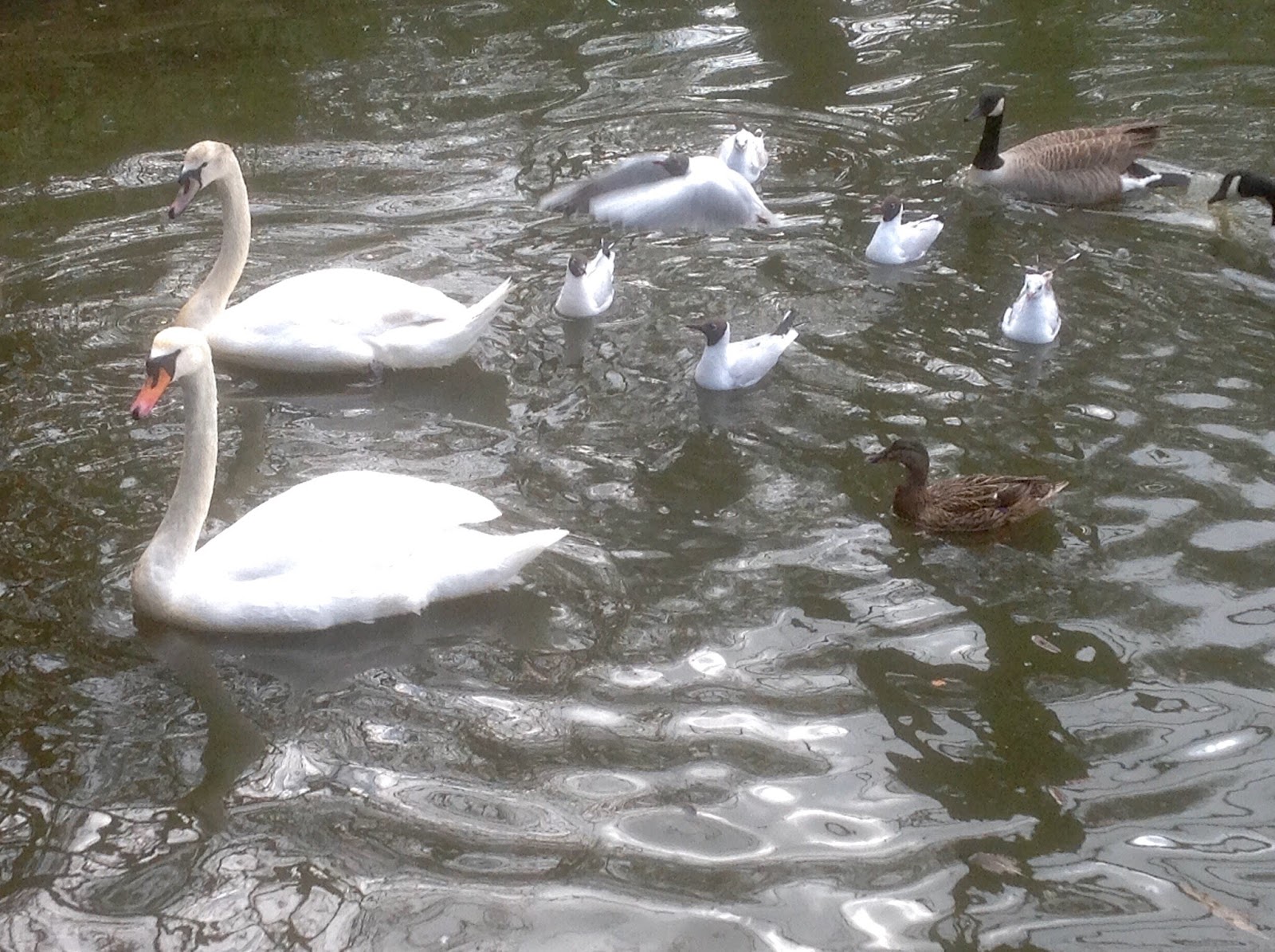
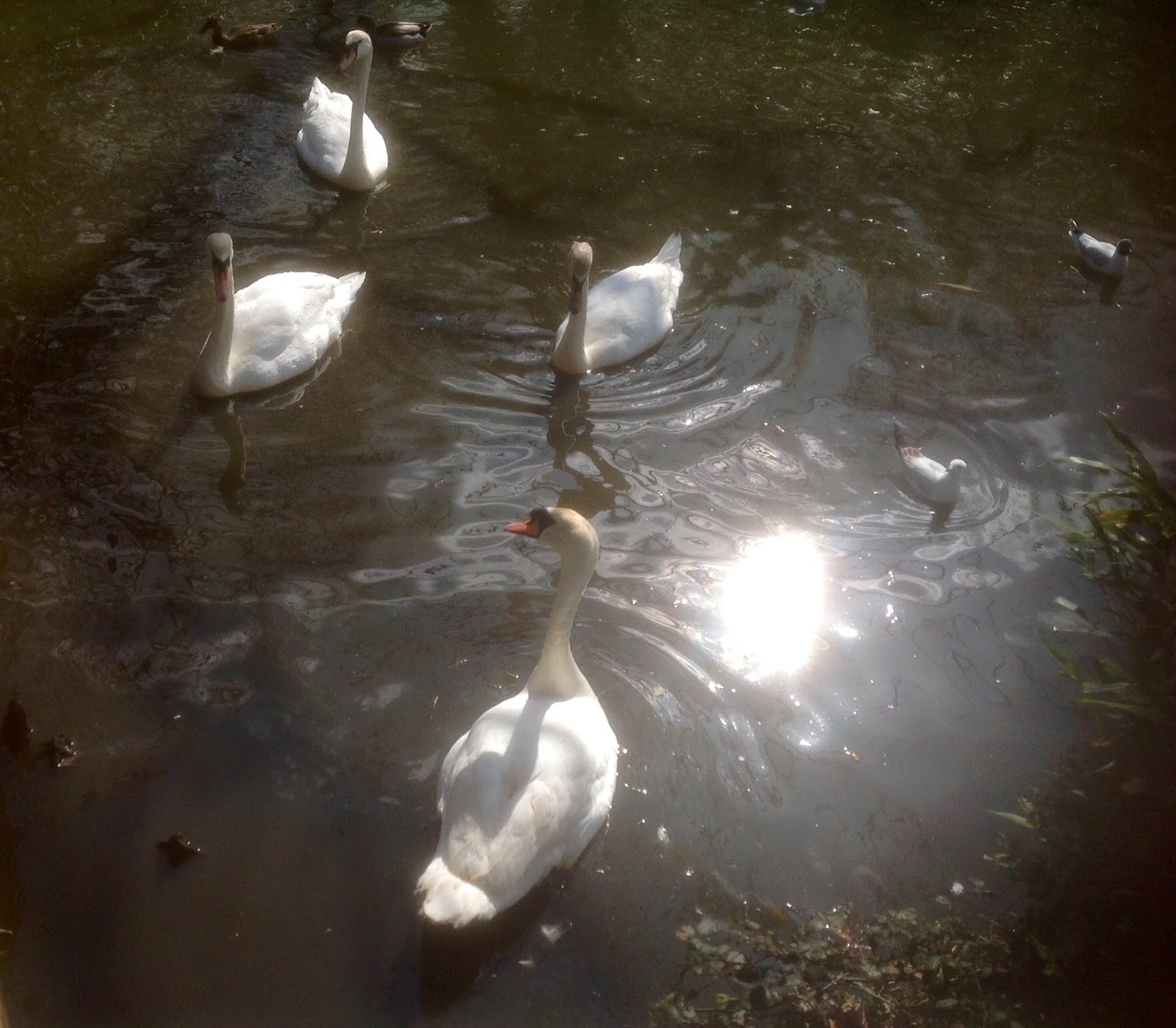
I snapped these photographs of a pair of nesting swans on a visit to the park last year. This set me thinking of the swans who congregate in this beautiful place. This nest was situated on a tiny island in a man-made lake at the centre of the park.
This lake attracts many wildfowl drawn by the certainty of a free meal. There’s a wooden structure packed with bags of duck food and an honesty box where one can place money. A price list is attached and the system seems to work.
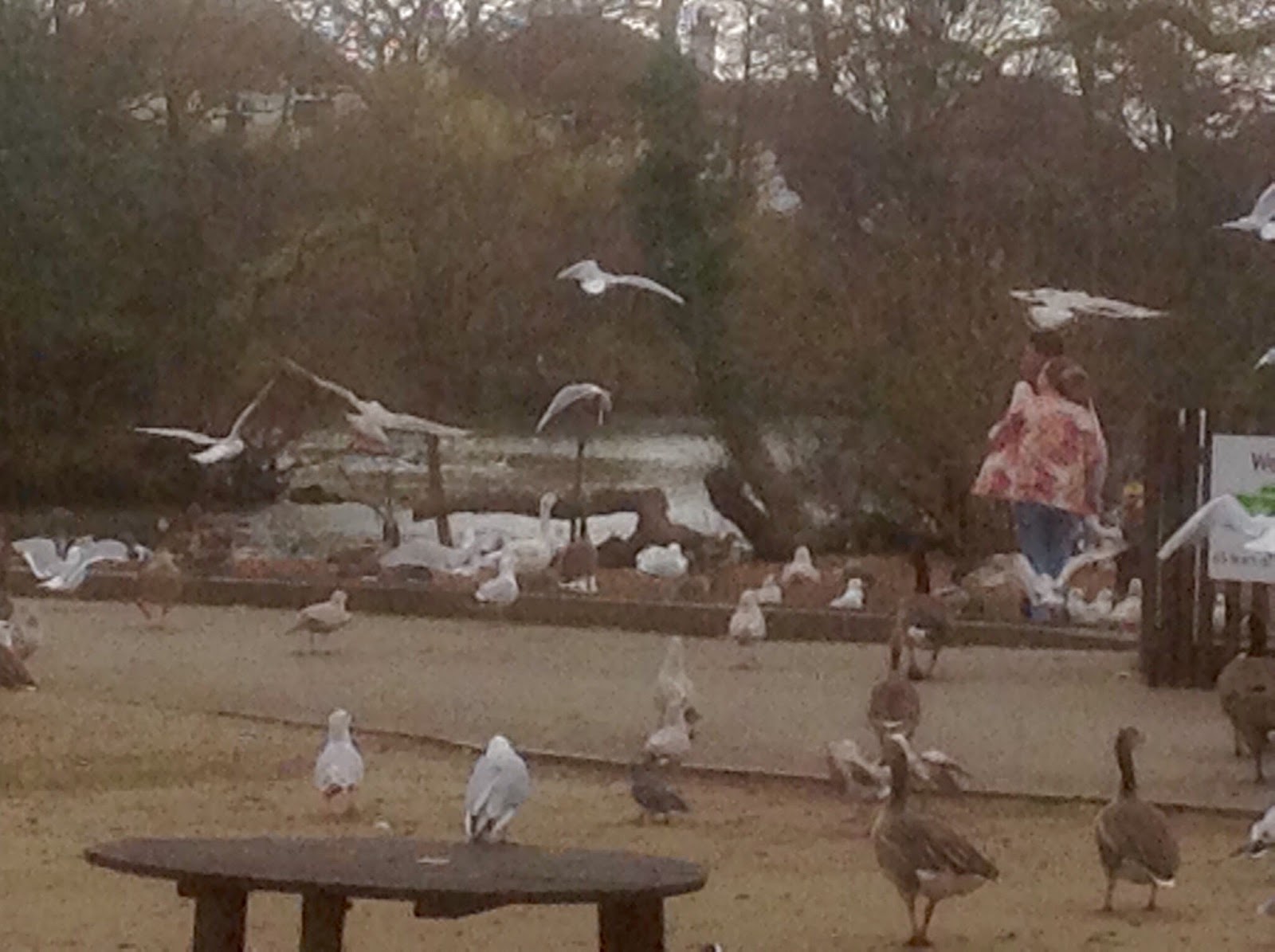
People feed the birds mainly from the shore of the lake where the food is on sale. A variety of waterfowl vie for these free meals.
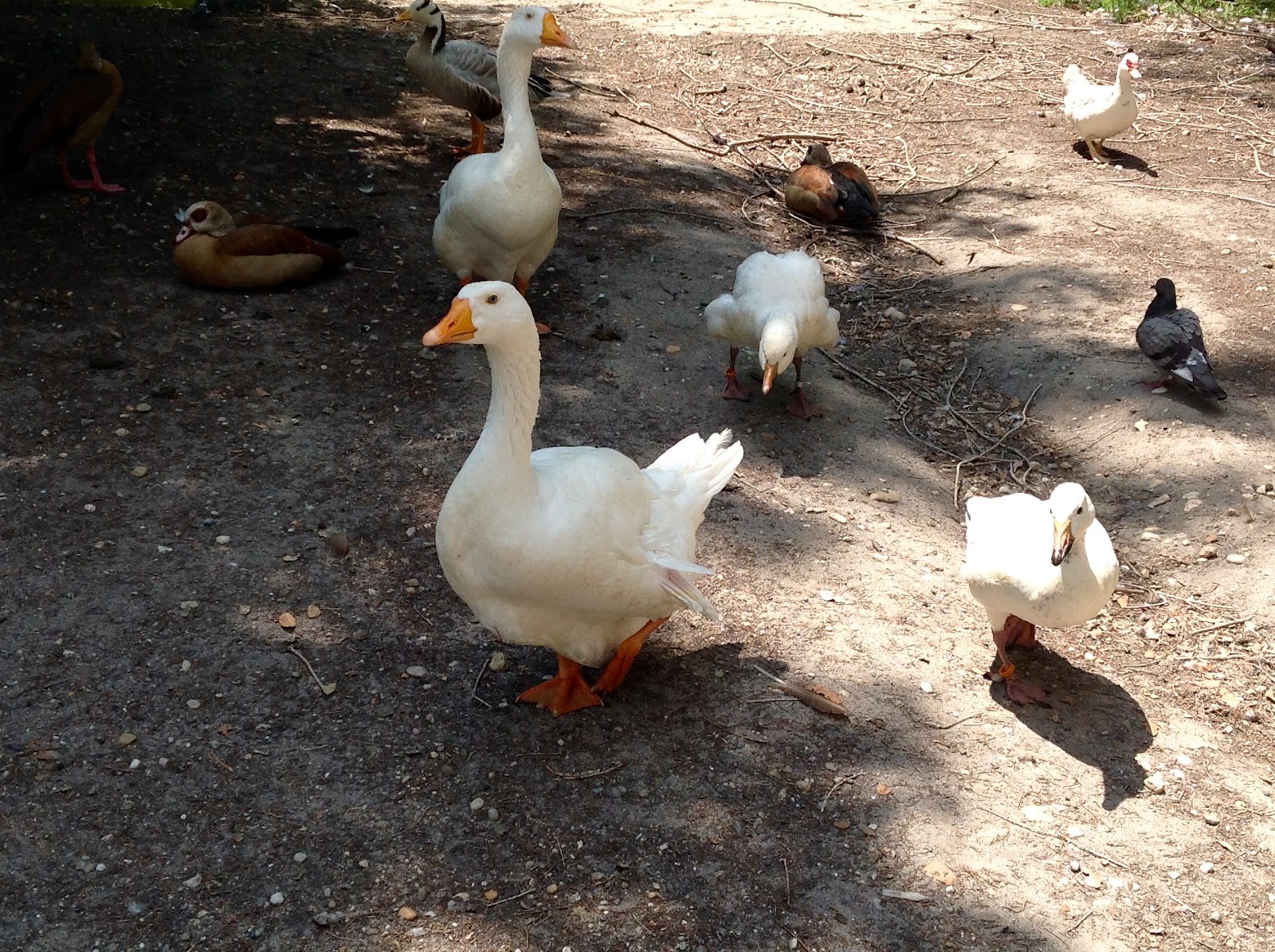
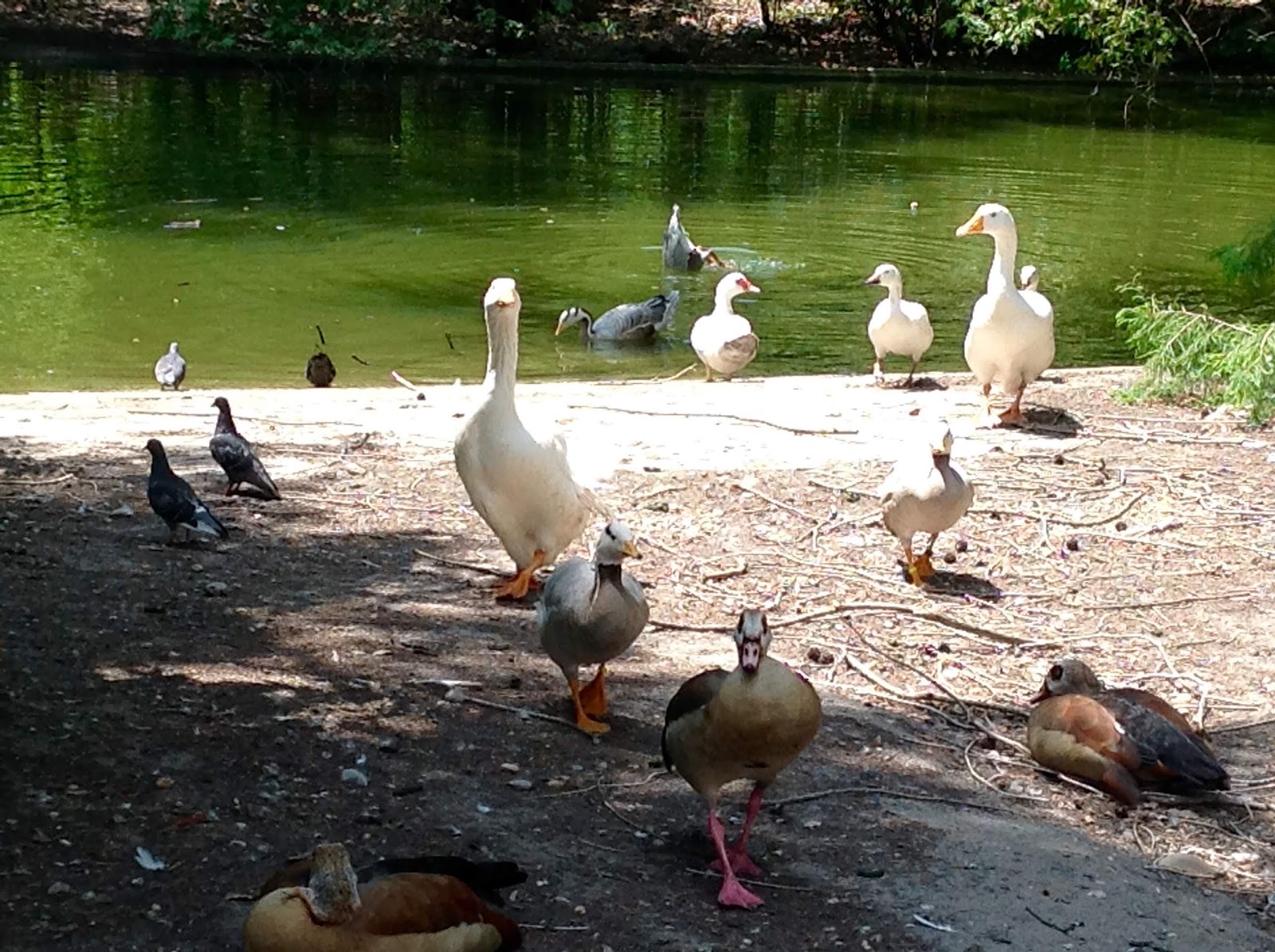
I spotted canada geese. mallard ducks, large white geese and a sprinkling of moorhens and of course quite a few swans. The waterfowl were hugely outnumbered by large aggressive seagulls, who swooped down and greedily stole food literally from the beaks of the ducks and geese.
I have never seen so many gulls screeching and clamouring, aggressively attacking the far larger waterfowl in competition for the free food. There was a small bridge near the island, where our swan in the photograph above was sitting on her nest, cautiously guarded by the cob swan, amid the clamour of the feeding frenzy that was taking place nearby.
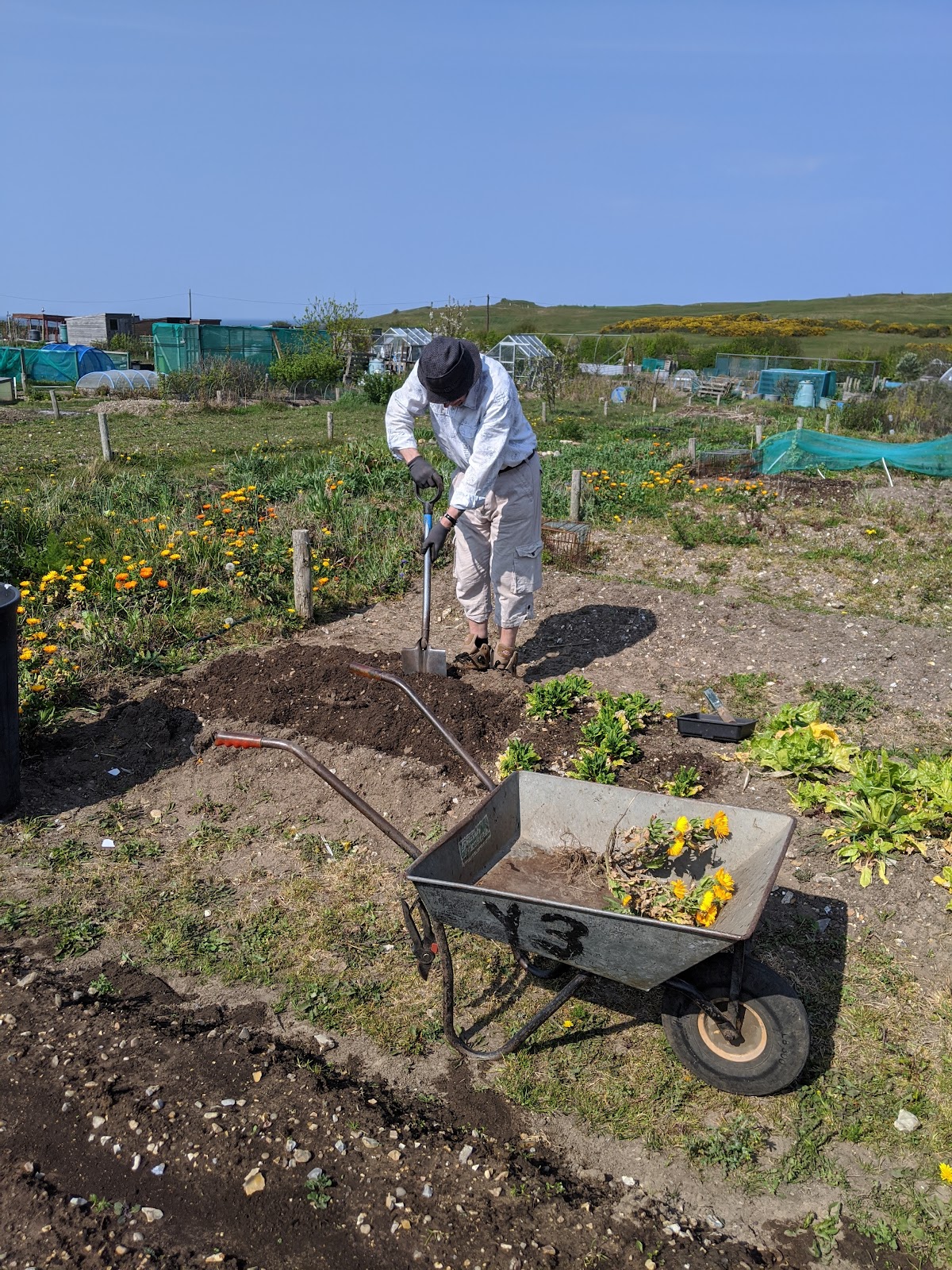
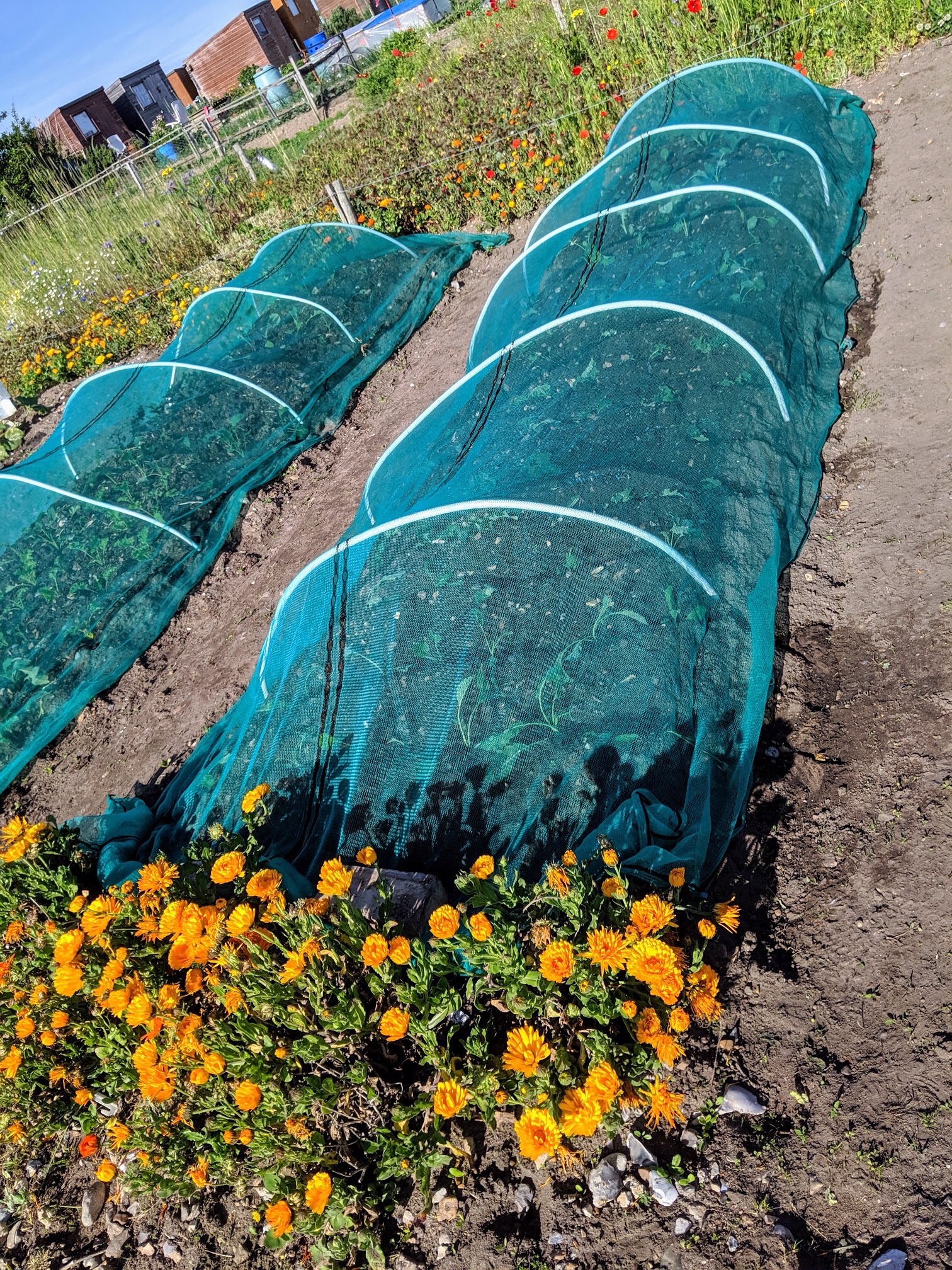
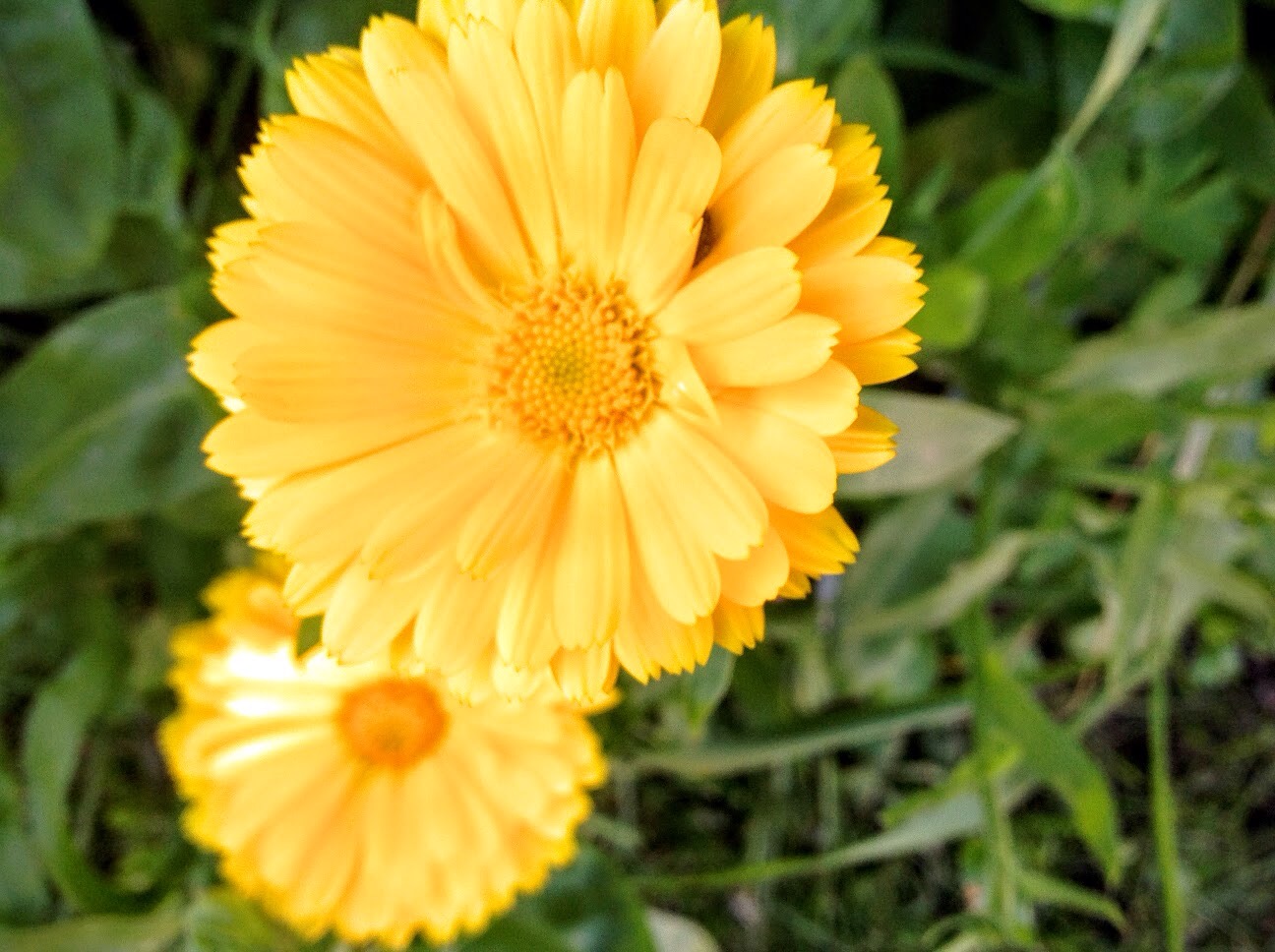
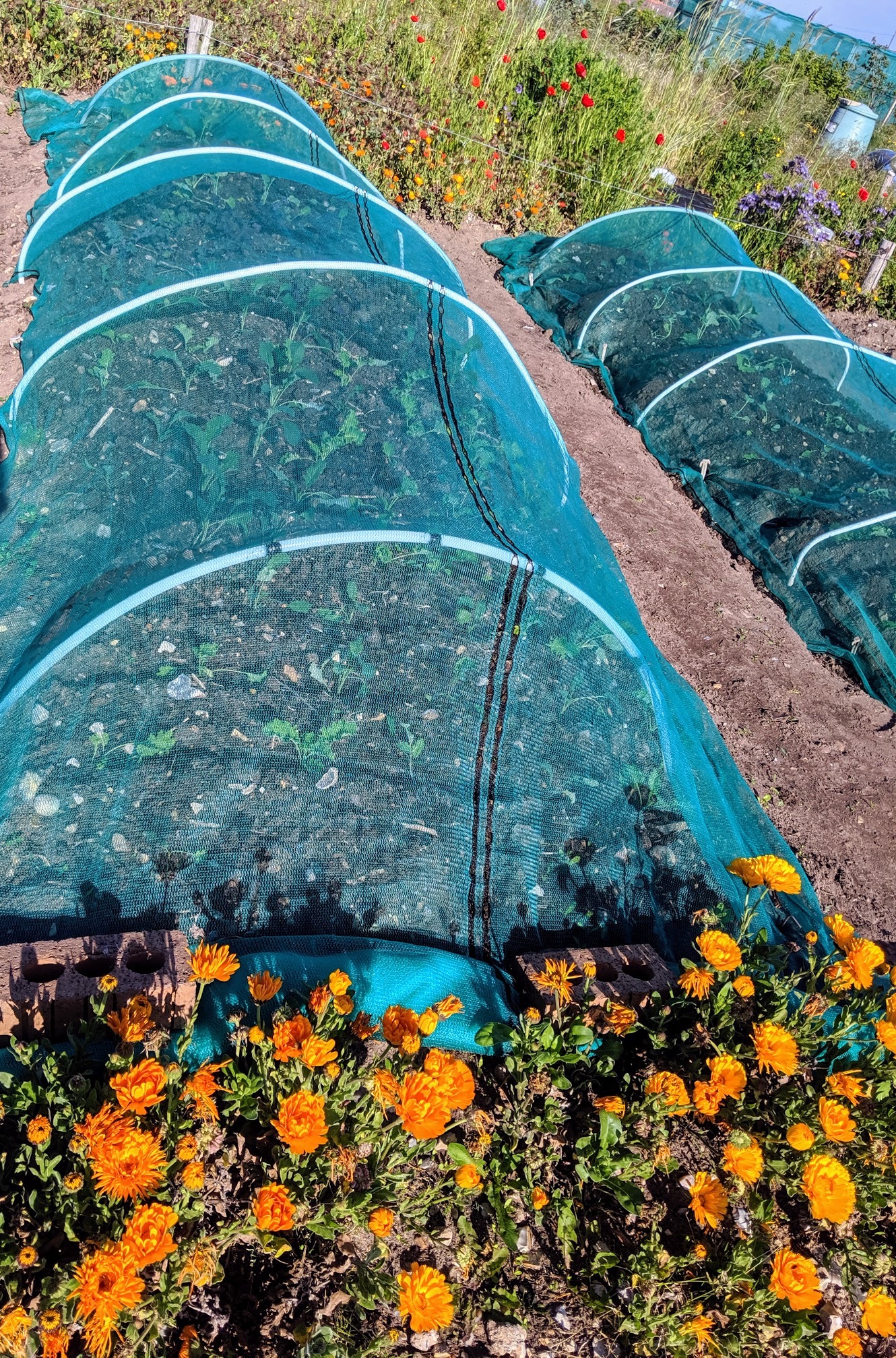
The above photograph is a week old photograph of me working on the allotment. It looks as if I’m removing some Marigolds. I like having the colour and continuity of Marigolds as well as the fact they have a useful function of deterrence.
Apparently Marigolds attract hoverflies who love eating the aphids that breed ferociously and love eating our Brassicas. Some of these English Marigolds look beautiful and brighten up the allotment. However they self seed profusely and spread widely and wildly, consuming all the water and nourishment that the food plants need.
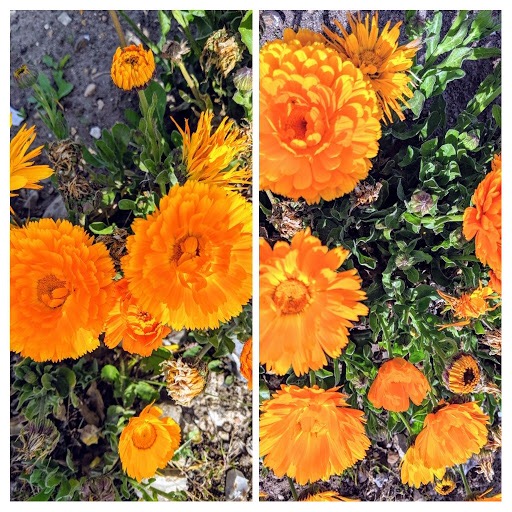
I always think Marigolds look a lot like the Dandelions we treat as weeds on the allotment and remove without hesitation. On impulse I looked up both on the internet and came up with this interesting fact..
‘The largest family of flowering plants is the ubiquitous sunflower family (Asteraceae or Compositae). … Familiar common names, such as daisies, Marigolds, zinnias, gazanias, chrysanthemums, Dandelions, thistles, ragweeds, sagebrush, cosmos and dahlias all belong to this family.’ Dandelions are also quick to spread and use any available space and resources. I guess this is one meaning of the old adage. ‘Beauty is in the eye of the beholder.’
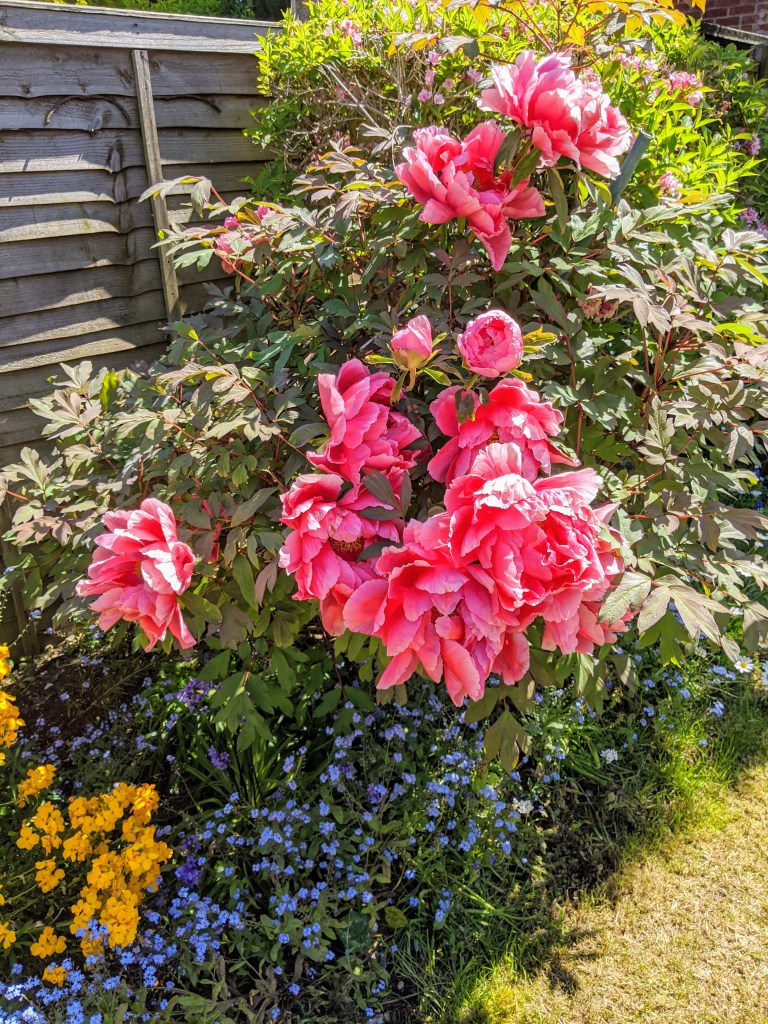
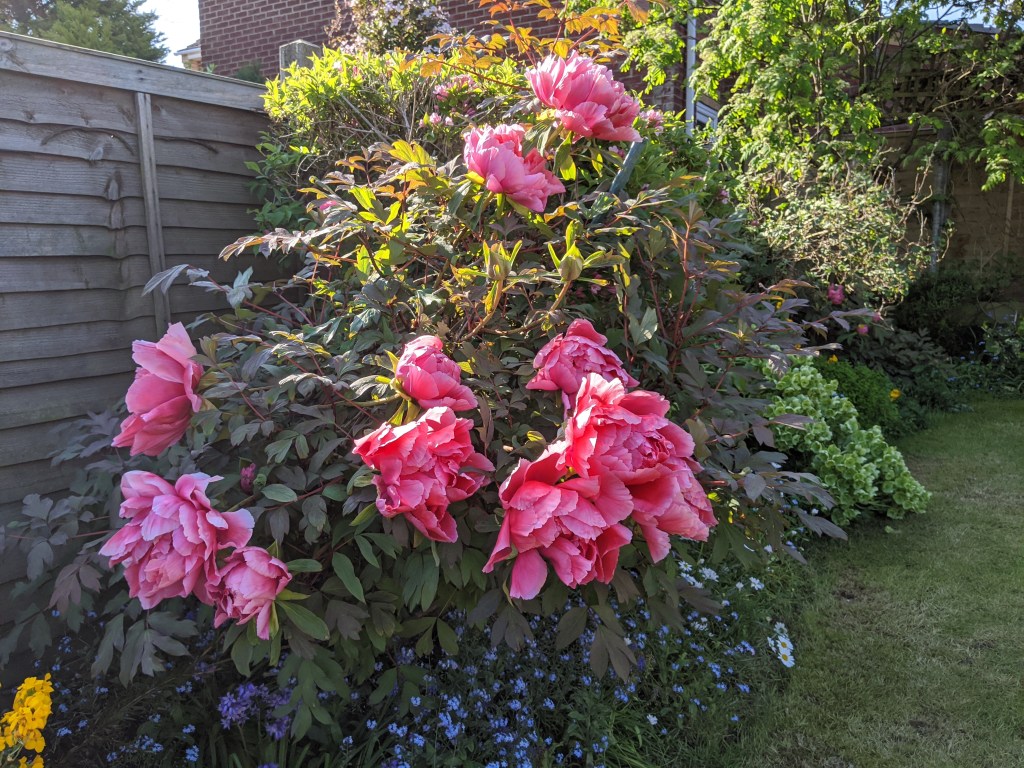
Just as a cheerful change from the depressing to the refreshing. Another feast for the eyes. Here is one of our Tree Peony shrubs in full bloom. HAPPY THURSDAY to all. 🙂🙂🎎☮️❤️
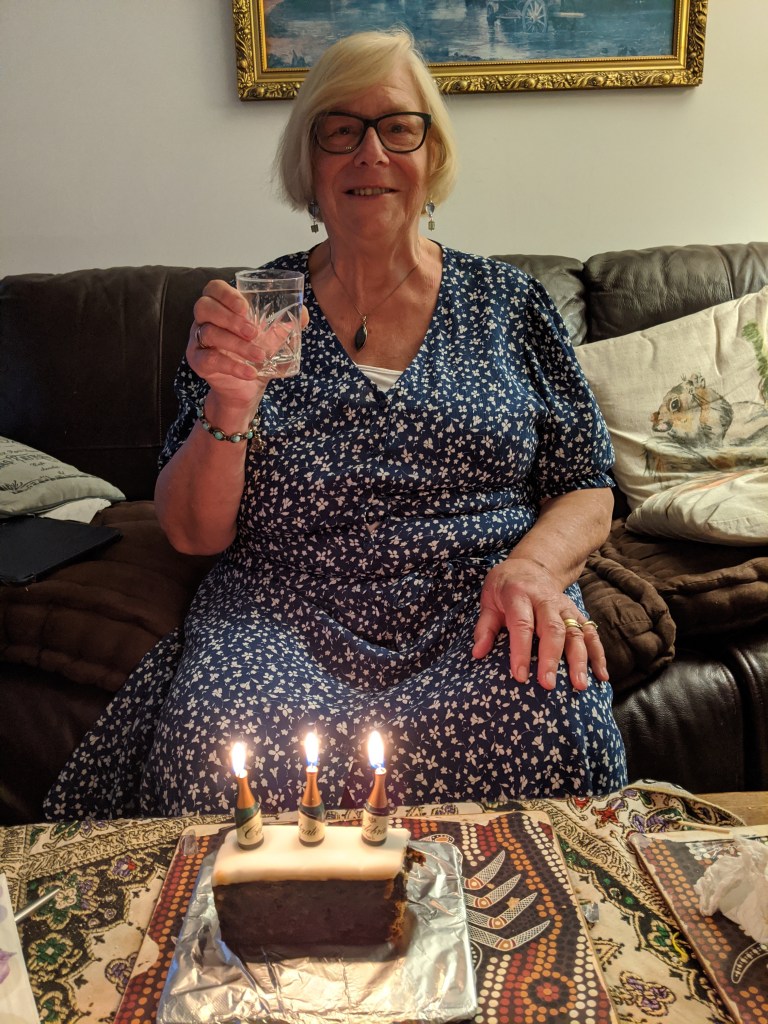
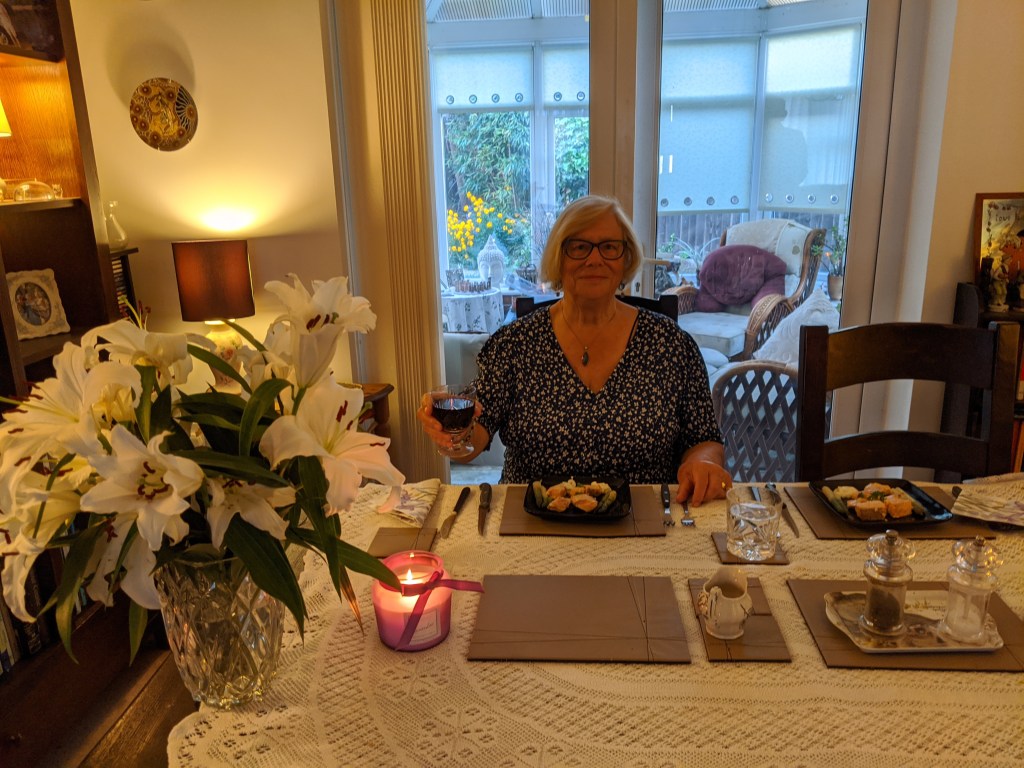
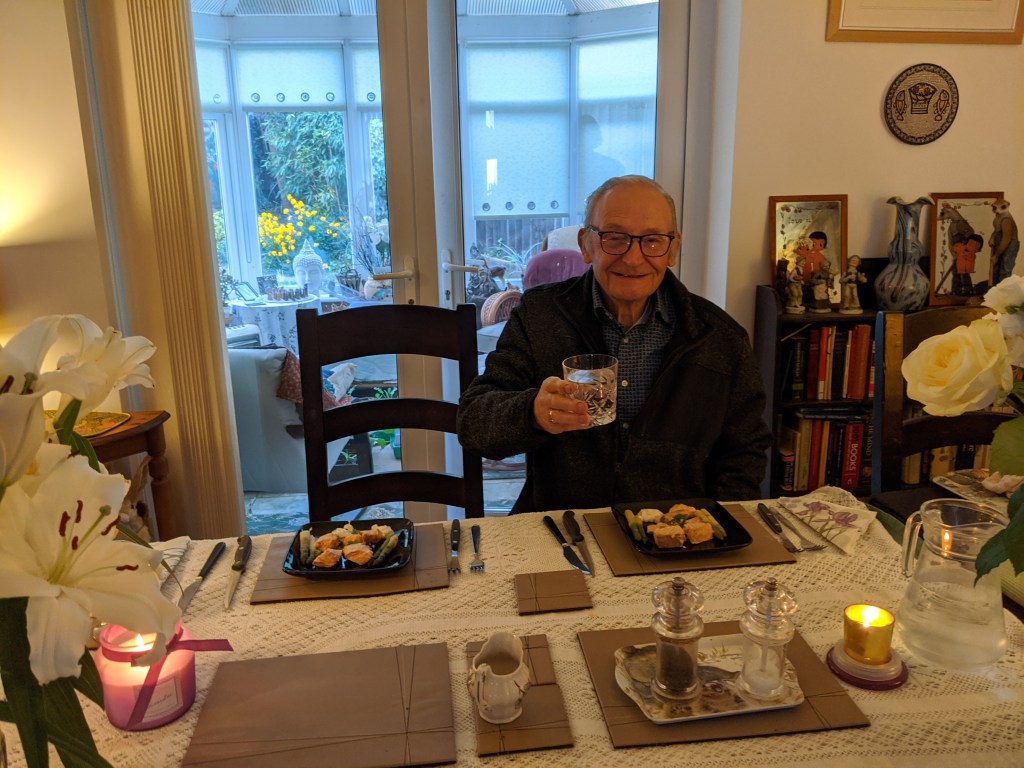
This must have been the strangest birthday Margaret has ever celebrated. Just the two of us enjoyed her special day, as we are self isolated and locked down. She had some lovely calls from our friends and thanks to technology, we were able to chat to our family on Skype and Messenger. We took a 15 minute walk in the sunshine to the allotment for our daily exercise, where we watered our seedlings. We decided to have a special birthday dinner at home. We were unable to find any local takeaway delivery service that operates on a Monday. Margaret prepared a delicious meal at home and we set the table with candles and flowers she had had presented to her by our daughter, Helen. There was also wine and chocolates dips and crisps from a food hamper provided by our daughter Liz. We sat and enjoyed the close of a special day for the birthday of a special lady.
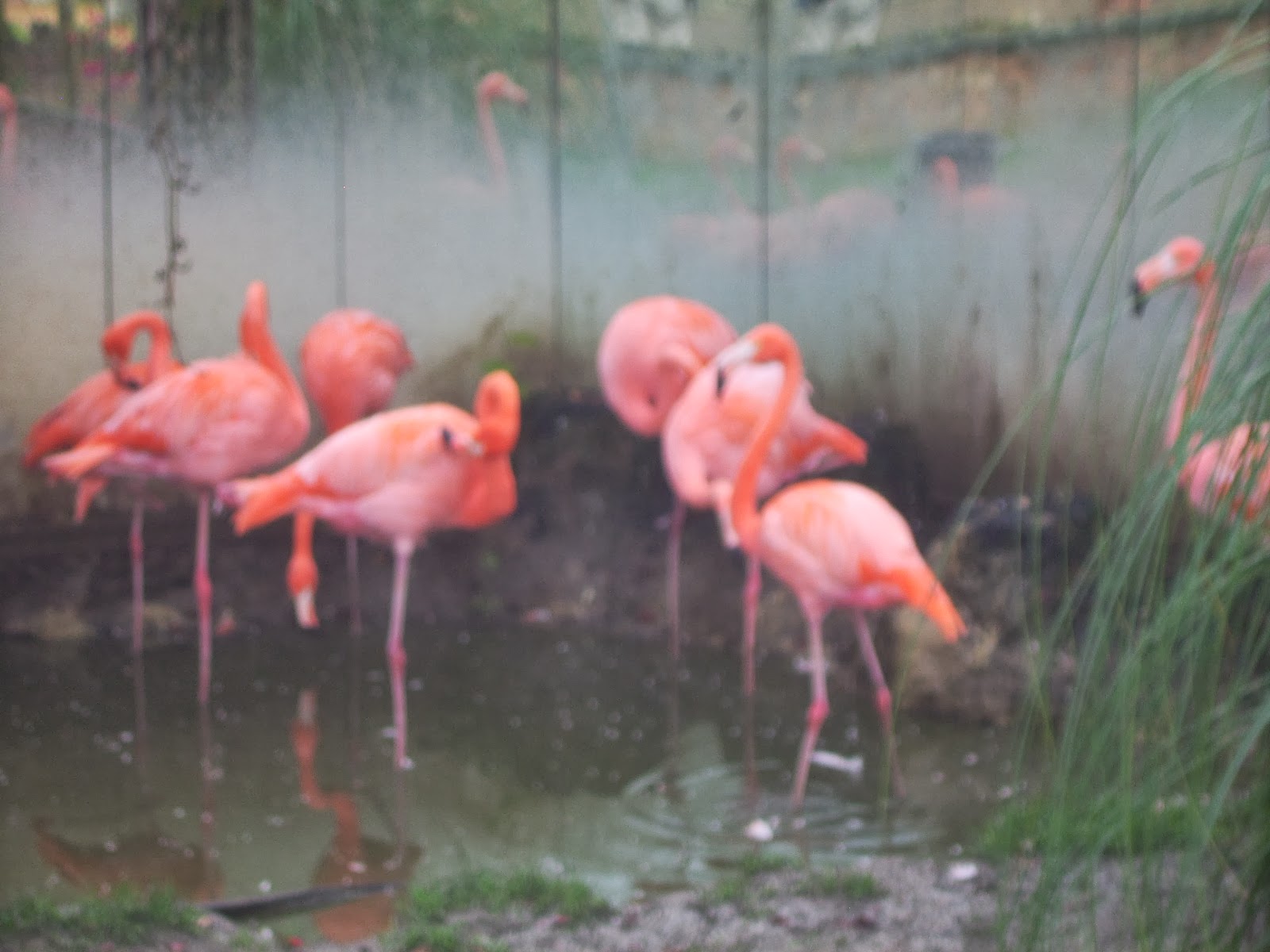
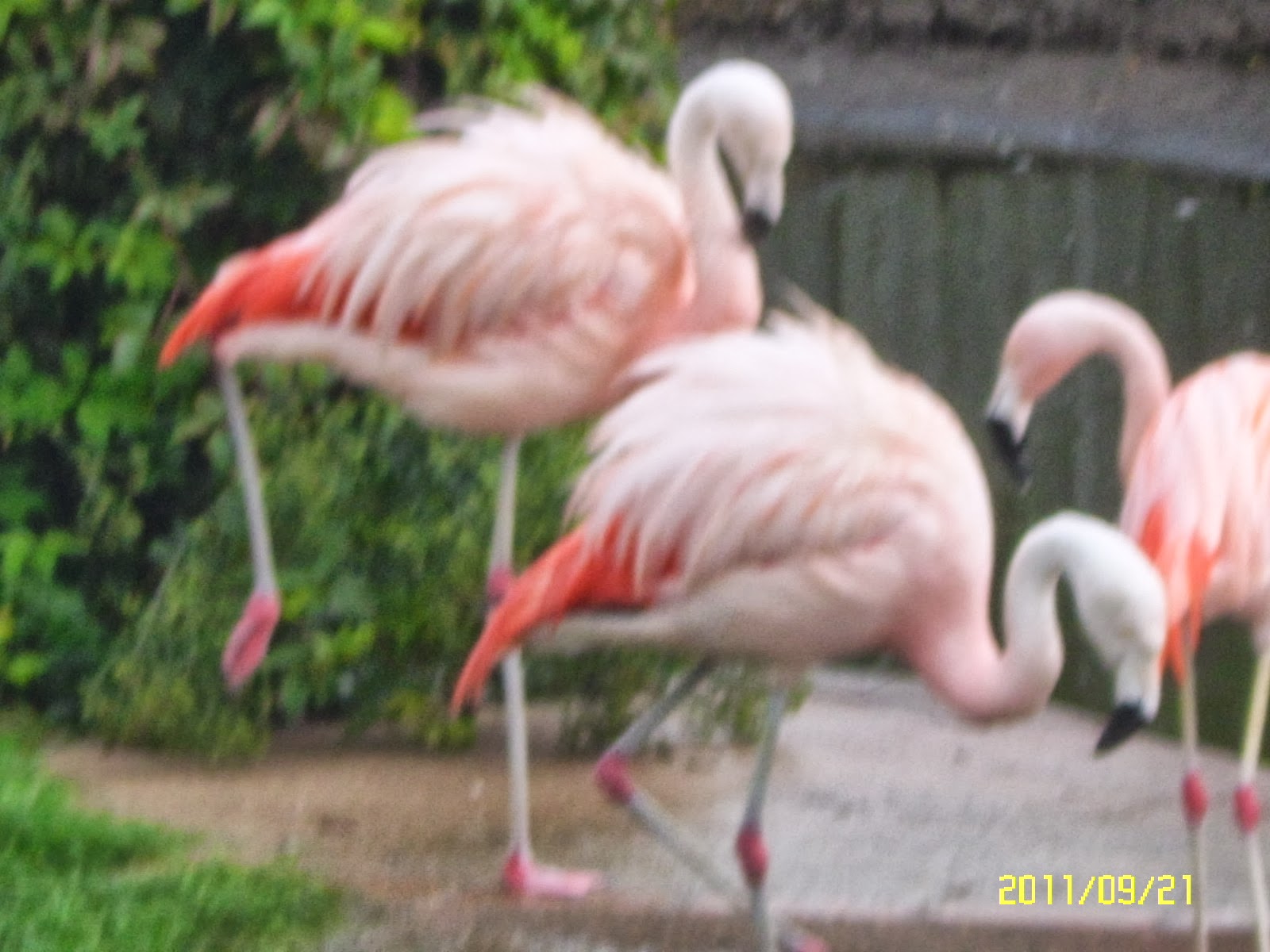
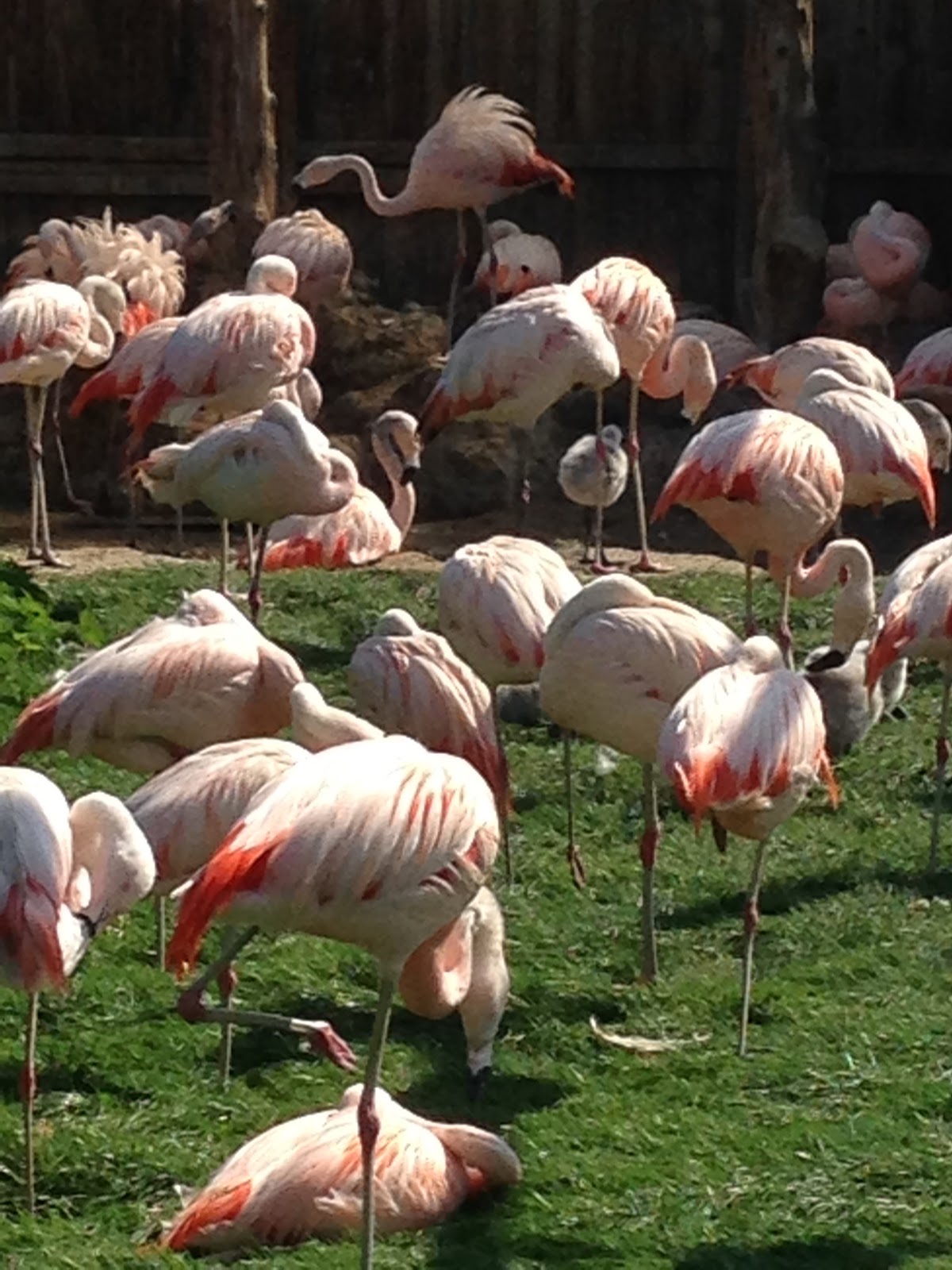
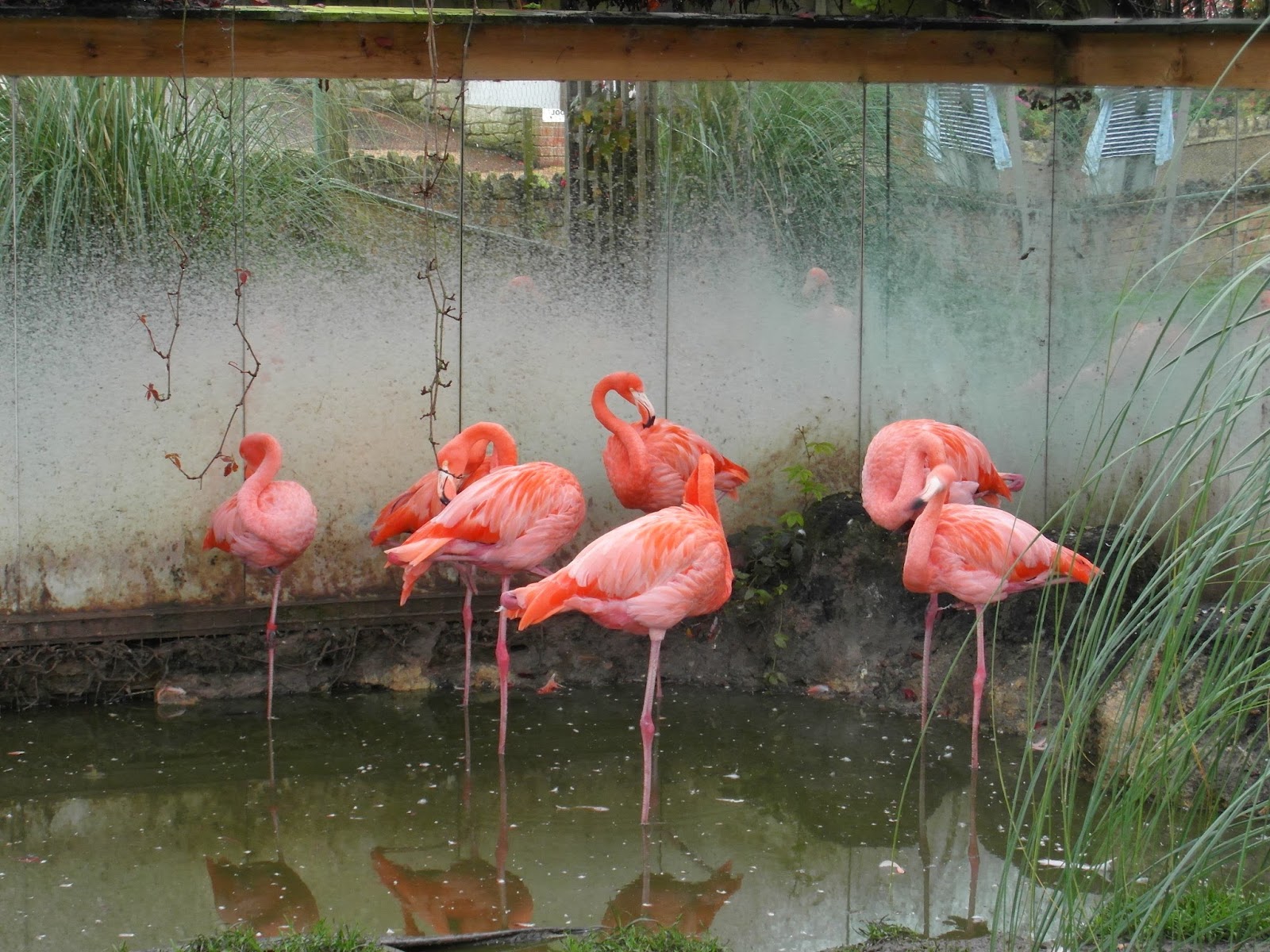
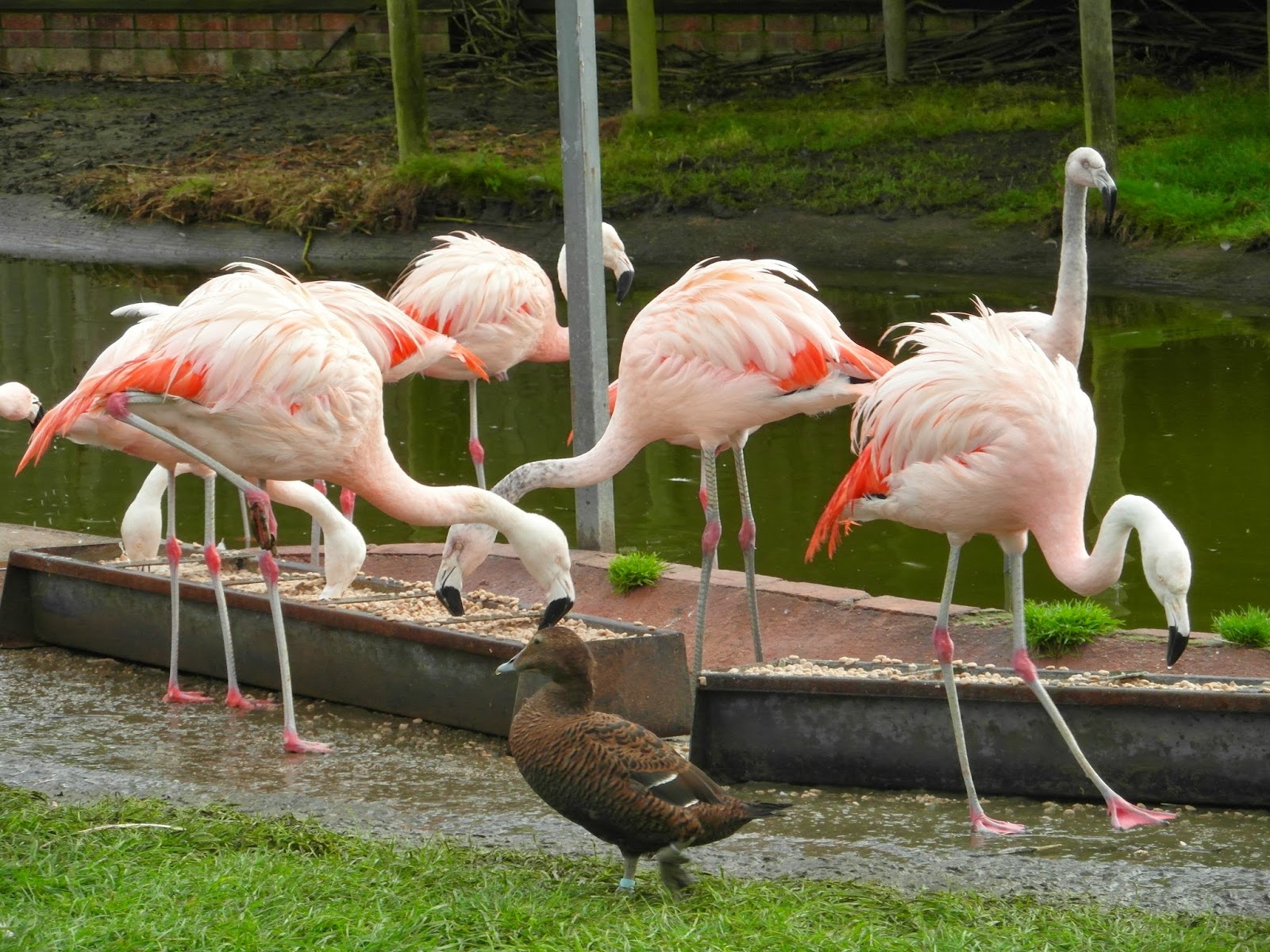
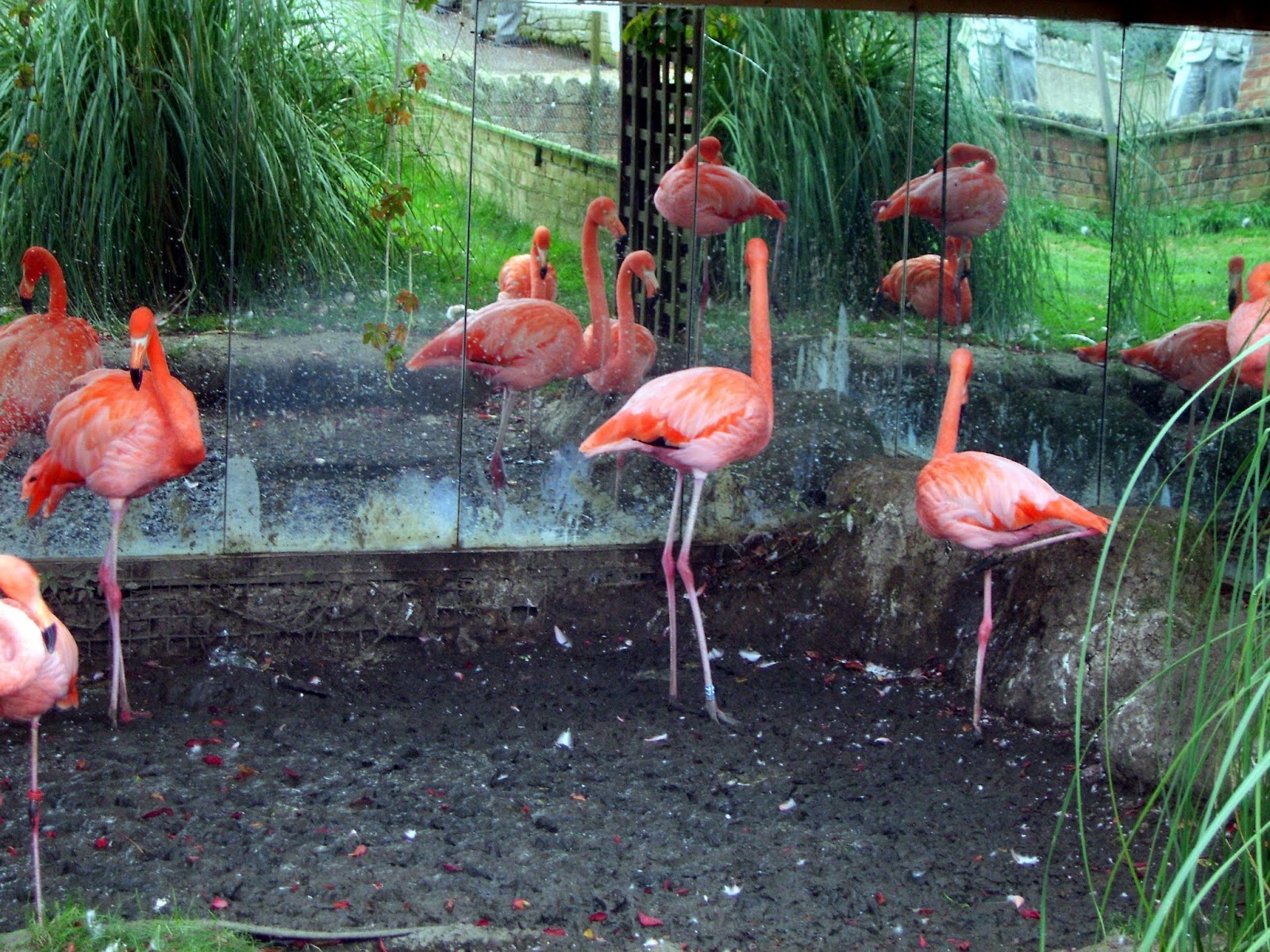
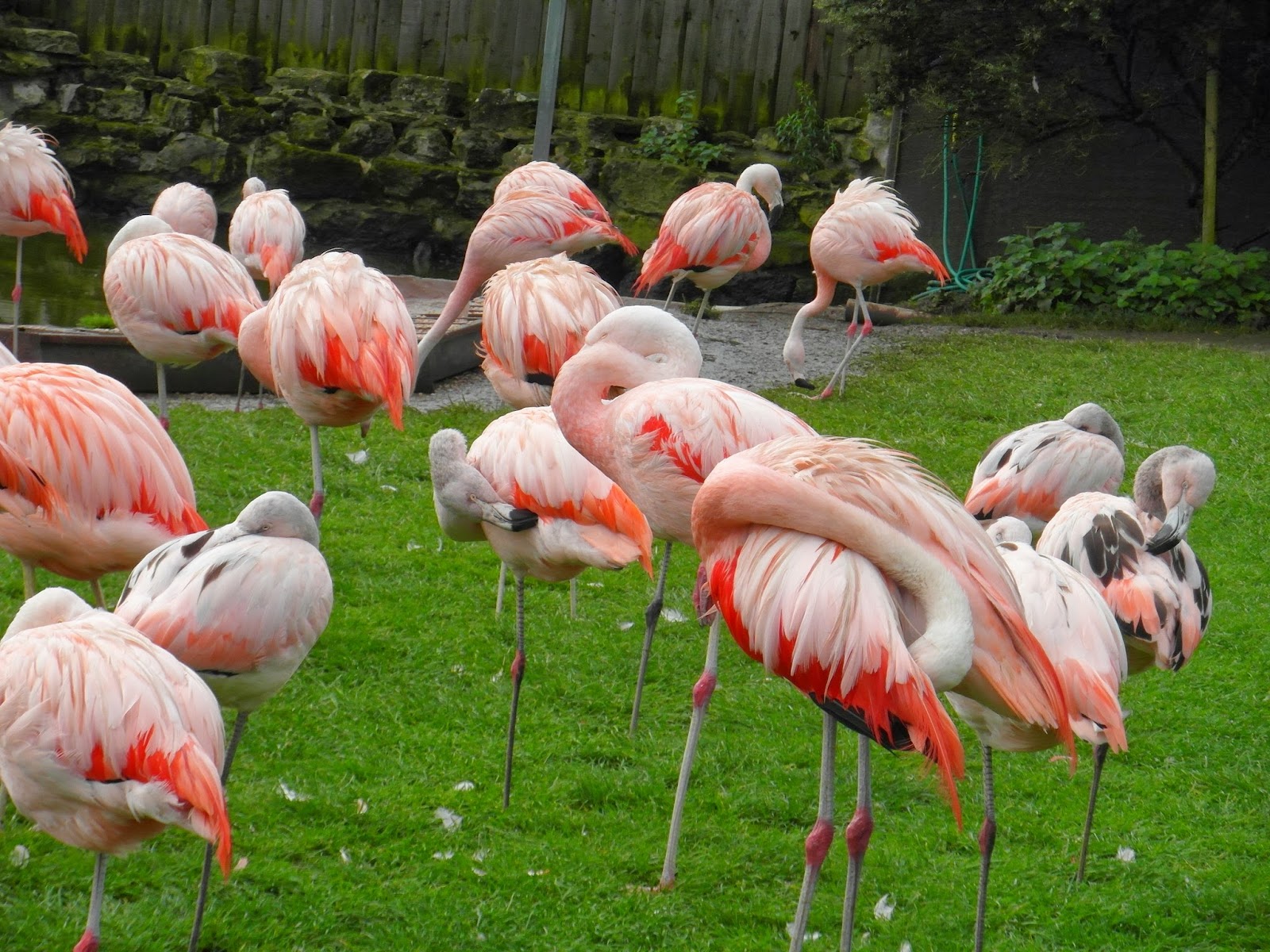
Six years ago, Margaret and I journeyed to the Isle of Wight, where we visited the wonderful Seaview Wildlife Centre. Sadly during November 2015, this interesting wildlife attraction closed down, due to problems with legislation. We were fortunate to be able to act as keepers for the day in 2014, which enabled us to help to feed and take care of the animals and birds for a single day. Although this involved feeding a variety of birds and animals, including penguins and wallabies, I intend to focus on the spectacular pink flamingos.
We snapped these photographs during our visit, although we didn’t get to actually feed these shy birds, probably because some of them were nurturing young.
I understand, Flamingos in captivity have to have their wings clipped to prevent them flying away. I did enquire whether the wildlife park had any problems with predators such as foxes, as I’m sure birds with clipped wings would be unable to fly away.
I found these interesting facts concerning flamingos on the internet. Mainly from the National Geographic magazine.
Greater flamingos live and feed in groups called flocks or colonies. They find safety in numbers, which helps to protect individual birds from predators while their heads are down in the mud.
The pink colour of flamingos is summed up by the phrase, “You are what you eat” This holds more truth than it might for humans. The bright pink color of flamingos comes from beta carotene, a red-orange pigment that’s found in high quantities within the algae, larvae, and brine shrimp that flamingos eat in their wetland environment.
Flamingos stand on one leg because it’s physiologically easier for them to do so. The way their legs work means they can rest all of their weight on one side without having to use their muscles to maintain balance.
It is thought that the legend of the rising of the Phoenix was actually based on a bright pink flamingo taking flight.
Wikipedia has a large fount of facts about these spectacular birds and it is well worth a visit to read up on the lifestyle of these interesting birds. There are several sites that deal with the myths and legends concerning flamingos I may collate and explore those facts in another blog post.
Margaret and I enjoyed our visit where we were to get close enough to the resident flamingos to enable us to take these interesting photographs.
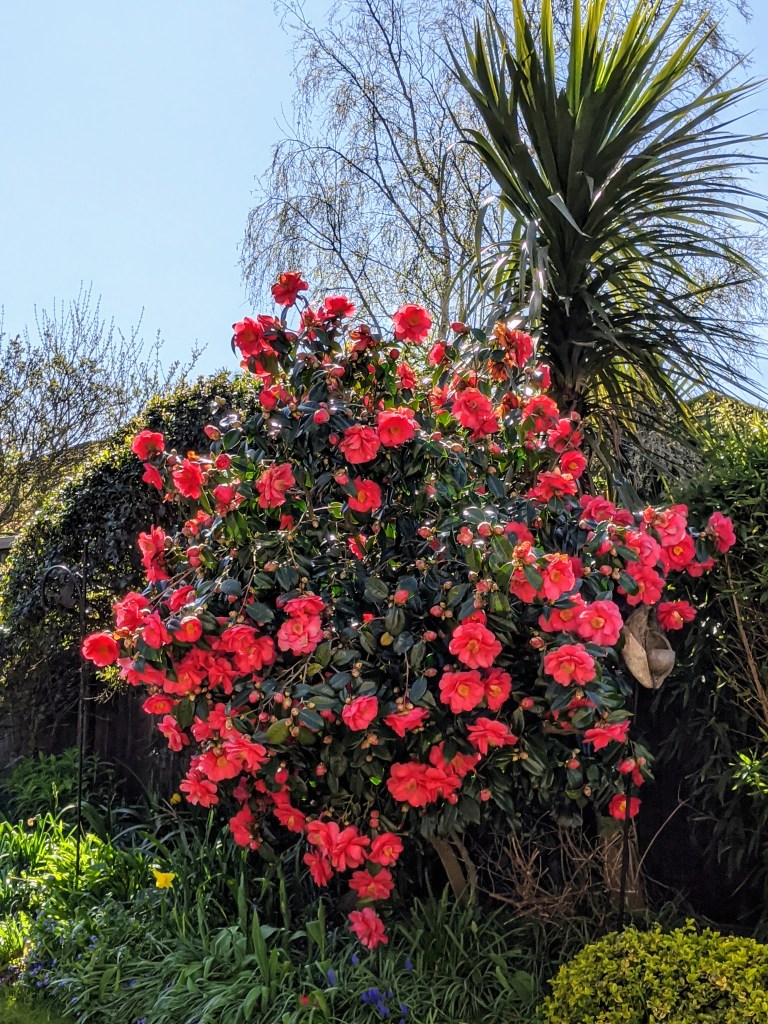
The first of the big flowers to burst into bloom in our relatively small garden is this extremely attractive Camelia. We have nurtured and taken care of this extraordinary shrub for the last fifteen years. Buds are visible all over the branches in December which suddenly burst into a sensational covering of quite large blooms. They gradually fade and drop from the branches, covering the lawn with the discarded flower heads, loose petals and tiny buds. I am often filled with wonder at the effort this shrub makes to produce such perfection.
TREE PEONY
Next to make an impressive appearance is the incredible Tree Peony. A quite unassuming shrub for most of the year, our Tree Peony quietly merges into the background of the borders. We actually have two of these wonderful shrubs in the garden. One of the two is situated in a shady corner and doesn’t flower as prolifically as the other. In late March and early April large buds begin to appear at the ends of the branches. Then, with a burst of shocking pink the buds swell and reveal huge, showy, impressive blooms. Then after about ten days these lovely blooms complete their cycle of life, wither, and fall from the shrub. Another source of wonder to the thinking man.
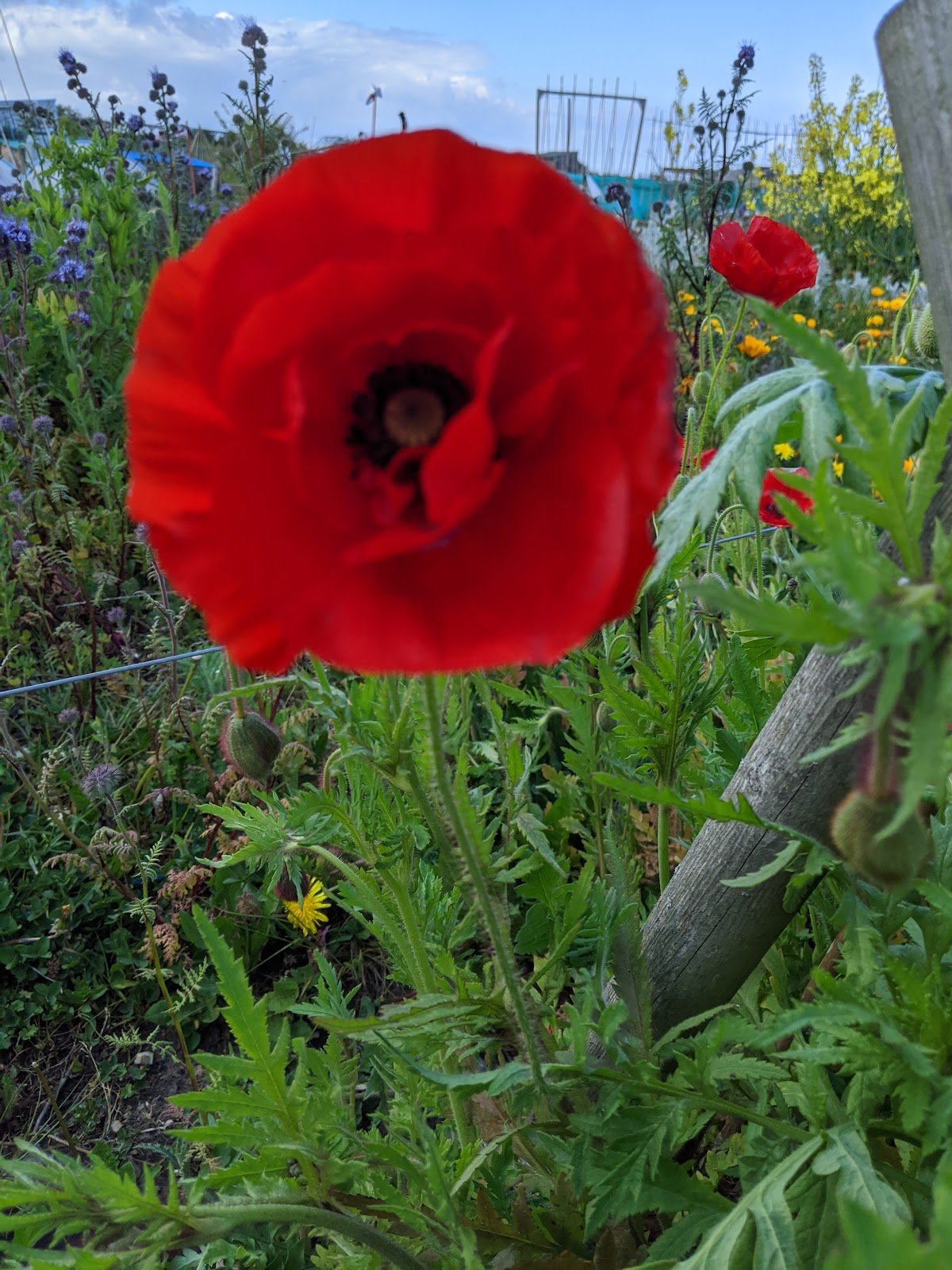
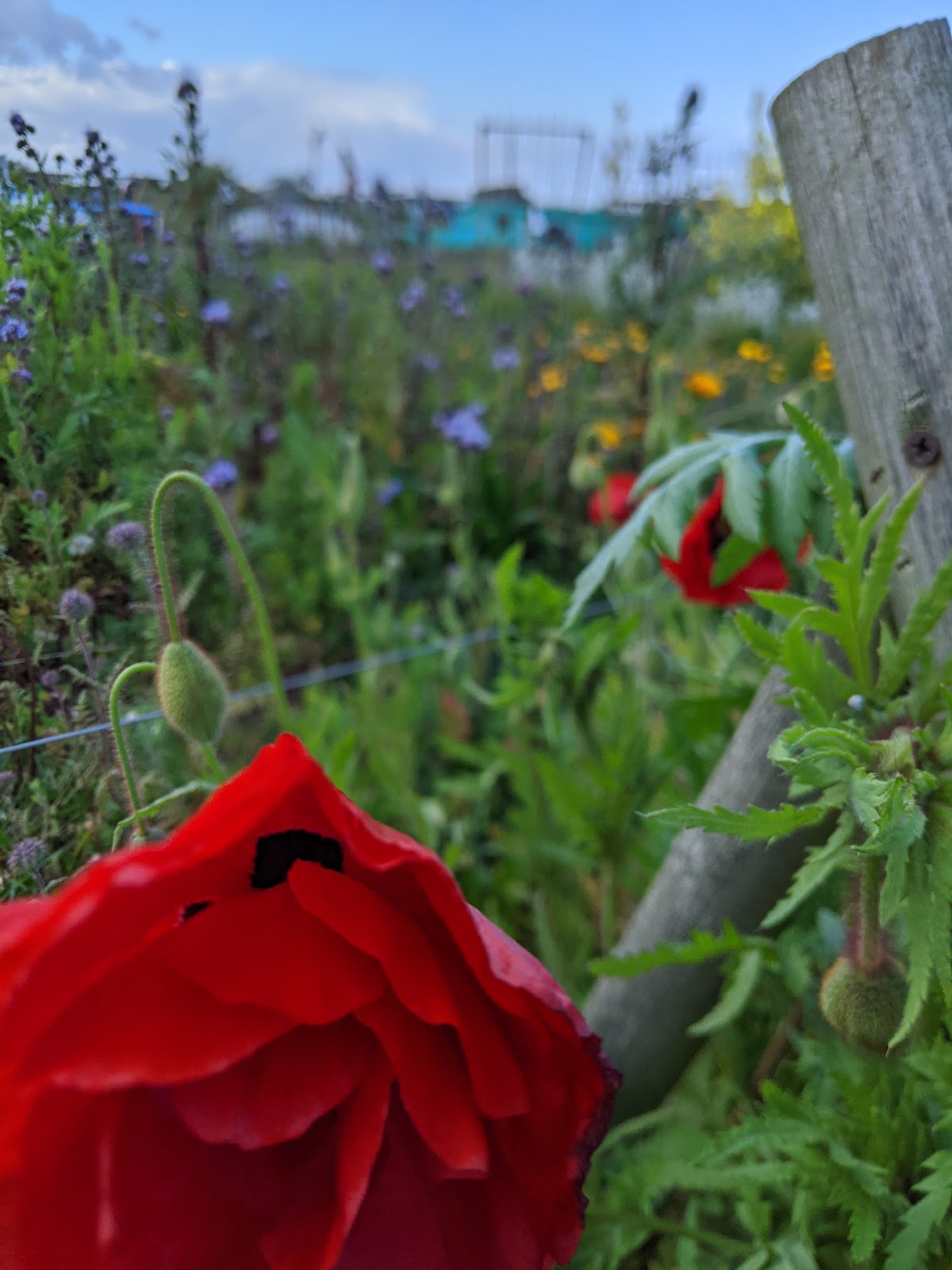
I snapped these beautiful photographs of poppies when Margaret and I were working on the allotment today. They’ve just appeared over the last couple of days. The poppies on our allotment are so prolific and spread so widely and fast, we usually pull them up as weeds and consign them to the compost heap. I have to admit I’ve never seen any as beautiful as this single large poppy in the photograph below. The luscious petal arrangement could be likened to a rose, it’s almost unbelievable that this is just a common wild poppy.
My limited knowledge of Poppies was generally reduced to the fact they are almost universally associated with death and remembrance. I was also vaguely aware they were associated with opium and all the tragic history connected with that.
I decided to do some research on the mystical meaning of Poppies through the centuries. I gathered the following facts from Wikipedia.
Poppies have long been used as a symbol of sleep, peace, and death: Sleep because the opium extracted from them is a sedative, and death because of the common blood-red color of the red poppy in particular. In Greek and Roman myths, poppies were used as offerings to the dead.
The poppy of wartime remembrance is Papaver rhoeas, the red-flowered corn poppy. This poppy is a common plant of disturbed ground in Europe and is found in many locations, including Flanders, which is the setting of the famous poem “In Flanders Fields” by the Canadian surgeon and soldier John McCrae. In Canada, the United Kingdom, the United States, Australia, South Africa and New Zealand, artificial poppies (plastic in Canada, paper in the UK, Australia, South Africa, Malta and New Zealand) are worn to commemorate those who died in war.
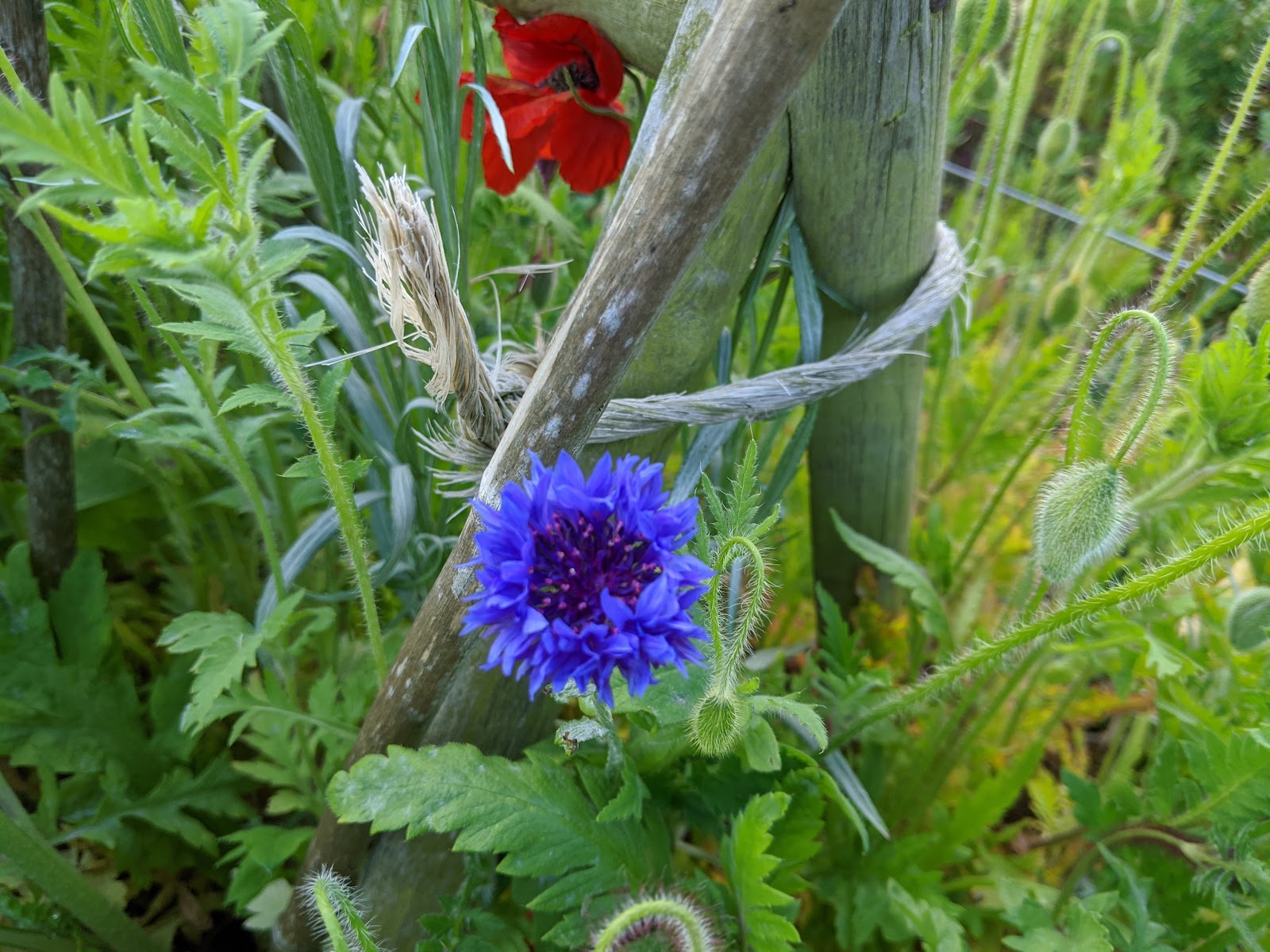
There is such an abundance of information connected to the use of poppies and the significance of poppies, I didn’t want to turn this small blog post into a book. Suffice to say Margaret and I will try to save some of the seeds from this magnificent bloom to transplant into a corner of our garden. In the photograph below a cornflower took centre stage, but that will be a post for another day.



 SUNDAY 3rd MAY 2020
 We snapped these photographs during our visit, although we didn’t get to actually feed these shy birds, probably because some of them were nurturing young.
 I understand, Flamingos in captivity have to have their wings clipped to prevent them flying away. I did enquire whether the wildlife park had any problems with predators such as foxes, as I’m sure birds with clipped wings would be unable to fly away.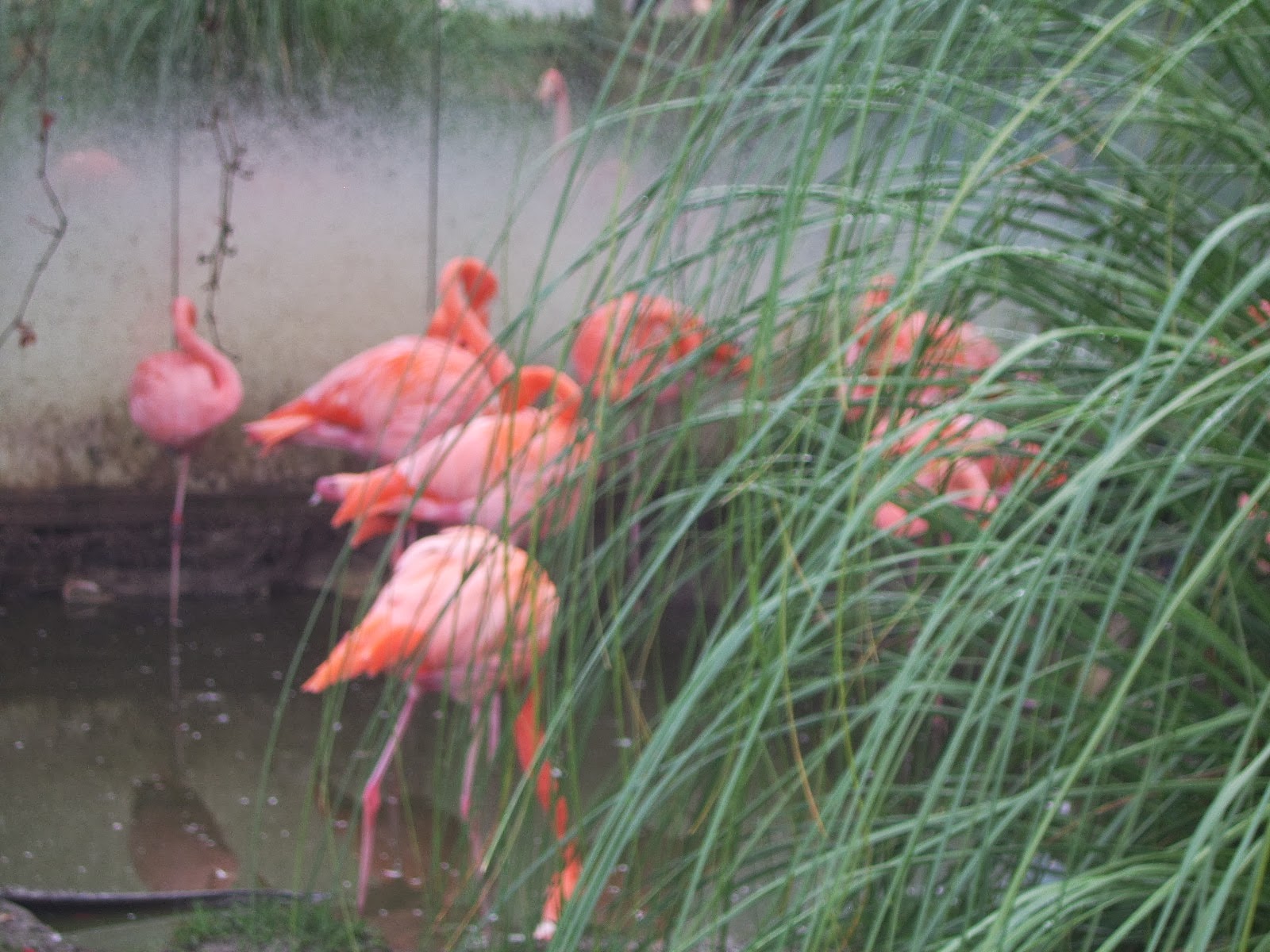
 FRIDAY 1st MAY 2020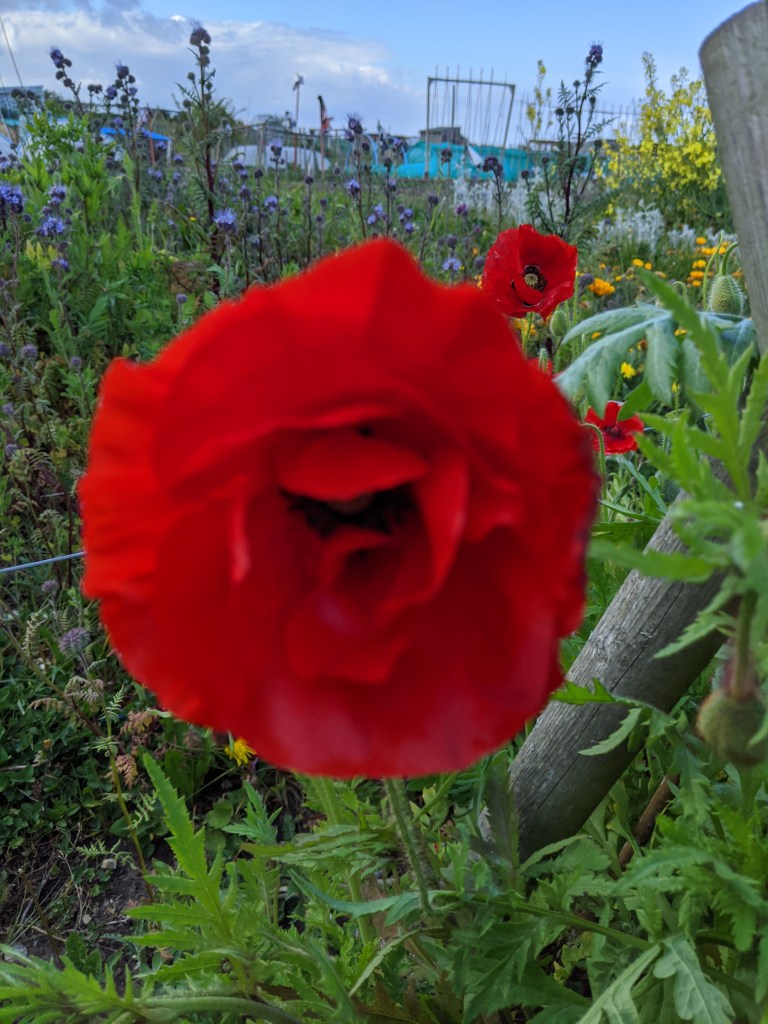
 johnandmargaret1607