Wally and Mike were off to visit an illegal rave-up. Free music with all their online friends in the local park.
‘Wally, look at all the people here! Hey! Carol and Gloria. How are you both.’
Gloria pushed her long blonde hair out of her eyes and smiled. ’We’re good aren’t we Carol.’
‘Yes!’ giggled Carol, ‘We sneaked out and got here as soon as we heard about the rave.’
Mike interjected with, ‘ My Dad was a bit funny because of this virus thing that’s going around, but everyone says it’s only a scare and not worth worrying about.’
‘Yes!,’ said Wally, ‘We can enjoy ourselves and hope for the best.’
The four friends had a wonderful time dancing the night away. It
It wasn’t until later that they realised that the whole thing had been televised and their parents were sure to see it on the news.
All hell broke loose when they got home. Wally said to his Dad
‘It should be alright as we are too young to catch it.’
I hope so for your sake! You’re grounded anyway.’ Shouted his Dad
It wasn’t until his Grandad was in hospital they both realised how stupidly shallow those hopes had been.
‘What’s Walancha?’ Asked the English student. ‘What do you mean by what’s Walancha?’ ‘ Well, this prompt setter M, has given a cue for a prompt including the word Walancha. ‘The Window to Walancha.’ Mr Sampson wiped his forehead, actually his whole head was a shiny dome, since his wife had shaved all his hair off during a dream. ‘Walancha,’ he mused, you say there’s a window involved?’ I can’t say I’ve come across this word. It sounds just like a place I once knew in the Himalayas. Tibetan monks used a high resolution mirror to reflect the sun into the eyes of their initiates. Thus inducing a state of mind known as Walancha.’ ‘Oh!’ Exclaimed the student ‘Walancha is an altered state of consciousness that can only be reached by getting dazzled.’ ‘Exactly!’ Sampson replied.
The professor was a well known entomologist he had lectured all over the world in most of the prestigious universities. In the jungles of Borneo, he met a local guide called Mojo and together they trekked through some impenetrable jungle searching for a new legendary example of insect life. A life of an unknown species.
‘Listen Mojo, we’re looking for a golden mosquito, that is a pure yellow golden colour But we have to be wary we don’t get bitten as Madness will surely follow.’
Later Mojo raced back from the densest part of the jungle with a dead insect clinging to his bare arm
‘Yai! Yai! I am now the one God and hate everybody, Mosquitoes will rule the world one day. Let’s all die together!’
The Professor was bemused as he pulled a pair of handcuffs out of his knapsack, secured Mojo and carefully removed the dead yellow insect.
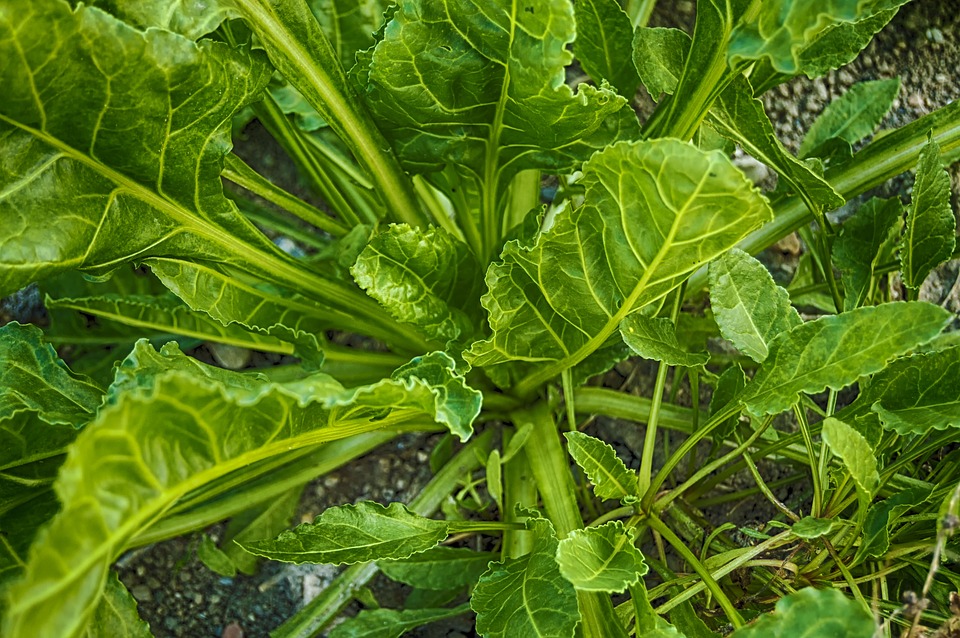
Here is my entry for today 22nd June2020Image courtesy of pixabay.com
SPOTTY SPINACH
Chef was inspecting the delivery of fresh vegetables to the kitchen at the rear doors
Jim Green was a smallholder who provided as much locally grown vegetables to the businesses and shops in the area as he could harvest.
‘Morning Jim! What have you brought for us today? I hope you remembered everything on my order.’
‘Yes Sir’ Jim replied. ‘I’ve got everything you ordered, luscious Lettuce, healthy Kale and some beautiful Cabbages. Oh! not forgetting the special Spinach you requested me to grow specially for your breakfast customers.’
‘Excellent Jim, let me just have a quick look. The Lettuces look wonderful, crisp and green, and the Kale look beautiful. Just a moment though the Spinach is full of spots.’
‘That’s because they’re special Sir, the spots give it a delicious flavour.’
Jenny Saunders was a star pupil at St Winifred’s school and she was a well thought of young lady by everyone in the whole school. She was an incredible mathematician who studied figures and always had her head in the clouds. It was Mrs, Wilkinson, the English teacher who gave Jenny the nickname of jiggly. Every time she pulled out her pencil case there would be a loud jingle as the coins jingled and jangled whenever the box was picked up. Jenny laughing always said it was her jiggle box everyone smiled at that and for the rest of her schooldays Jenny became known as Jiggly Jenny. One day she went missing from the school, nobody knew where she had disappeared, she just seemed to vanish. Mr Measures, the science teacher was incredibly worried, especially as they’d been working on the mathematical theory of invisibility.
Suddenly there was a jingle jiggly sound from behind the school book cupboard and Jenny appeared, rubbing her eyes.
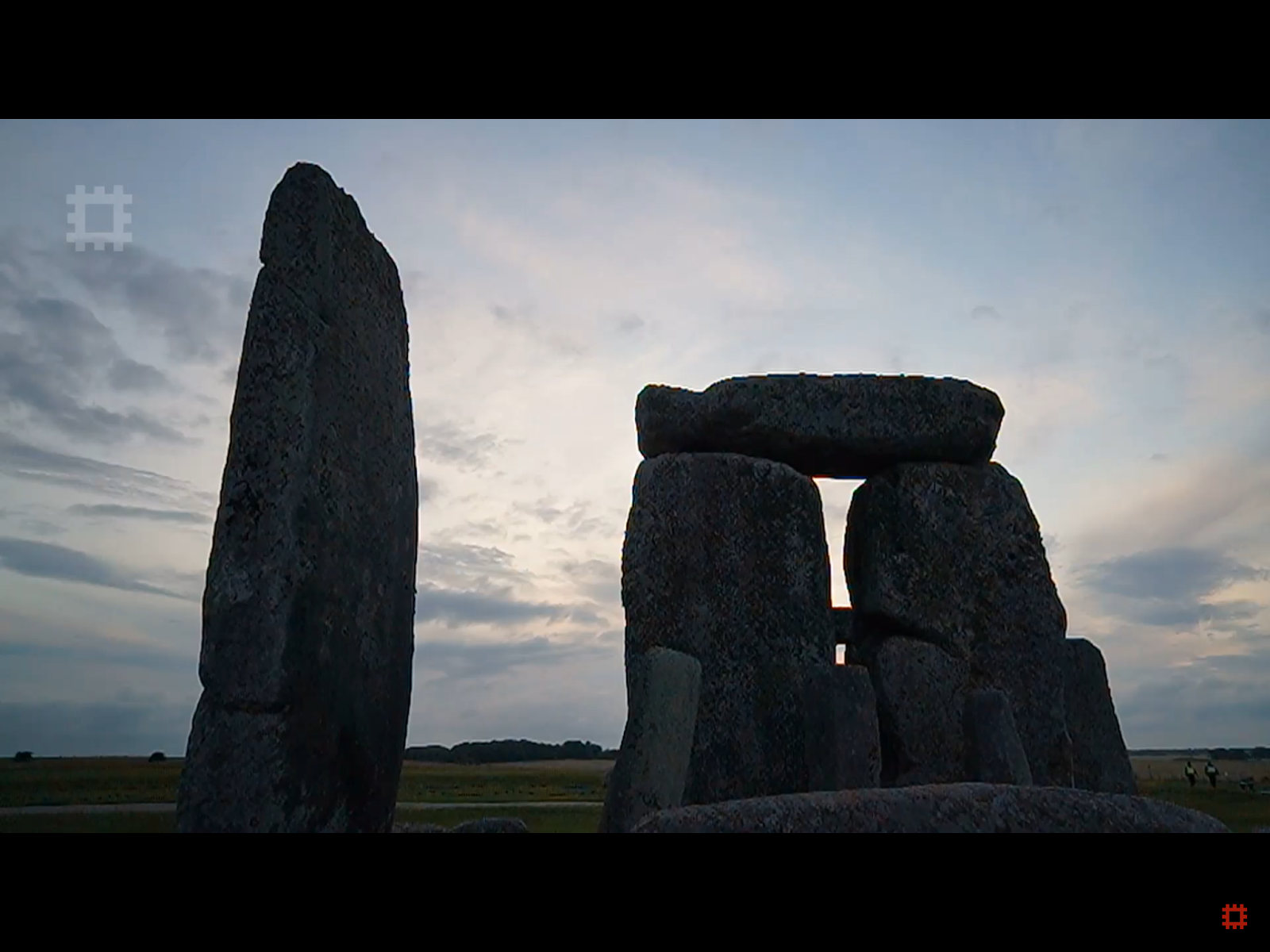
Image was a screenshot I took from the English Heritage live video.
SATURDAY 20th JUNE 2020 ~ BLOG POST
SUMMER SOLSTICE
by John Yeo
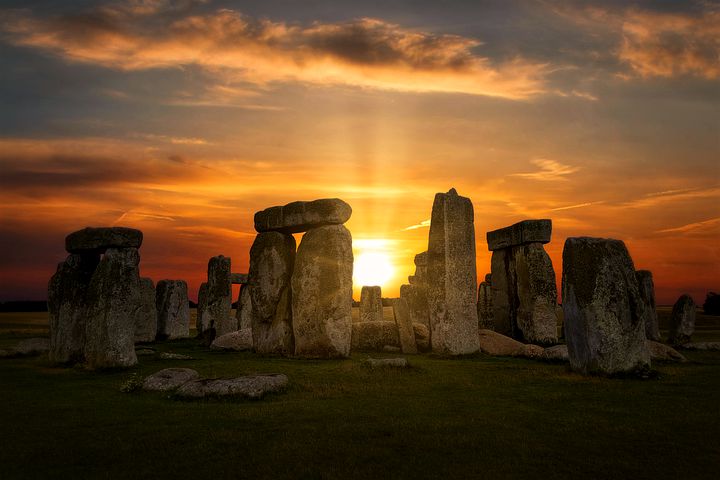
Today is Midsummer day and the celebration of the Summer Solstice at Stonehenge, in Wiltshire. I’ve never had the opportunity to enjoy the pleasure of experiencing this amazing sight in reality. To my delight, English Heritage announced they would be setting up a live stream to enable people to view and virtually celebrate the Solstice at Stonehenge. We tuned in to YouTube and set the live video stream going. At first it seemed to be something of an anticlimax. The sky above the iconic stones was quite cloudy at 21:10; sunset was predicted to be a 21:27. There was no commentary but the camera occasionally panned around the standing stones. At one angle the setting solstice sun was quite bright and obviously the view from the other side was almost black, full of interesting evening shadows. I remarked to Margaret that it would probably feel quite uncomfortable if you were there alone.
The wealth of mysterious legends and fables based around Stonehenge are enough to fill the culpable mind full of awesome dread of Stonehenge. The Druids are a religious sect who once used Stonehenge as a temple, in fact I believe the modern day equivalent Druids still use the ancient stones. The famous sacrificial stone is a highlight of every visit, although there is no direct evidence it was ever used for sacrifice.
The sunset was incredibly dark and obscured by a cloudy sky.
The sunrise in the morning will be at 04:52 and should certainly be more of a spectacle.
Sunday 21st June 2020
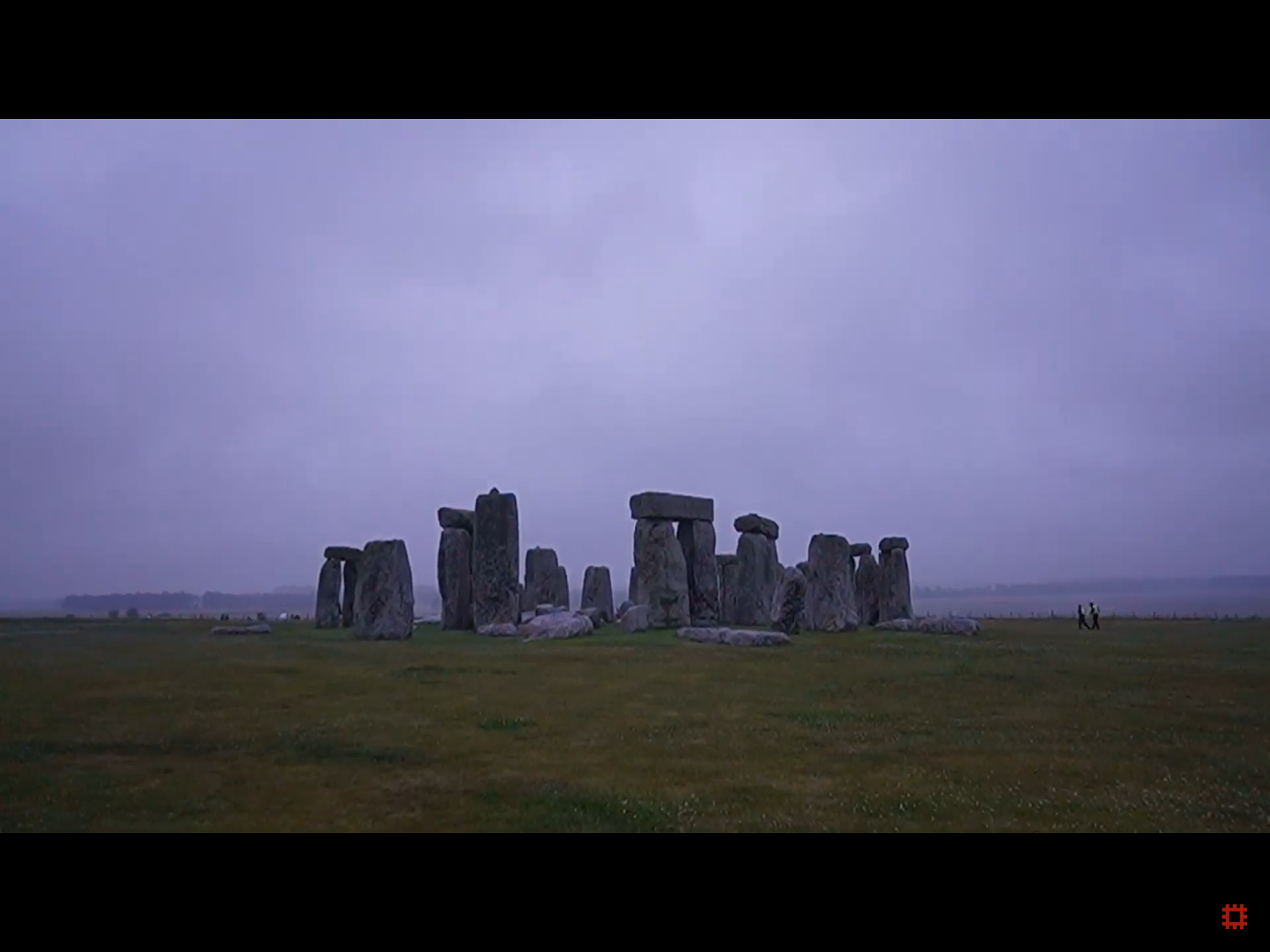
I woke up in time to view the live stream video of the sunrise over Stonehenge. The sun rose at 04:52 but unfortunately the sky was covered with thick clouds and the spectacular sunrise didn’t occur.
I snapped a screenshot from the live video. Sadly a gray dreary start.
HAPPY SOLSTICE!
Another screenshot of the unspectacular Summer Solstice sunrise.I downloaded this image from the internet to remind me of things that might have been.
Image from the net credited to the Financial Times.
FRIDAY 19th JUNE 2020 ~ BLOG POST
A SMALL ISLAND
by John Yeo
We watched a performance of ‘A Small Island,’ screened by the National Theatre. This is a play based on a novel by Andrea Levy, who sadly passed away from Cancer before she was able to see it.
This play is based on the Windrush scandal. A reflection of the time when many people from Jamaica in the West Indies arrived in England as citizens. Many of these people had earned their citizenship by fighting for their colonial Mother country of England during the Second World War. Jamaica was a colony of the British Empire and this gave these people the right to take up citizenship in Britain.
The play focussed on a few unfortunate people who had arrived in England from their homes in Jamaica to live and work.
The play started in the West Indies by highlighting the shortage of employment and the frequent hurricanes and tropical storms that afflict Jamaica. England became something of a paradise, where jobs and houses were freely available and the expectations of these people’s dreams were clearly evident.
Some had dreams of taking up professional careers or joining the forces when they reached England.
The play focused partly on one couple. The man Gilbert, joined the Air Force and had plans to study to become a lawyer. The scene when he was interviewed for his career was illuminating as he was promised a high position. This never materialised as he was immediately placed in a menial position as a driver. The first example of the huge letdown most of these people would experience.
A young light skinned, half caste lady, named Hortense, wanted to go to England but single young women were discouraged from applying and she was at her wits end. The only way she could get accepted was to go through a marriage ceremony with her friend Gilbert who would then send for her as his wife. Hortense was a teacher and she planned to continue her teaching profession in England.
Meanwhile Gilbert had settled in England and after he had left the Air Force, he desperately tried to get a job. He had little success, due to the overt racism of the times. He was subjected to some terrible racial abuse during his employment and was attacked at his place of work.
He tried everywhere to secure some comfortable accommodation to rent but once again ingrained racism reared its ugly head with landlords refusing to let their properties to black people. He finally managed to rent a shabby one-roomed bedsit from a landlady named, Queenie, who desperately needed the income from a few rooms in her house and she was happy to accept black and coloured people.
Eventually Gilbert sent for Hortense, who arrived and was shocked to discover the living conditions in the bedsit.
The racism and the trials and tribulations this couple went through were harrowing to say the least. This story is riddled with some obnoxious scenes of the horrible challenges facing black people in England during this period.
Queenie, the landlady gives birth to a black child, the result of a liaison with a former tenant. Meanwhile her husband had unexpectedly returned from a forces posting in India and is revealed to be an extreme racist. He demands that Gilbert and Hortense get out of his house immediately.
Gilbert and Hortense find somewhere else to live and the play finishes with Queenie, the landlady, begging them to take her black child with them as she believed this would be the only way her child could ever expect to be accepted into British society.
I was vaguely aware of the so-called Windrush scandal, when thousands of black people arrived in England looking for a better life. This eye-opening play revealed the shocking depths of racism that was ingrained throughout society at that period in time. I’m sure there are residues of these cruel, unfortunate, unforgivable attitudes running through all strands of our society still. I think by screening this play the National Theatre has done a powerful service to the Black Lives Matter campaign.
Write a piece describing the devastating effect of the Coronavirus Covid19 on a single family.
DEVASTATION
by John Yeo
Jose was a successful hotelier, his wife Maria was his backbone and his inspiration. They had built up La Casa del Puenta. The hotel was excellent and attracted many tourists from around the world. They had a reputation of being the first hotel in Spain to have been awarded a certificate of excellence by Jules Fargo, a well known travel experience organisation that could make or break the future of a hotel.
It was during the high season that the rumours of something nasty began swirling around the media waves. It was Maria who became worried first, her sister had suddenly become seriously ill and was in a large hospital in the city.
‘Jose,’ she said, out of the blue one day, ‘I have to take the day off tomorrow to go and visit Consuella in hospital.’
Without hesitation, Jose said. ‘Of course darling, I will manage. You have built up some wonderfully adaptable staff to cover for you.’
‘Thanks Jose, I will give her your love and take a few things to ease her stay while she’s in hospital. I don’t know quite what’s wrong with her exactly but I’m sure she will get over it.’
Little did either of them realise what life-changing events were about to happen that would have untold repercussions on their comfortable everyday life.
Later that day the news broke of the serious infectious disease that was sweeping through Spain. The news bulletins on the media were frantically warning people not to travel. To stay put, and keep themselves isolated from everyone else. The hotel emptied over the course of that single day, as guests checked out. The hotel reception desk telephones were constantly busy with people ringing to cancel their bookings.
Some members of the hotel staff immediately packed up and left, to be with their homes and families, contrary to the official advice. Suddenly everyone who Jose and Maria came into contact with was wearing a medical mask. Maria had instantly dropped her plan to visit her sister in the city, as the significance of what was happening became clearer.
The food deliveries suddenly dried up except for a few local farmers who dropped off their produce directly to the hotel.
Information began to become clear, the country was in the grip of a worldwide pandemic. A deadly disease was sweeping the world and had reached Spain. The advice was to stay put and not go outside.
Over the next few days the hotel became like a large hollow shell, the swimming pools were deserted with the bars and the restaurant permanently empty. None of the loyal hotel staff remained as they had slowly fled home to their families, contrary to the government advice. Jose and Maria kept to their suite. The freezers in the kitchens were full of frozen food, and the wine cellar was reasonably stocked. However they had to spend a long time just destroying the fresh food and filling the bins.
Horror-stricken, they had kept up with the news of the deadly outbreak and as the body counts grew on a daily basis they became increasingly frightened.
One positive thing that was happening was the continued visits of Farmer Lorenzo, bringing fresh milk, eggs and bread and most importantly local news.
Apparently many local people were sick and there was much sadness and the streets were deserted wherever you went.
Lorenzo said, ‘I dare not walk on the streets of town as some young men are breaking into local shops to steal food.’
Maria replied, ‘Oh no! Where are the police?’
‘The police are forced to keep the peace, but there is a lot of sympathy for the hungry people. Food stocks are running short, due to stockpiling by the wealthy.’ replied Lorenzo.
Two weeks later when Lorenzo arrived with his fresh produce he found the hotel deserted. The local postman shouted from his van parked across the road. They are both in the general hospital, seriously ill with this evil virus. Lorenzo couldn’t control the tears that formed in his dark brown eyes.
Today I will focus on our Asparagus beds on the allotment The photograph above was snapped earlier today after I had spent a couple of hours weeding and manuring the beds with compost.
The compost I’ve used is a mixture of well-rotted horse manure and some of our waste kitchen vegetable matter. There’s also a good portion of grass cuttings and some shredded paper. A good combination of nutrition for these greedy feeders. Over the past 25 years of growing Asparagus on allotments, I find this is a potent mixture indeed. In my opinion it’s wise to feed the plants twice a year. I choose to feed them in the early Spring and again when I’ve finished cutting the spears.
The nutritional benefits of eating Asparagus are many and this makes the effort of persevering with growing these attractive plants, worthwhile. Asparagus is a low calorie vegetable that is an excellent source of essential vitamins and minerals especially folate and vitamins A C and K.
The cutting season for me lasts about eight weeks, from the moment the spears first appear in the middle of April until the 15 June. This cut-off date is extremely important as the spears have time to develop into the attractive Asparagus fern. The ferns soak up the sunshine during the remainder of the Summer, which swells the roots to encourage a good crop of Asparagus spears the following year.
The most important threat to Asparagus is an infestation of the dreaded Asparagus beetle that lays its eggs on the emerging spears. They eat the spears as they lay their eggs, they also excrete a substance that is unsightly on the spears and the plants. The larvae eat the centres of the red Asparagus seeds and strip the leaves of the fern.
Over the years I find frequent cutting during the harvest season keeps this pest from laying eggs in the early part of the season. However the danger of infestation for me lies in the period directly after I’ve stopped harvesting, when the spears first appear before they transform into the impressive ferns. On the neighbouring allotment gardens there are many small patches of Asparagus plants growing and as the Asparagus beetle is a flying pest there’s a good chance of infestation from these sources. The only organic cure for the Asparagus beetle appears to be physically plucking the beetles and their eggs off the plants by hand and immersing them in soapy water.
At the end of the season the ferns turn yellow. This is the time to burn them, as opposed to composting them, to prevent any further infestation of the Asparagus beetle.
When first planting Asparagus crowns its best not to cut and harvest the spears for the first two years. Once they’re established Asparagus plants will continue to crop for over 20 years, if they are well looked after.
‘In mythology, Asparagus has been renowned since ancient times both as an aphrodisiac and medicinally, for its healing properties. … With its active compound asparagin stimulating the kidneys, bladder and liver, Asparagus is a powerful detoxifier.’


 THE WINDOW TO WALANCHA






 TUESDAY 16th JUNE 2020 ~ BLOG POST


 johnandmargaret1607