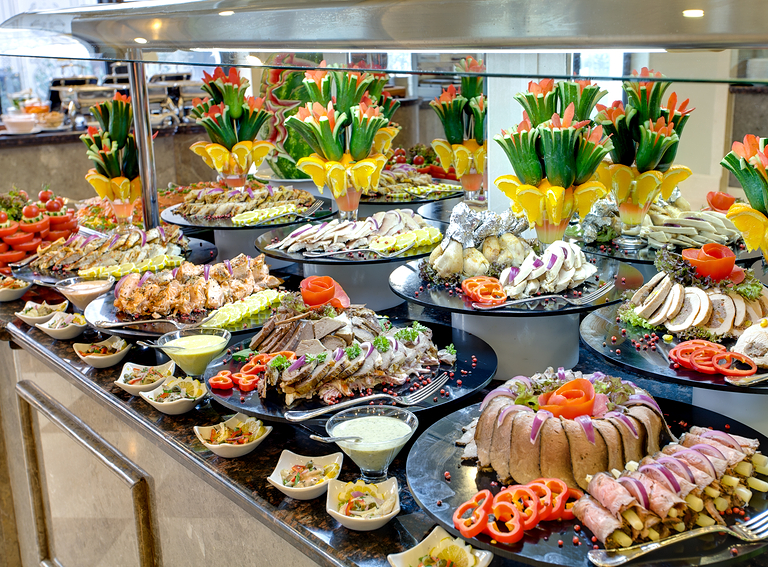
For today’s prompt, take the phrase “After (blank),” replace the blank with a word or phrase, make the new phrase the title of your poem, and then, write your poem. Possible titles include: “After Dinner,” “After You,” “After Hours,” and/or “After I Finish Writing This Poem.”
Saturday 6th April 2019
DAY SIX
Robert Lee Brewer’s Poem-A-Day on Writers Digest
Image Courtesy of pixabay.com
AFTER THE SEED WAS PLANTED
by John Yeo
Was it a speck of dust that had flipped into an empty packet? No, laughed my chief garden advisor. Looking a wee bit nonplussed, ‘That is a potential Petunia plant Searching for the right conditions.’ Although I was still none the wiser I prepared a natural environment.
After the seed was planted
Moisture was added to the mix
Of enriched potting compost,
The tiny seed began to get started.
Change developed slowly but surely
As metamorphosis began,
Two tiny leaves unfurled in the process,
A new plant life had begun its story.
For today’s prompt, write a stolen poem. And no, don’t steal anyone’s poem! But you can write about doing such a thing. Or stealing hearts, stealing time, stealing minds.
Image courtesy of pixabay.com
HOPE
by John Yeo
My child has left and gone to work
I lie here alone with my thoughts,
I will not stir, I will not move, I am in pain.
My little girl Hope is twelve years old
Takes care of everything for us both,
Since her mother left us alone again.
When the sadness descended on me.
Hope gets up at dawn to prepare our meal,
Fetches water to wash the clothes,
She cleans the room and takes good care of me.
Hope hides when visitors come to the door
We both need her here to be free, with me.
Hope works in a sweatshop making clothes
for the fat people over the sea.
As I lie here alone the rats appear,
They scuffle around then leave, foodless.
When the landlord calls to collect the rent,
I have noticed the way he looks at my Hope
As she pays him from her paltry earnings.
Mischievous, malevolent lascivious looks
That bode no good for my child.
School for Hope was a couple of years
In a shack for a classroom until;
Her mother left us and Hope went to work.
She has no time for friends or parties
New clothes or games and playing sport,
No time for laughter or enjoying a book.
Hope is too busy working to stop and look.
Selfishly I lie here and let things be.
I know I can never let Hope be free
We are tied to each other irrecoverably,
It is too late for all but my sympathy.
I know I’m a thief and I can clearly see
I have stolen a precious commodity.
The innocent freedom of childhood.
For today’s prompt, pick a painter, make him or her the title of your poem, and then, write your poem. Possible painters include Salvador Dali, Frida Kahlo, or Pablo Picasso. Of course, you don’t have to go with the big names.
Image courtesy of pixabay.com
Edvard Munch
By John Yeo
Full of inward fascination,
With an outer gloss of trepidation,
I was entranced by a painting.
A face full of fear and suffering
Shocked beyond all reasoning
With a sad mentality unraveling.
With my curiosity blindly aroused
I couldn’t help thinking out loud.
‘Whoever actually painted this
Must have also suffered painfully’
Edvard Munch a Norwegian artist
Created this work empathetically.
‘The Scream’ an iconic painting.
Reflected art as inward suffering.
Revealed by the artists inward
fear of his own tortured soul.
A legacy of a creative journey toward.
A mirror of beautiful painful love.
For today’s prompt, write an animal poem. The poem could be about an animal. Or it could just mention an animal in passing. Or include an animal in your title and fail to mention the animal once in your poem. Your poem, your rules.
Image courtesy of Pixabay.com
TECHNOLOGY
by John Yeo
If animals could communicate clearly
And we could understand their thought,
If the Lions could talk to the Lambs
Would the thought processes differ really,
Or give answers to the problems sought
If Bears could converse with Orang-Utans?
How could we eat creatures who question
Our motives for making a meal of them,
Without giving their feelings a thought?
Communication would aid the digestion
Of plants and seeds and bugs. What then?
If Chickens and Turkeys were able to talk.
If Horses became clever with logistics.
Or Pigs preached the wisdom of the ages
Ants could help to govern all smoothly
Monkeys could be studying simplistics
While Ducks would be veritable sages
Humans would be lost in technology.
People have lost the talking habit
Most of them are lost in their phones
People no longer look up and around
No time to chat to a passing Rabbit.
Bees plainly buzz these walking Drones
Who shuffle by without making a sound.
And today is actually a special day: Two for Tuesday! Pick one prompt or use both…your choice!
Day Two
Robert Lee Brewer’s Poem-A-Day on Writers Digest
Write a worst case poem. What’s the worst that could happen?
Write a best case poem. Take the worst and reverse it!
WORST CASE
by John Yeo
I’m not kidding you this is actual truth.
We were waiting by the airport carousel
Waiting for our luggage to hove into view.
Tommy our youngest nearly jumped through the roof.
There’s our case Mum! I know it so well
It’s really old and tatty and a muddy blue.
It wasn’t our suitcase passing through. A smart lady stepped forward and blushed. Then grabbed her case from the carousel. Tommy piped up to apologise, right on cue. Although suddenly conversation was hushed. Sorry I thought I would be able to tell. When I saw the worst case on the carousel.
This is a response to Robert Lee Brewers Poem a day for the month of April 2019.
Day One.
For today’s prompt, write a morning poem. Maybe you’re a morning person, maybe not. Your poem can be about a morning. Or it can be set during the morning. And those who’ve done this before probably already know that I have no problem with you interpreting this as a “mourning poem.”
BIRDSONG
By John Yeo
Dawn breaks on a mist dampy day
Frost fills the air and colours the parkway,
January shadows, loom and recede
Not a sound to shatter the icy mead.
~
Then, a deep-throated sonata from a nearby bush
A fusion of birdsong to break the hush
Rising and falling to colour the morning
A Blackbird song signals a new day dawning.
~
The rich fluty quality, the tuneful sound
Resounds and is heard for miles around
This natural symphony is a beautiful warning,
A territorial stakeout, he is seriously performing.
~
He whistles and warbles sweet sound in profusion,
Smooth trilling notes with a melody in perfect fusion,
My eyes narrow in the cold morning light
To catch sight of the songster before he takes flight.
~
The silence seems melodic and richly outspoken,
Then, the smooth flow of notes is suddenly broken,
A cry of alarm sounds, wings flap with a whir
The Blackbird flies from the danger of feathers or fur.
~
His natural defense against Man, Feline or Hawk,
Against the danger of attack or predatory stalk,
He will surely return when the threat is gone,
Safety beckons and he will take up his song.
~
A melody of love and careful protection
Of his territory, his nest after careful selection.
The challenge is to write a story using 200 words or less based, on the photo prompt.
Photo Credit: Susan Spaulding
CYCLING TO THE CENTRE OF THE WORLD
by John Yeo
If I hire two cycles we can enjoy a sightseeing extravaganza for two. The weather is set to be dry and fine and we can beat the traffic, just me and you. There are no high winds forecast to spoil things, as we take off on our exciting ride. Along the grand historic river Thames, a sightseeing tour along the riverside. The London Eye circles it’s way on the horizon, overseeing a panoramic view Of the historic city, monuments and famous attractions old and new. There are many cycle paths and cycling routes nearby but the towpath is closed. The historic Globe Theatre is worth a look as we meander along at our own speed. The Tate Modern gallery, a work of art in restoration, is an interesting sight to see. Our journey takes us along traffic-free paths allowing us some time to stop. My tyre got punctured near Borough Market within sight of a riverside pub. We stopped for lunch and explored the stalls selling tasty cheeses and meats. A kindly patron in the pub helped us get on our way by changing a tyre for free. We raced each other to our final destination. The Greenwich Observatory. We parked the bikes and stood astride the historic Meridian line, where east meets west. We took our place at the centre of the world.
This week in honor of St. Patrick’s Day, Pegman takes us to Rams Island, an island on a lake in Northern Ireland. Though I picked a remote spot, you’re welcome to choose a more urban location anywhere in Northern Ireland.
Your mission is to write up to 150 words inspired by the prompt. Once your piece is polished, share it with others using the Linkup below.
Ram’s Island, Northern Ireland | Darran McDonnell, Google Maps
NO SMOKE WITHOUT FIRE
by John Yeo
Billy and Pat, an adventurous pair of treasure hunting fanatics were chortling away at what they had discovered inside the chimney. An incredibly old and extremely beautiful locked box. This box was bound with rusted, salt-encrusted metal bands that were so corroded they were almost crumbling away. Pat gingerly rubbed the top of the box to reveal the hairy smiling face of a strange horned man. Intricate carving and strange writing with a floral emblem surrounded this kindly face.
‘We’ve got something good here Billy.’
‘Aye Pat! We’ll get some good money for this!’
Pat suddenly grabbed a rock and smashed the metal bands.
Billy was shocked. ’What did you do that for?’
‘To see what’s inside, might be gold or jewels,’ replied Pat,
Slowly Billy raised the tight-fitting lid. Dense smoke filled the air. Surrounded by ethereal music the two treasure hunters passed out. The box was gone?
This is my original rough take on the prompt before I had to rip it down to 150 words
Greenland | Johan van den Bos, Google Maps
Welcome to What Pegman Saw, a 150-word weekly writing prompt inspired by the photos found on Google Maps. This week Pegman is still wandering around in the Northern Hemisphere. However, this time Pegman visits Greenland for the first time
THE GARDENER
by John Yeo
It had been a good year for old Tekkeitsertok, in his garden on the side of a sheltered hill, located just outside of Nuuk, the largest town in Greenland. This year had been warm, the lake was full of crystal clear water and his plants were thriving.
Tekkeitsertok was expecting visitors his two grandchildren, Pana and Arnaq were on the way.
With a dual yell of delight, two young tornadoes rushed up suddenly and threw their arms around him.
‘Hi, Grandad!’ Shouted Arnaq, a sweet looking young lady, and the older of the two.
Pana, eighteen months her junior was a sturdy young man of thirteen who would hunt, shoot and fish with the older men, grinned broadly. ‘We want to see the miracle of your growth Grandad, will you teach us how you can produce such nice food from those tiny seeds?’
‘Of course, children, but we will need longer than a day.’ replied the weary-looking elderly man.
Suddenly Pana said, ‘Grandad, I have a question.’
‘What is it Pana?’
‘Grandad, your name is Tekkeitsertok, after the god of hunting, yet you are here growing vegetables. What happened?’
Arnaq, his older sister caught her breath and shook her brother, ‘Don’t ask stupid questions Pana!’
Tekkeitsertok smiled and said, ‘It’s alright young lady, I will enlighten you both. I have killed many animals in my life, for warm clothing, for meat and even for fashion furs. I have seen many things. One day I was trapped under an ice floe, when a pure white wolf sunk his teeth into my, now useless left arm and dragged me away. I passed out. Sometime later, I came back to life and I remember a deep growling voice that repeatedly said the killing must stop.’
I then came around to find myself on a sled pulled by five white huskies with eyes that seemed to say. “Remember!”
Since that day I have never killed again except when hunger drove me to kill for food.’
Both children were silent as they watched their Grandad handle his spade with one hand to till the soil.
Tekkeitsertok’s garden was located near Nuuk, the largest town in Greenland.
Tekkeitsertok, had visitors, Pana and Arnaq.
‘Hi, Grandad!’ Shouted Arnaq, the older of the two.
Pana, said, ‘Teach us how you produce food from those tiny seeds?’
‘We will need longer than a day.’ replied Tekkeitsertok.
‘Grandad, your name is Tekkeitsertok, after the god of hunting, yet you are here growing vegetables. What happened?’
Tekkeitsertok said. ‘I had killed many animals. One day I was trapped under an ice floe when a white wolf sunk his teeth into my arm and dragged me away. I passed out and a deep growling voice said, ‘The killing must stop.’ I found myself on a sled pulled by five white huskies with eyes that seemed to say, “Remember!”
I have never killed again.’
Both children watched their Grandad, handle his spade with one hand to till the soil. The lessons had begun.
Welcome to What Pegman Saw, a 150-word weekly writing prompt inspired by the photos found on Google Maps. This week Pegman is still wandering around in the Northern Hemisphere. However this time Pegman visits Greenland for the first time.
Greenland | Johan van den Bos, Google Maps
THE GARDENER
by John Yeo
Tekkeitsertok’s garden was located near Nuuk, the largest town in Greenland. Tekkeitsertok, had visitors, Pana and Arnaq.
‘Hi, Grandad!’ Shouted Arnaq, the older of the two.
Pana, said, ‘Teach us how you produce food from those tiny seeds?’
‘We will need longer than a day.’ replied Tekkeitsertok.
‘Grandad, your name is Tekkeitsertok, after the god of hunting, yet you are here growing vegetables. What happened?’
Tekkeitsertok said. ‘I had killed many animals. One day I was trapped under an ice floe when a white wolf sunk his teeth into my arm and dragged me away. I passed out and a deep growling voice said, ‘The killing must stop.’ I found myself on a sled pulled by five white huskies with eyes that seemed to say, “Remember!”
I have never killed again.’
Both children watched their Grandad, handle his spade with one hand to till the soil. The lessons had begun.