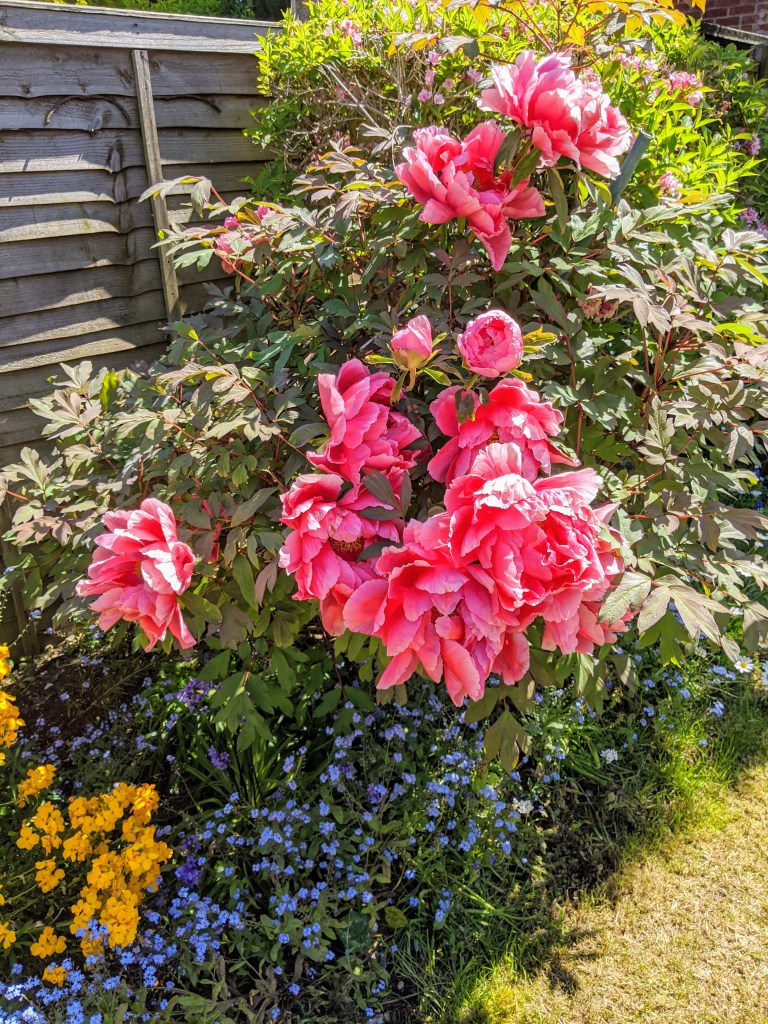
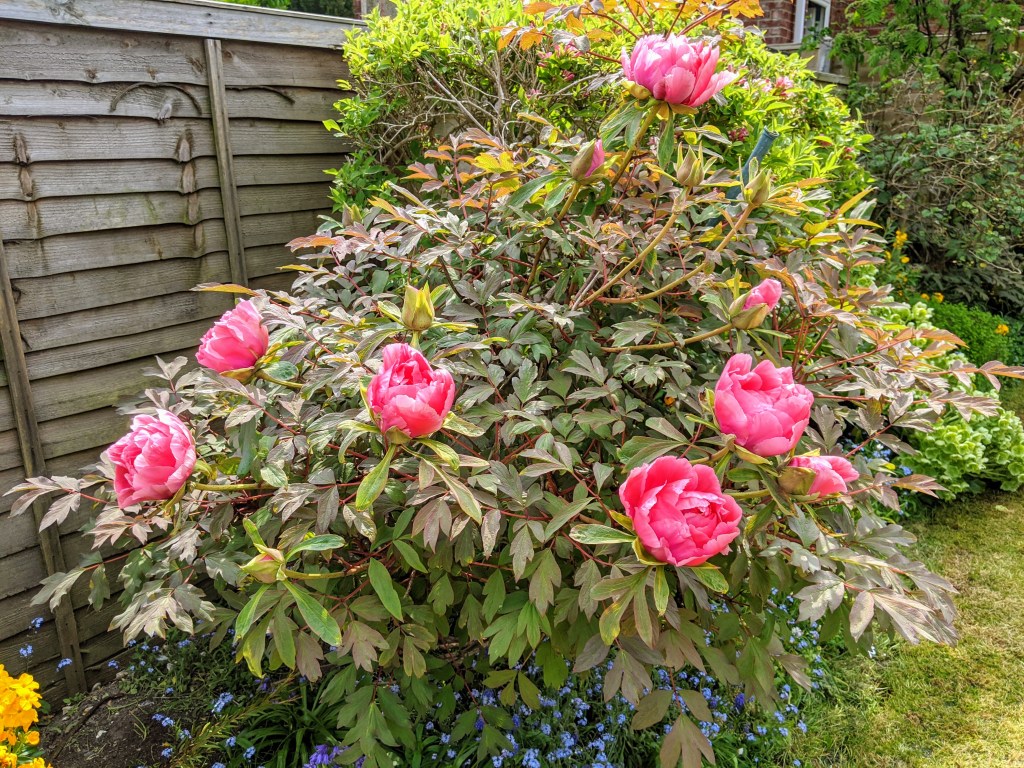
Just as a cheerful change from the depressing to the refreshing. Another feast for the eyes. Here is one of our Tree Peony shrubs in full bloom. HAPPY THURSDAY to all. 🙂🙂🎎☮️❤️
Just as a cheerful change from the depressing to the refreshing. Another feast for the eyes. Here is one of our Tree Peony shrubs in full bloom. HAPPY THURSDAY to all. 🙂🙂🎎☮️❤️
A Lockdown birthday
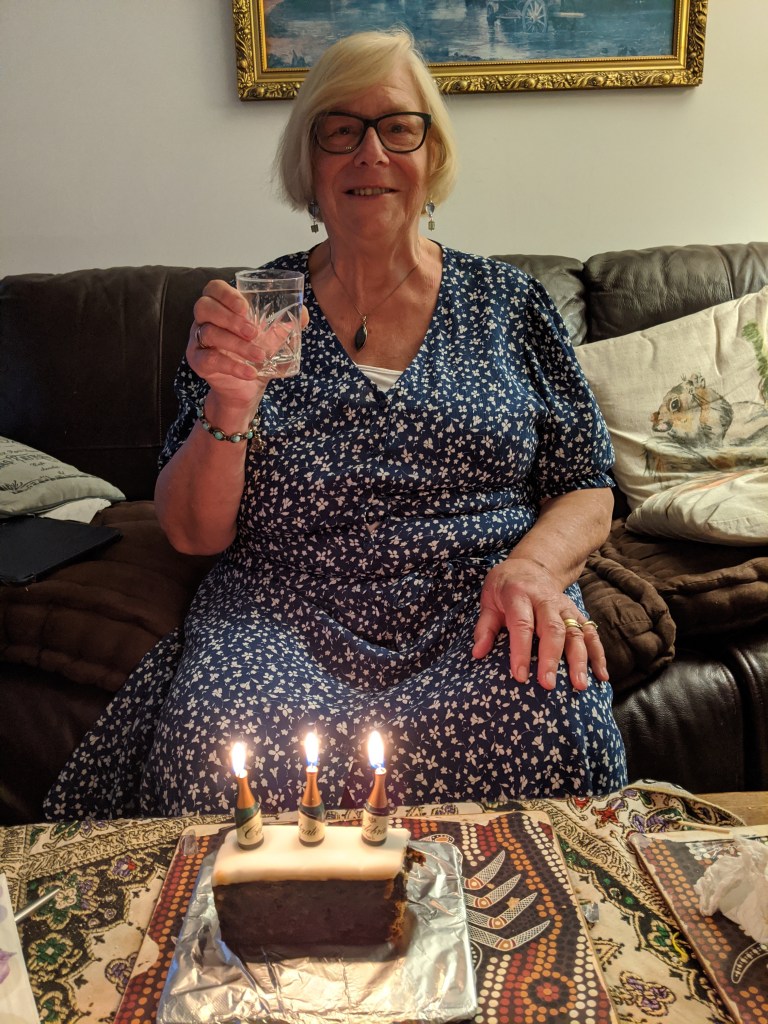
This must have been the strangest birthday Margaret has ever celebrated. Just the two of us enjoyed her special day, as we are self isolated and locked down. She had some lovely calls from our friends and thanks to technology, we were able to chat to our family on Skype and Messenger. We took a 15 minute walk in the sunshine to the allotment for our daily exercise, where we watered our seedlings.
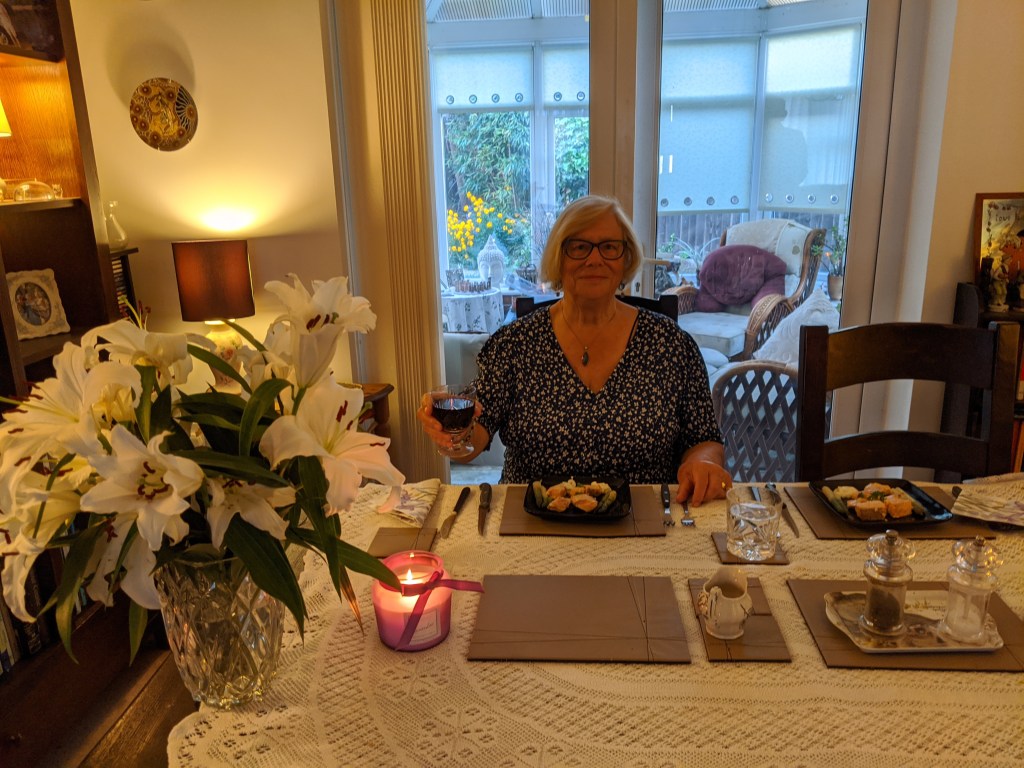
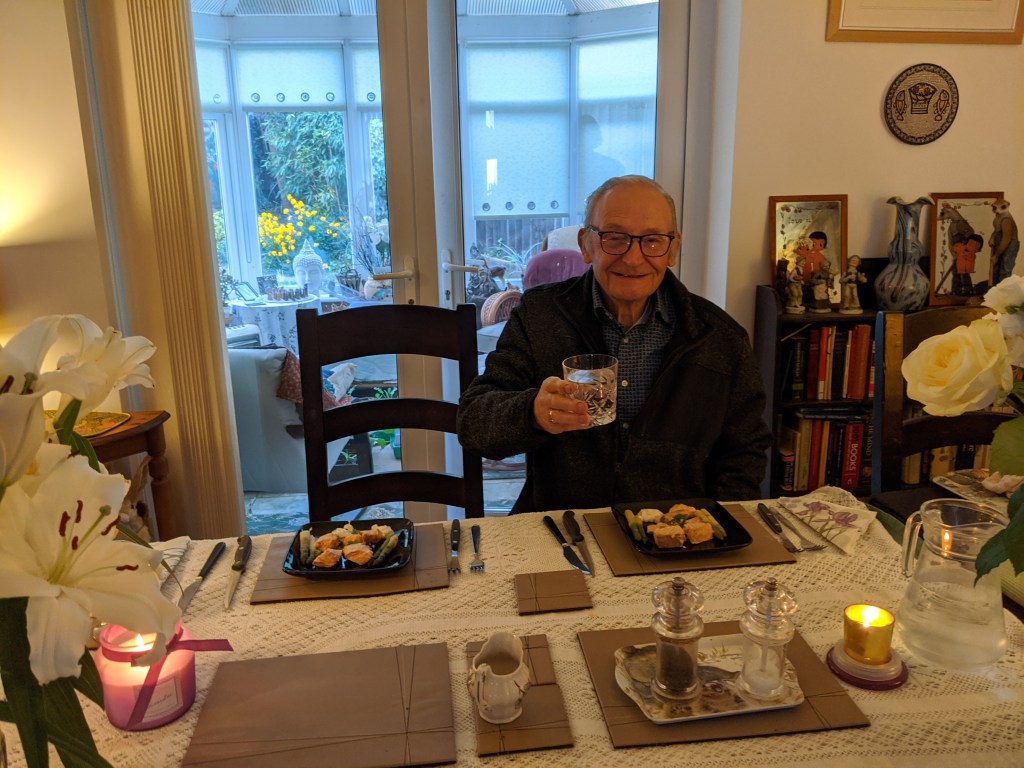
We decided to have a special birthday dinner at home. We were unable to find any local takeaway delivery service that operates on a Monday. Margaret prepared a delicious meal at home and we set the table with candles and flowers she had had presented to her by our daughter, Helen. There was also wine and chocolates dips and crisps from a food hamper provided by our daughter Liz. We sat and enjoyed the close of a special day for the birthday of a special lady.
FLAMINGOS
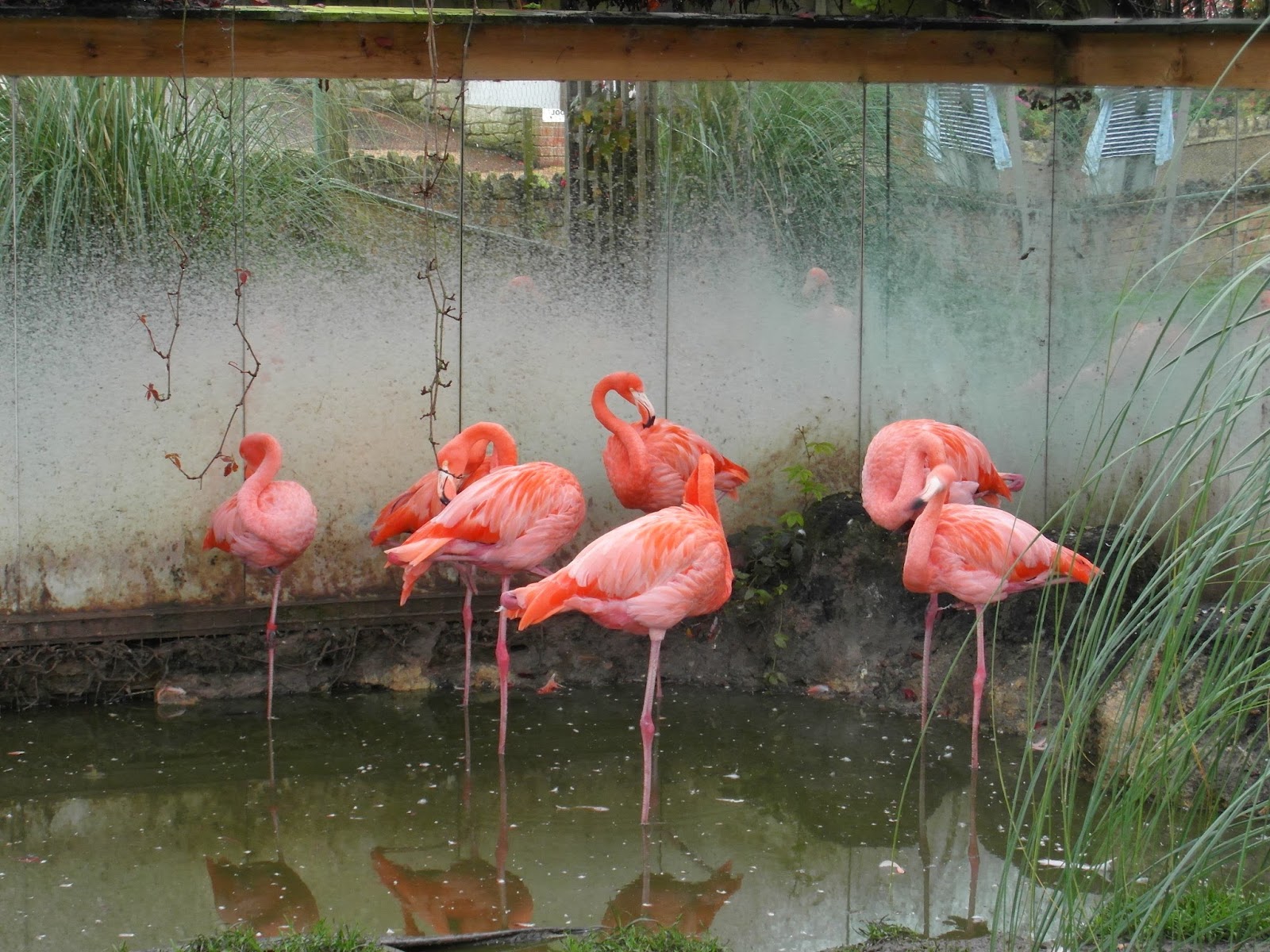
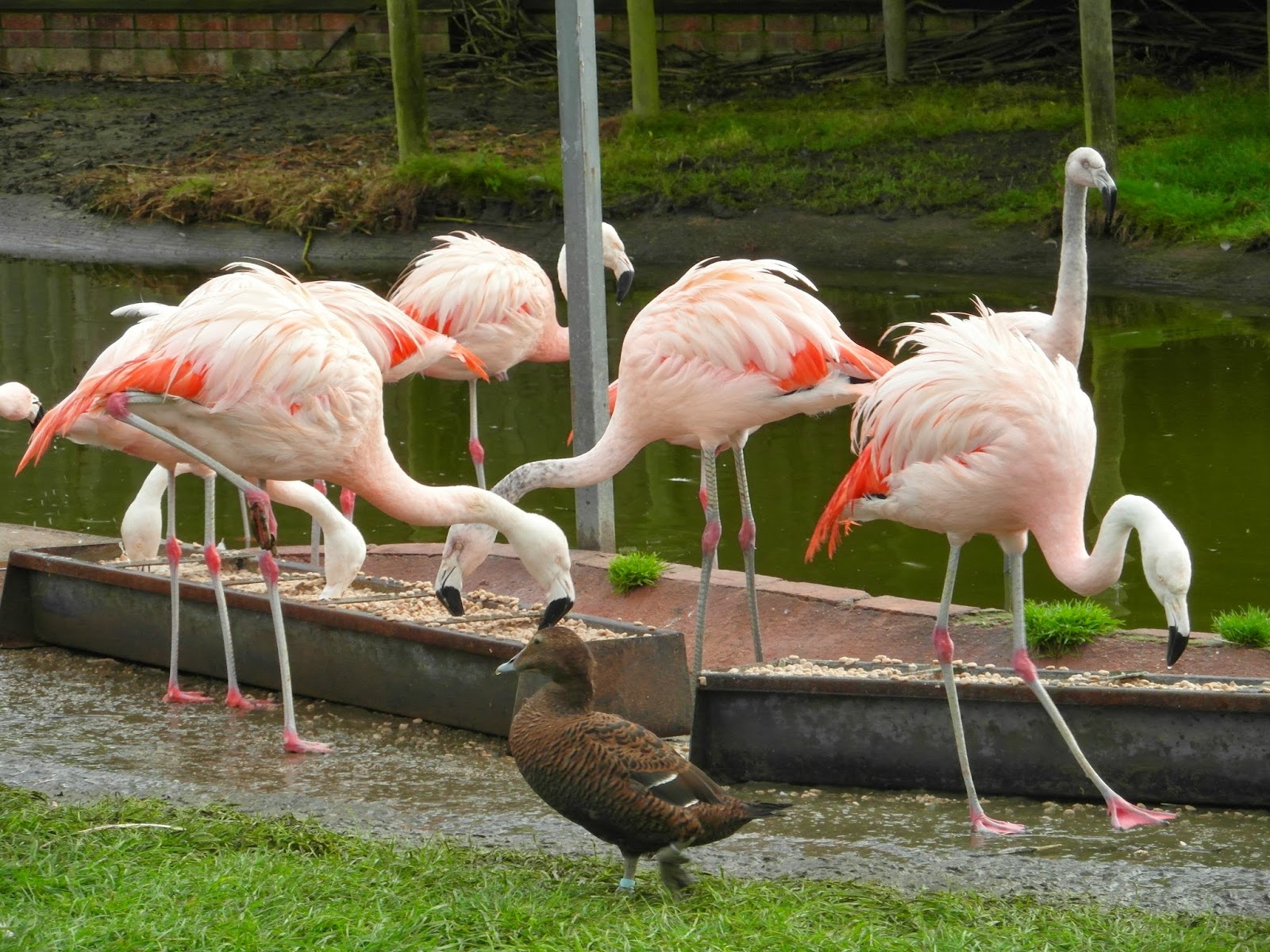
Six years ago, Margaret and I journeyed to the Isle of Wight, where we visited the wonderful Seaview Wildlife Centre. Sadly during November 2015, this interesting wildlife attraction closed down, due to problems with legislation. We were fortunate to be able to act as keepers for the day in 2014, which enabled us to help to feed and take care of the animals and birds for a single day. Although this involved feeding a variety of birds and animals, including penguins and wallabies, I intend to focus on the spectacular pink flamingos.

I found these interesting facts concerning flamingos on the internet. Mainly from the National Geographic magazine.
Greater flamingos live and feed in groups called flocks or colonies. They find safety in numbers, which helps to protect individual birds from predators while their heads are down in the mud.
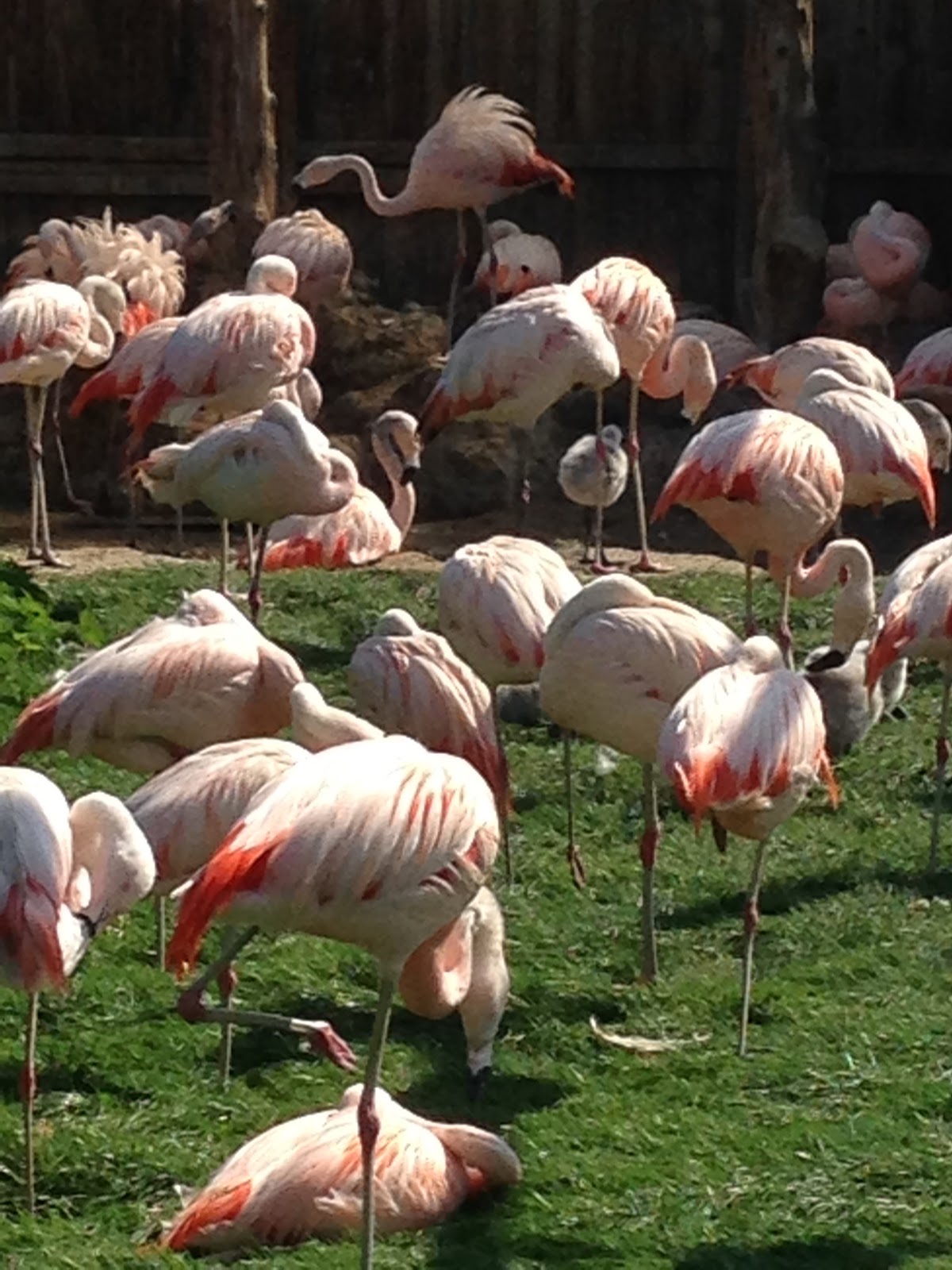
The pink colour of flamingos is summed up by the phrase, “You are what you eat” This holds more truth than it might for humans. The bright pink color of flamingos comes from beta carotene, a red-orange pigment that’s found in high quantities within the algae, larvae, and brine shrimp that flamingos eat in their wetland environment.
Flamingos stand on one leg because it’s physiologically easier for them to do so. The way their legs work means they can rest all of their weight on one side without having to use their muscles to maintain balance.
It is thought that the legend of the rising of the Phoenix was actually based on a bright pink flamingo taking flight.
Wikipedia has a large fount of facts about these spectacular birds and it is well worth a visit to read up on the lifestyle of these interesting birds. There are several sites that deal with the myths and legends concerning flamingos I may collate and explore those facts in another blog post.
Margaret and I enjoyed our visit where we were to get close enough to the resident flamingos to enable us to take these interesting photographs.
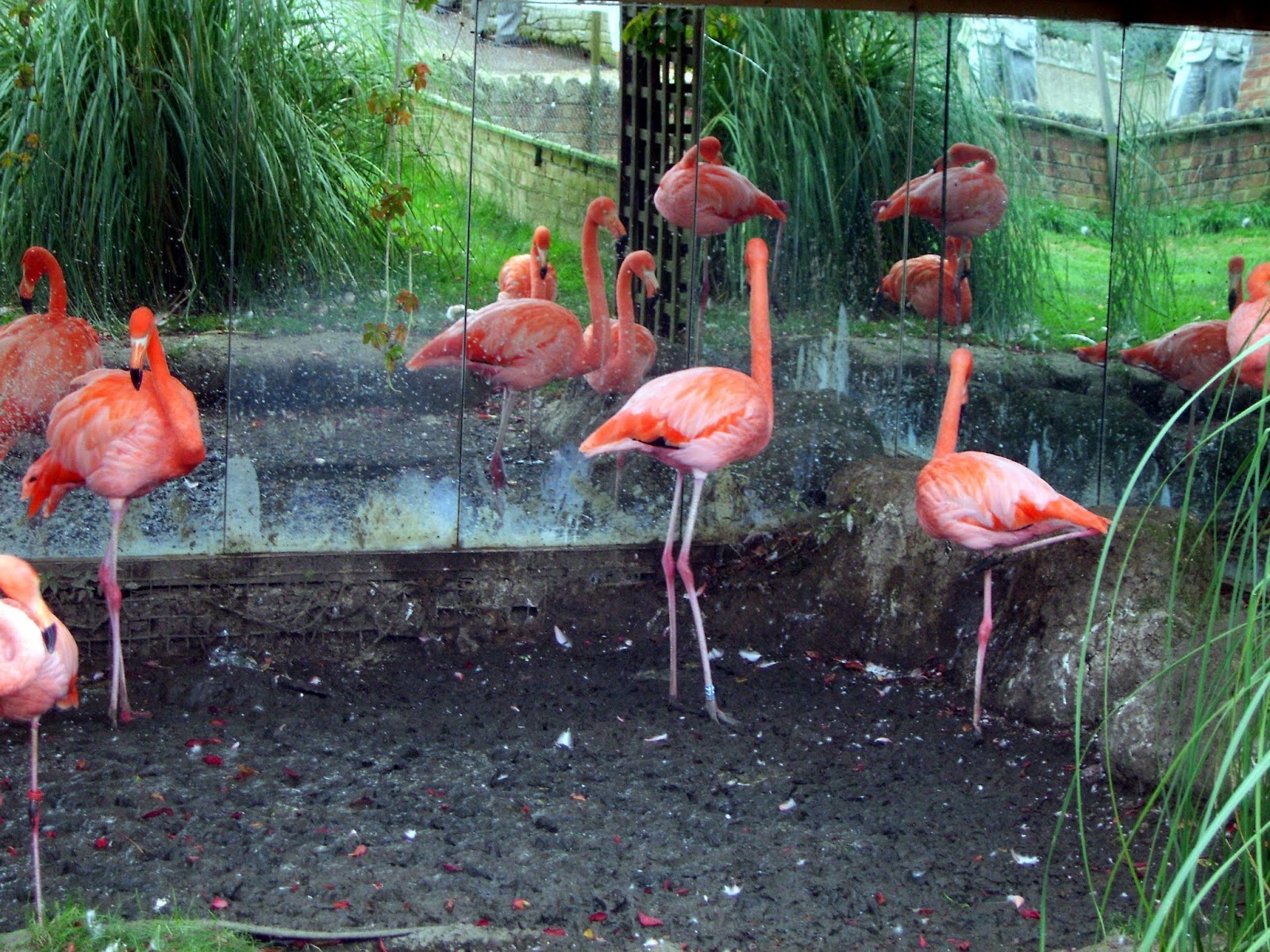
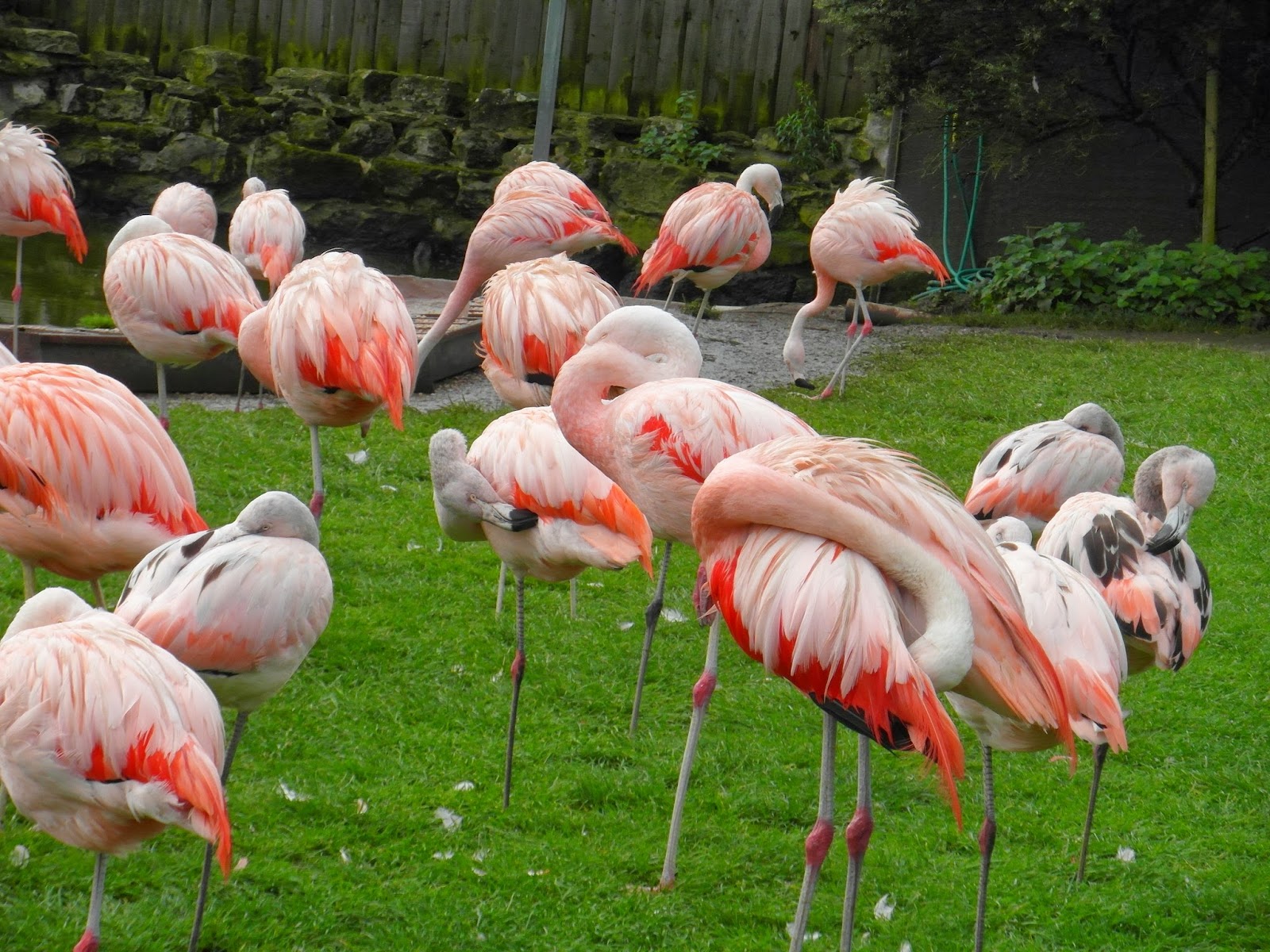
© Written by John Yeo all rights reserved.
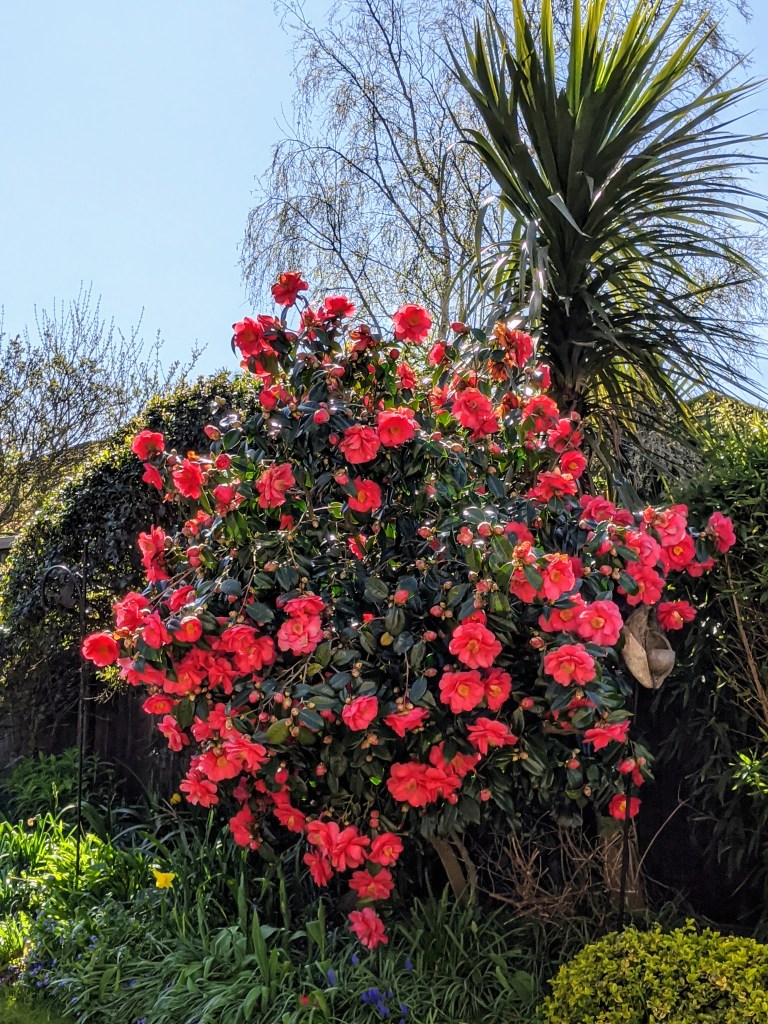
The first of the big flowers to burst into bloom in our relatively small garden is this extremely attractive Camelia. We have nurtured and taken care of this extraordinary shrub for the last fifteen years. Buds are visible all over the branches in December which suddenly burst into a sensational covering of quite large blooms. They gradually fade and drop from the branches, covering the lawn with the discarded flower heads, loose petals and tiny buds. I am often filled with wonder at the effort this shrub makes to produce such perfection.
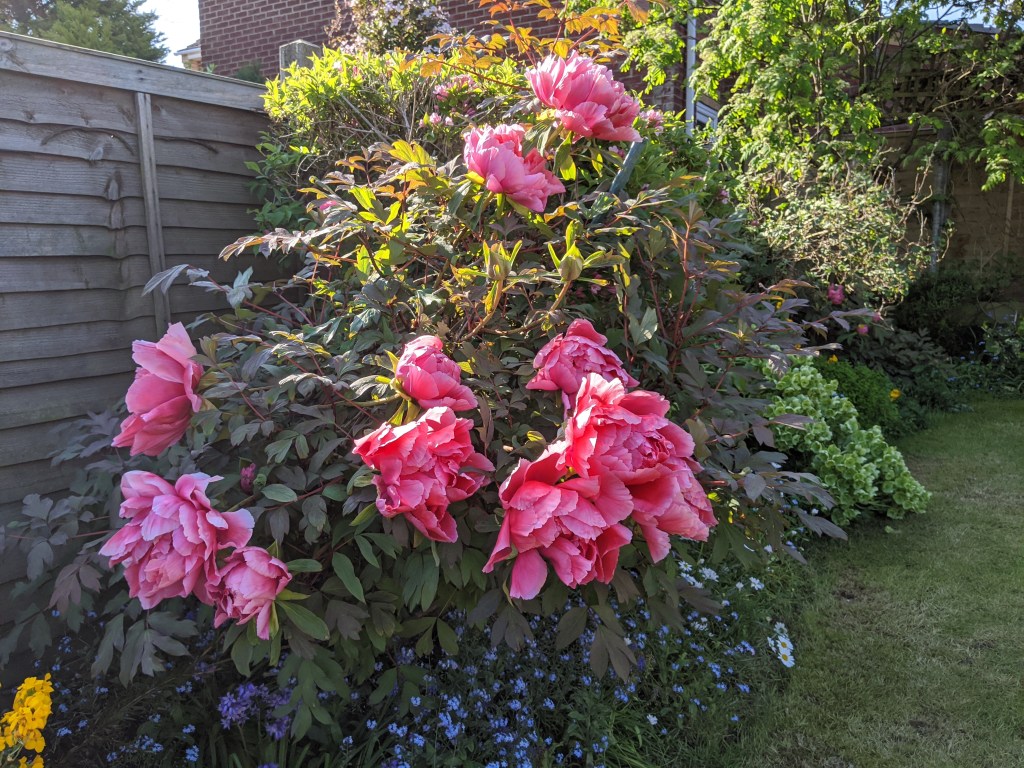
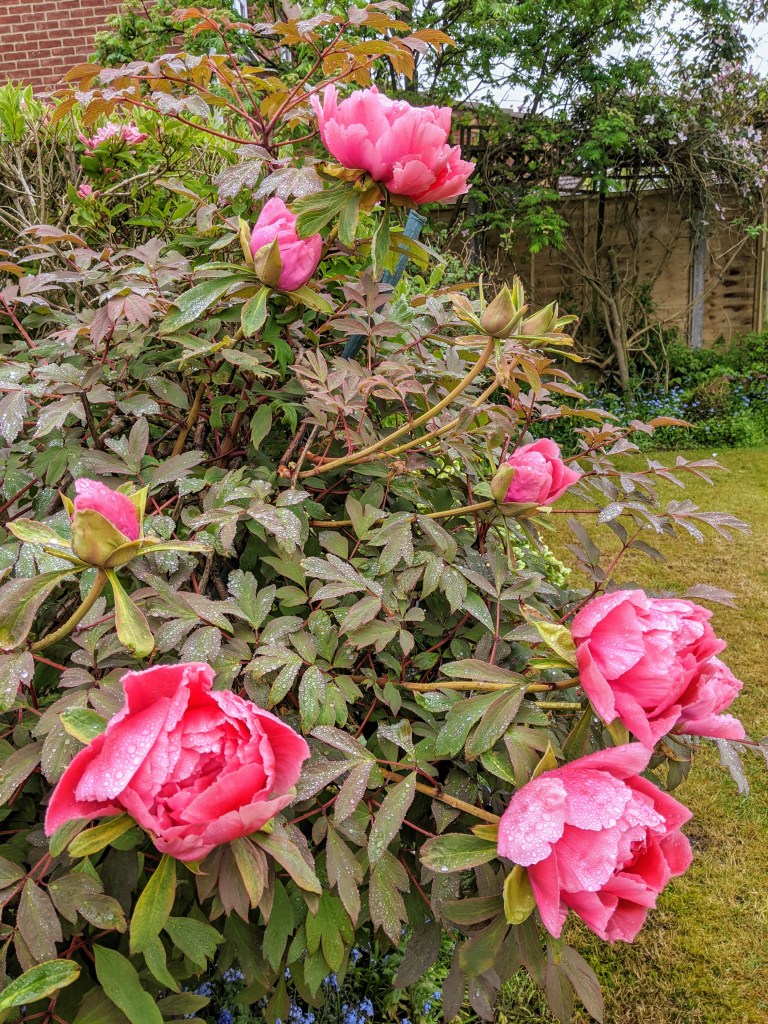
Next to make an impressive appearance is the incredible Tree Peony. A quite unassuming shrub for most of the year, our Tree Peony quietly merges into the background of the borders. We actually have two of these wonderful shrubs in the garden. One of the two is situated in a shady corner and doesn’t flower as prolifically as the other. In late March and early April large buds begin to appear at the ends of the branches. Then, with a burst of shocking pink the buds swell and reveal huge, showy, impressive blooms. Then after about ten days these lovely blooms complete their cycle of life, wither, and fall from the shrub. Another source of wonder to the thinking man.
Written by John Yeo © All rights reserved.
by JOHN YEO
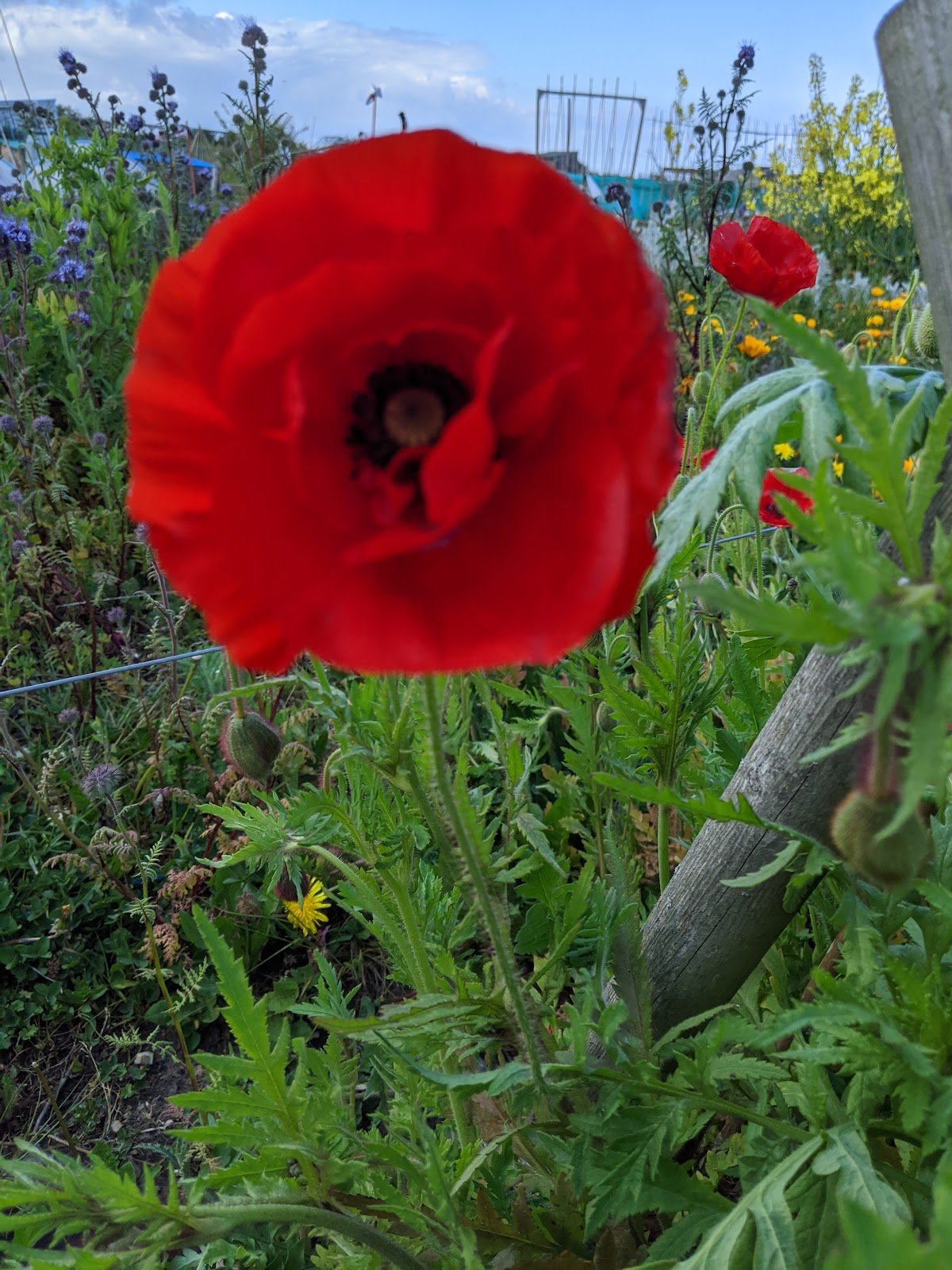
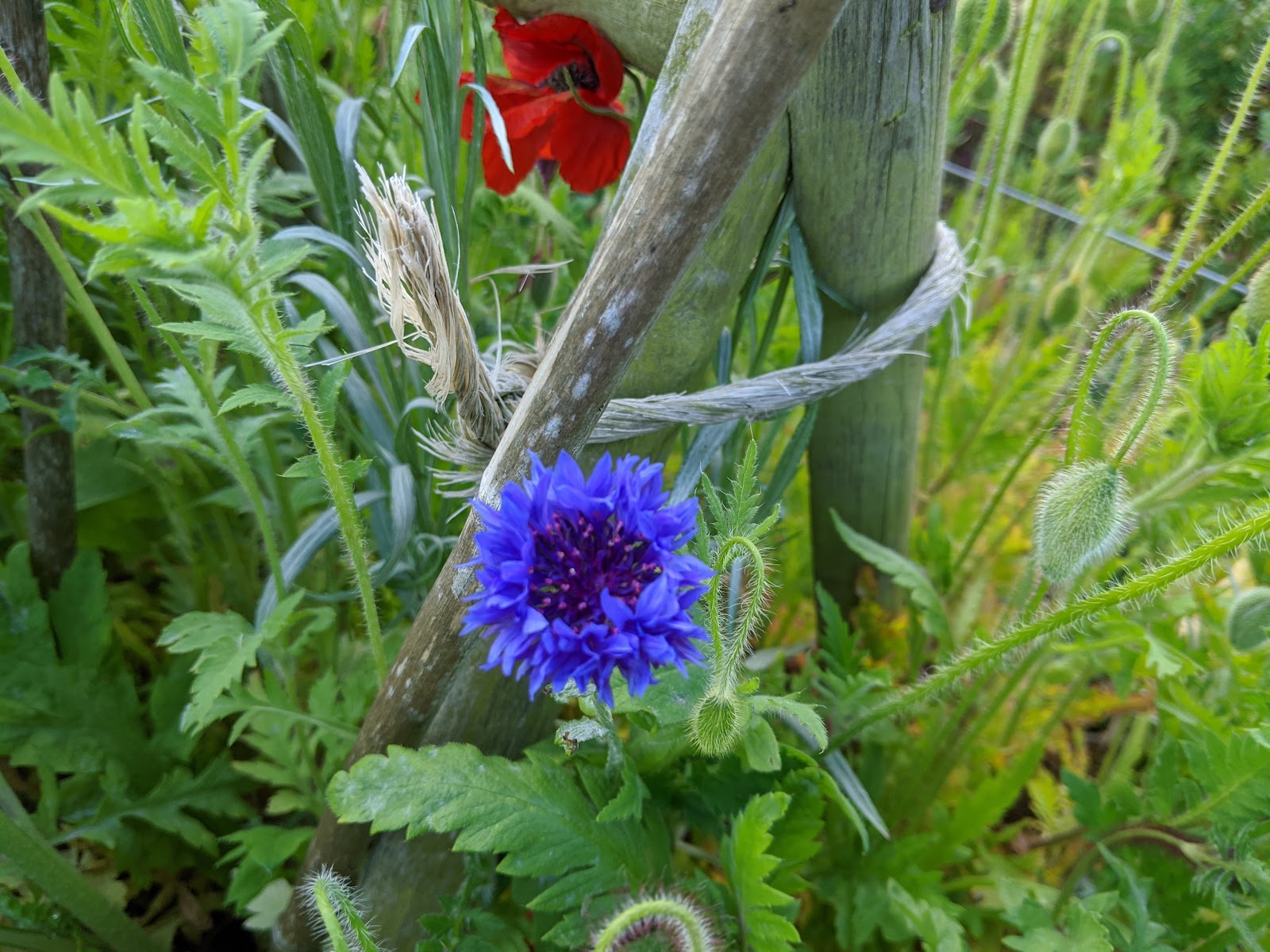
I snapped these beautiful photographs of poppies when Margaret and I were working on the allotment today. They’ve just appeared over the last couple of days. The poppies on our allotment are so prolific and spread so widely and fast, we usually pull them up as weeds and consign them to the compost heap. I have to admit I’ve never seen any as beautiful as this single large poppy in the photograph below. The luscious petal arrangement could be likened to a rose, it’s almost unbelievable that this is just a common wild poppy.
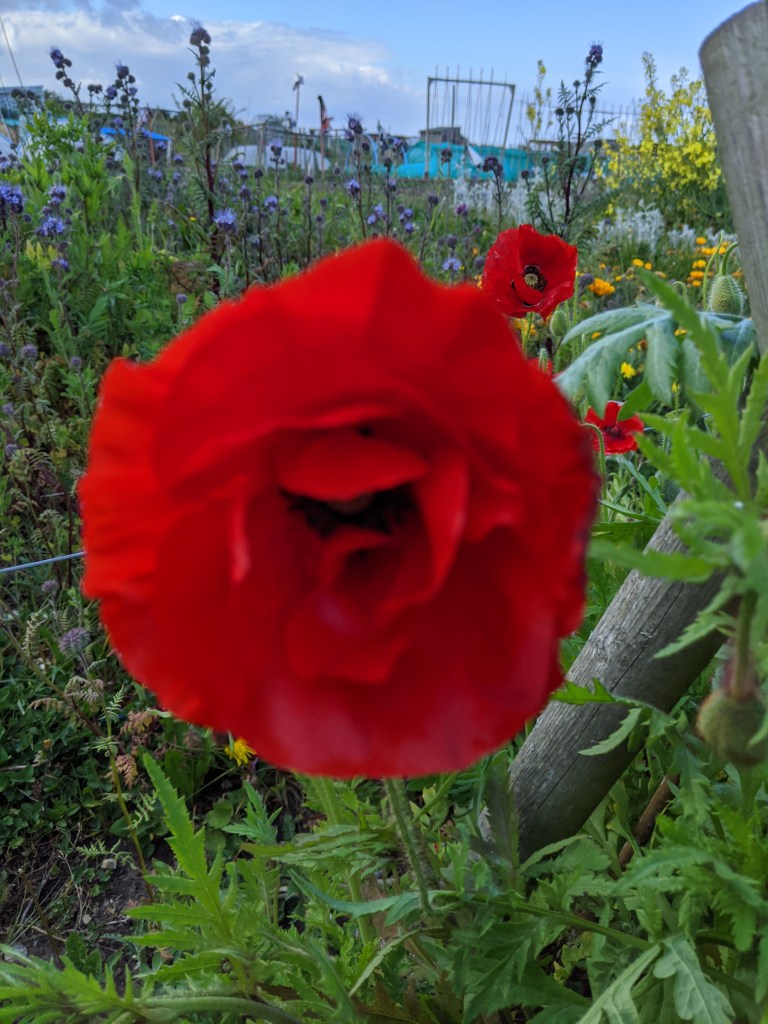
My limited knowledge of Poppies was generally reduced to the fact they are almost universally associated with death and remembrance. I was also vaguely aware they were associated with opium and all the tragic history connected with that.
I decided to do some research on the mystical meaning of Poppies through the centuries. I gathered the following facts from Wikipedia.
Poppies have long been used as a symbol of sleep, peace, and death: Sleep because the opium extracted from them is a sedative, and death because of the common blood-red color of the red poppy in particular. In Greek and Roman myths, poppies were used as offerings to the dead.
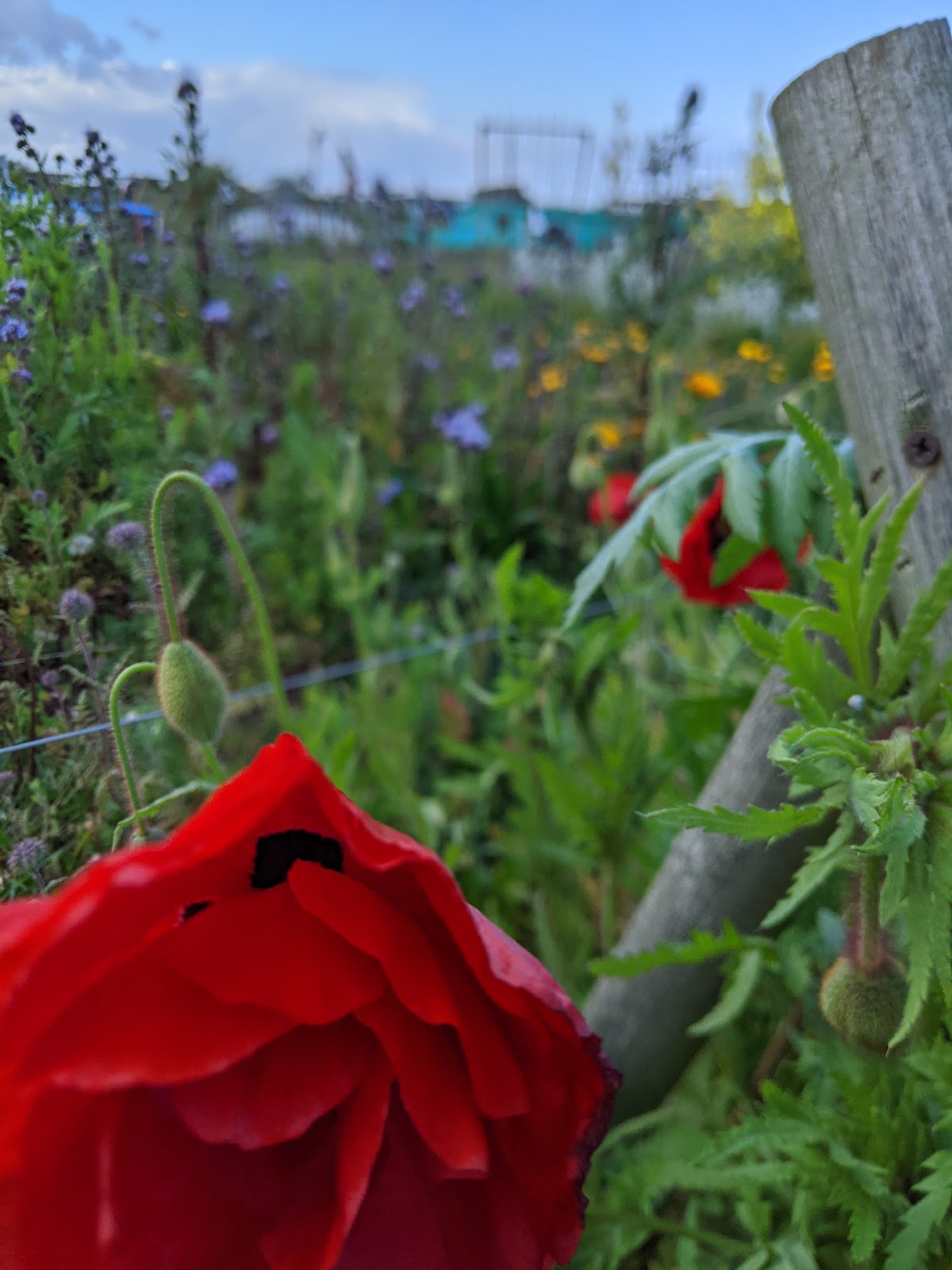
The poppy of wartime remembrance is Papaver rhoeas, the red-flowered corn poppy. This poppy is a common plant of disturbed ground in Europe and is found in many locations, including Flanders, which is the setting of the famous poem “In Flanders Fields” by the Canadian surgeon and soldier John McCrae. In Canada, the United Kingdom, the United States, Australia, South Africa and New Zealand, artificial poppies (plastic in Canada, paper in the UK, Australia, South Africa, Malta and New Zealand) are worn to commemorate those who died in war.
There is such an abundance of information connected to the use of poppies and the significance of poppies, I didn’t want to turn this small blog post into a book. Suffice to say Margaret and I will try to save some of the seeds from this magnificent bloom to transplant into a corner of our garden. In the photograph below a cornflower took centre stage, but that will be a post for another day.
© Written by John Yeo

POETRY FOR A LONG AFTERNOON.
Feeling in a philosophical sort of mood today I resurrected and updated a couple of my old poems.
The first deals with Seasonal affective disorder, or SAD, for short. If only the present horrors of Coronavirus, could be reduced to a need for more sunlight.
SEASONAL CHANGES
by John Yeo
Spring into Summer with floral delight
Blooms and blossoms fill the air.
Farmers fields are bursting with growth,
Green shoots and yellow rape everywhere.
The weather forecast has the pollen count.
Nothing to worry about, no surprise
A fit of sneezing with watery eyes
As hay fever sets in again.
Autumn into Winter with frost and rain,
Windy weather prompts the leaves to fall.
Reds, gold and russet, a beautiful sight,
The shorter days with dark icy nights.
The weather forecast predicts heavy snow.
Nothing to worry about, no surprise
A fit of sneezing with watery eyes
Resort to bed with the flu.
Seasonal affective disorder strikes
With a low mood and depression.
Regularly during the Winter months
Sunlight is reduced during shorter days.
The weather forecast is dire.
Nothing to worry about, no surprise
The doctor’s diagnosis is incomplete
Sit in front of a lamp and soak up the light.
Seasonal affective disorder retreats
With the arrival of early Spring.
Lightness and happiness sets in again
Balmy breezes and very light rain.
The weather person is smiling.
Nothing to worry about, no surprise
The world wakes up in a blaze of glory
With thoughts of a relaxing holiday.
Copyright © Written by John Yeo ~ All rights reserved.
STURDY
by John Yeo
This hard Oak survived for many a year;
Strong, weatherbeaten, standing up with pride,
A powerhouse with stores of food for life,
Birds, Squirrels and Insects make their homes here.
Lives that thrive in the overspreading leaves,
With a multitude of living green shoots
A sturdy thick trunk that branches and leads
To an underground sea of tangled roots.
Spring brings forth a flood of budding new growth
Summer settlement then Autumn leaves fall,
Shooting and thrusting a thick strong outgrowth.
A magnificent Oak sturdy and tall.
Huge machinery brings extra sharp blades
Hopes cut down as a history cascades.
© John Yeo ~ All rights reserved.
As current events have shown nothing is perpetual. I think life has shown that even the strongest people can be cut down with this Coronavirus. An abomination that certainly shows no discrimination. Yet there will alway be hope and renewal even from the tiniest acorn hiding in the undergrowth.

WEDNESDAY 29th APRIL 2020
TREE PEONIES.
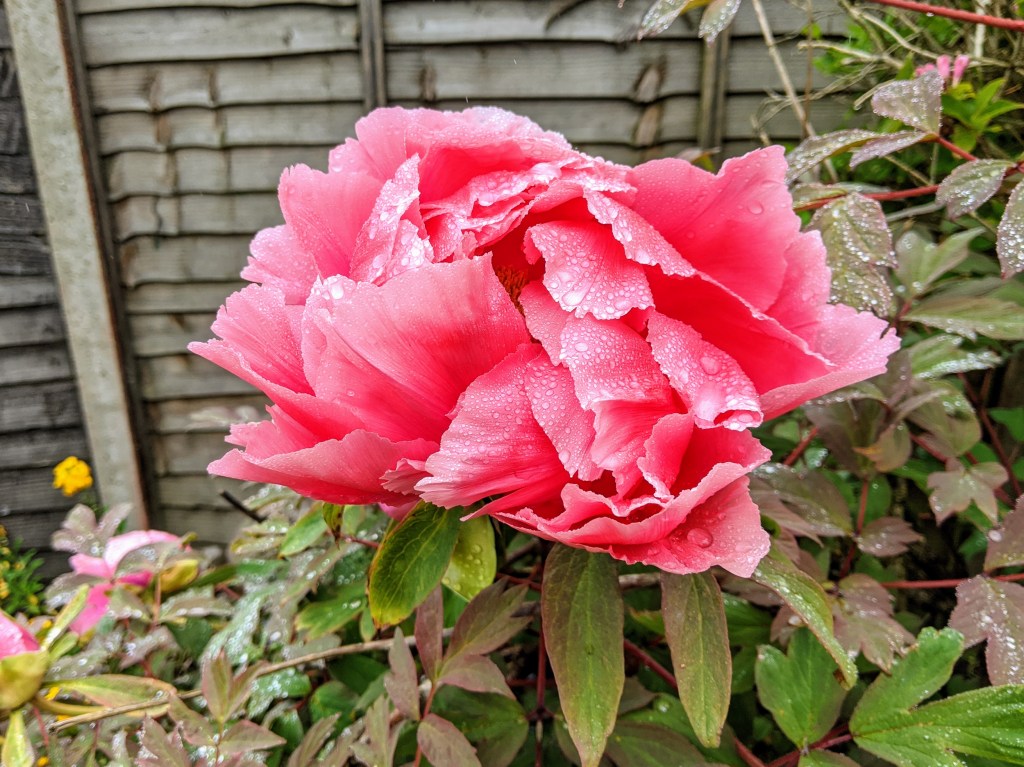
These beautiful photographs show more of the luscious blooms on our two Tree Peony shrubs in the garden. These impressive blooms have just burst open, they’re the first we’ve seen this year. The buds have been around for the last couple of weeks. The huge deep pink, flower heads, blossom freely, showing their ephemeral beauty. Then about 7 days later the heads wither and die, then drop off the plant. These superb plants originated in China, where they were once celebrated as the national flower. After much hybridisation they are now widespread in many parts of the world. In ancient times, Peonies were used for medicinal purposes including curing headaches, relieving pain during childbirth and the treatment of asthma. Long ago, people believed that Peonies protected them from demons. During the Victorian era, Peonies were extremely popular and could be seen growing in gardens throughout England. If you have ants in the garden, they will be attracted to a sugary coating on the Peony flower buds. I have to admit I have never noticed ants on our Peonies. Both Butterflies and Bees are attracted to the rich nectar produced by Peonies.
Written by John Yeo
Corsica
As another contrast to the tragic Coronavirus pandemic news that is continuously swamping our consciousness at present. I thought I would revisit and share another of our travelling experiences.
Three years ago, Margaret and I were on a cruise visiting Corsica in the Adriatic sea. The ship arrived at Ajaccio, a busy port in Corsica, where we were berthed in a harbour conspicuous by the absence of large cranes and the usual piles of freight containers. Later we were to learn that there is little industry on the island of Corsica, hence the crystal clear waters of the surrounding blue sea. The island relies heavily on the tourism industry for its main source of income. Everything here is expensive as it has to be imported.
We were booked to go on a panoramic tour of the island.
We left the port and the town of Ajaccio, and made our way through verdant green fields, with many nice houses with pretty gardens, and smallholdings with some farm animals.
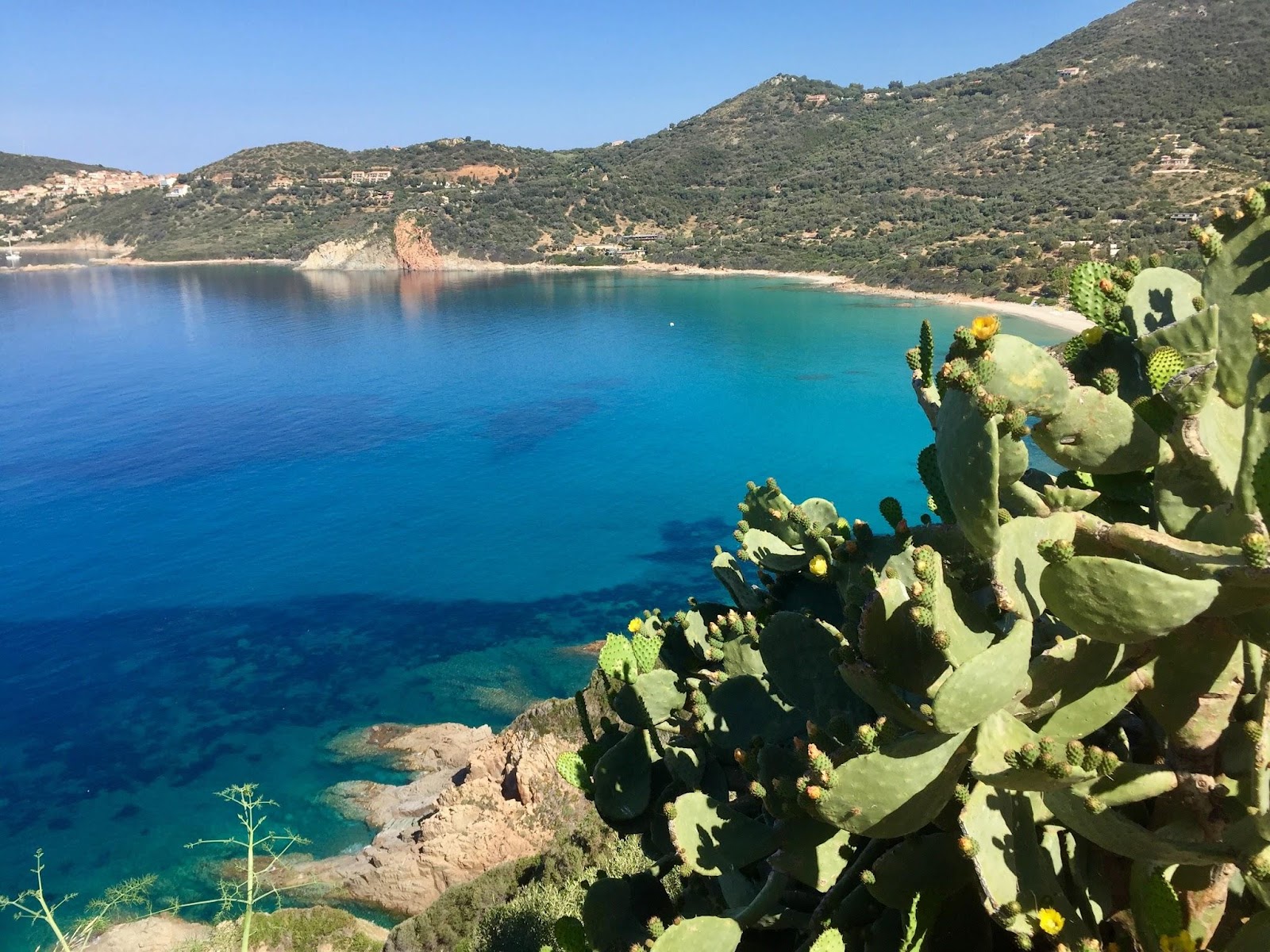
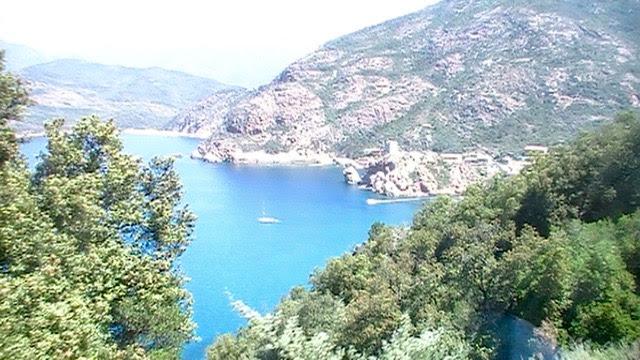
We finally reached the rocky coastline, with pretty sandy coves and beaches. The seawater was an amazing greeny-blue colour, crystal clear and beautifully clean. Our tour guide warned us that when the sea is rough, the invisible currents can be deadly, and extremely dangerous. There were people enjoying the beaches, although the high season here hadn’t started.
There are an incredible number of Olive trees here, both growing wild and many cultivated to make Olive oil. Eucalyptus trees have been introduced, apparently to soak up the excessive water in the atmosphere and in the soil.
Cultivated Grapevines are in evidence everywhere to produce the wonderful Corsican wine.
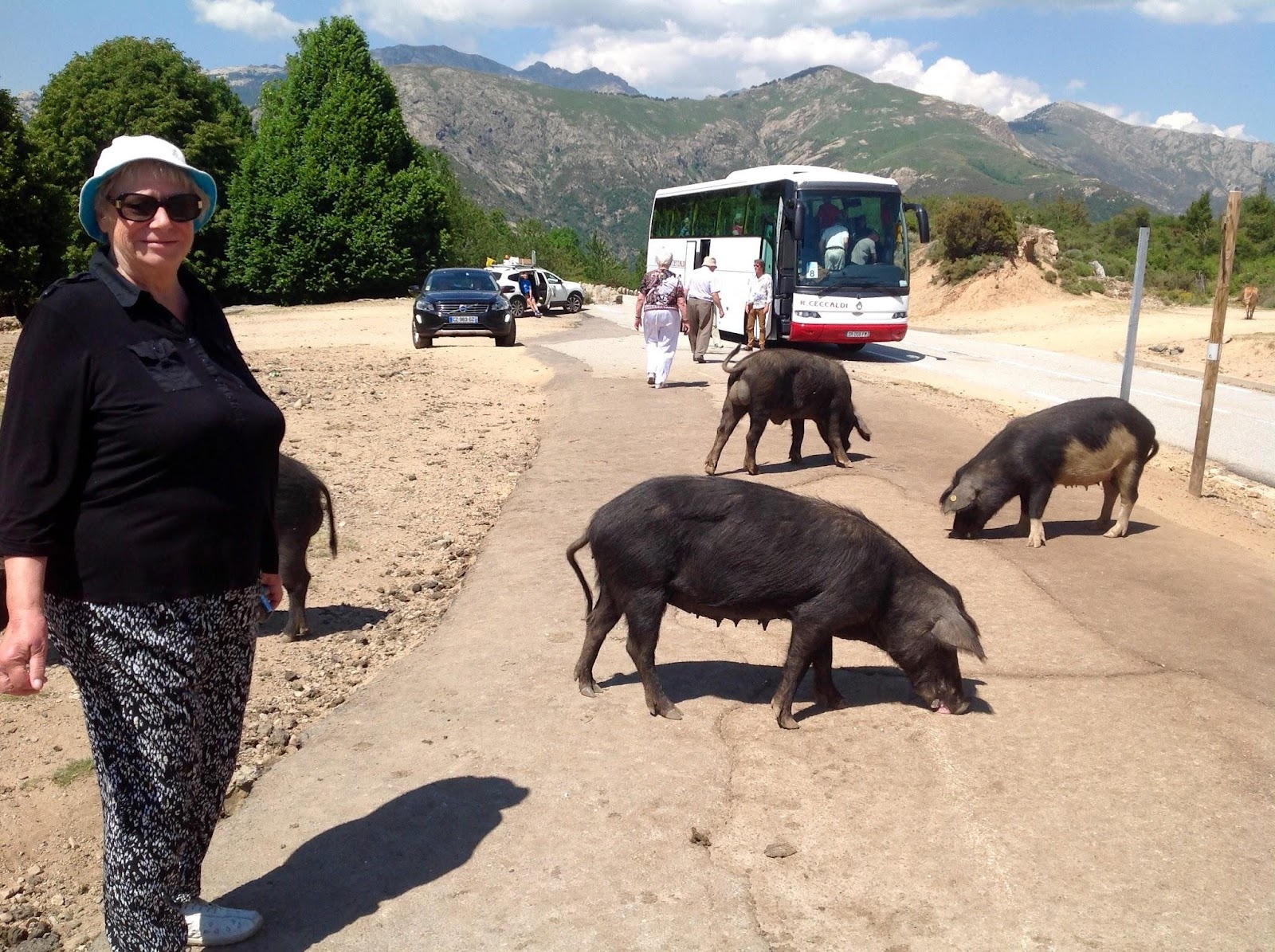
We passed many goats and pigs foraging along the side of the roads. Our guide informed us there were wild boar roaming freely on the island that sometimes bred with the domesticated pigs. There is a short season when it is permitted to hunt these wild boar for meat.
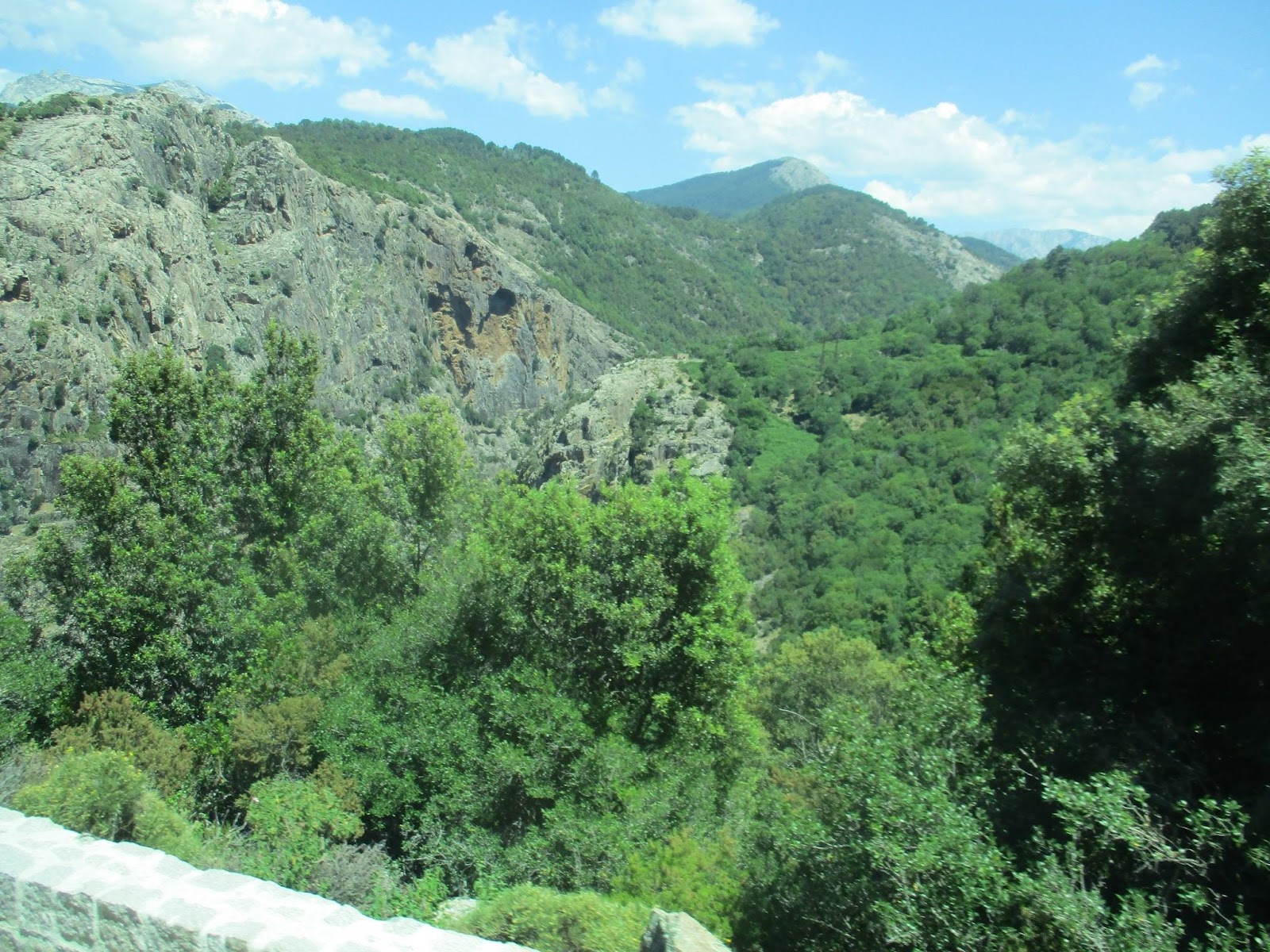
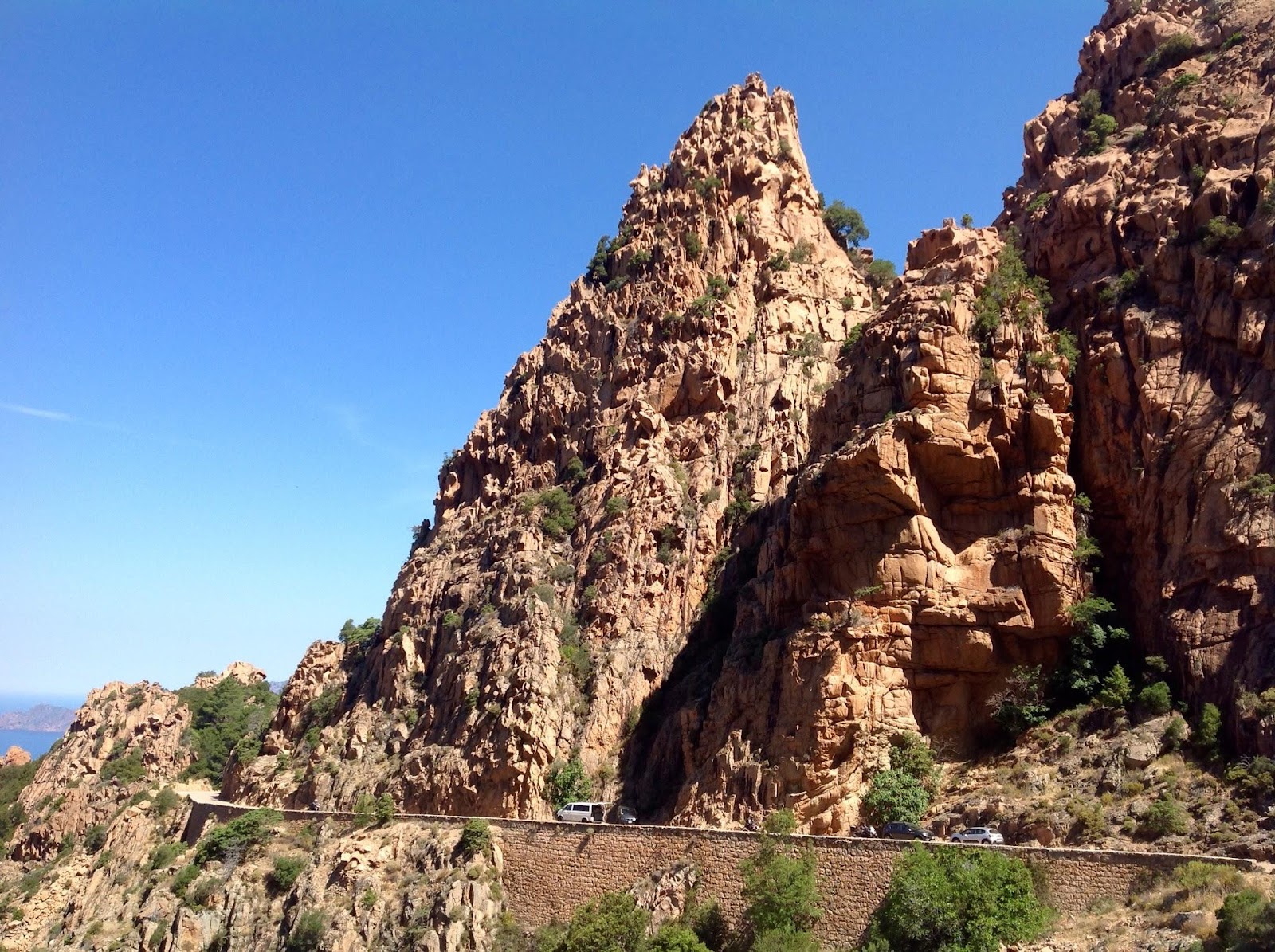
We slowly climbed the mountains where we viewed some spectacular pink and orange granite cliffs with some dramatic red rocks, known locally as Piana Calanche. Breathtakingly beautiful, these wonderful rock formations made for a dramatic background to the green pine trees. Everywhere one turned there was a wonderful view of pine forest or rocky escarpment.
We watched Red Kite birds of prey circling in the skies above, as we climbed the mountain. Our guide informed us that these are a protected species here as is the Fish Eagle.
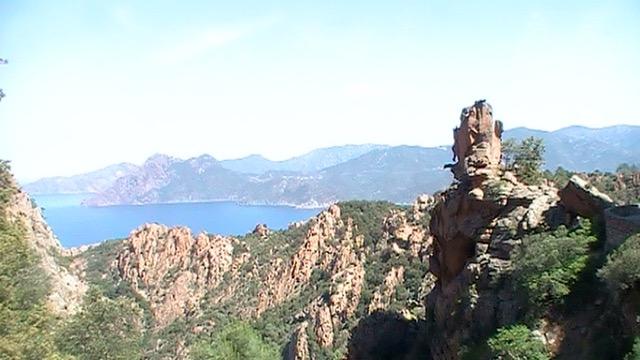
The roads through the mountains are extremely narrow and our coach driver had great difficulty manoeuvring, whenever another vehicle approached us.
We stopped at another point along the way where we were able to take photographs of some more of the large local Pigs and some Cattle. The guide explained these animals were owned by people who left food for them at the same spot every day. He also warned against trying to stroke or to touch these animals as there were Sows there with Piglets.
We then began to descend from the mountain and finally we reached the beaches again, with their blue crystal clear waters.
We reached the dockside where we boarded our ship, carrying a head full of memories and many photographs to savour later.

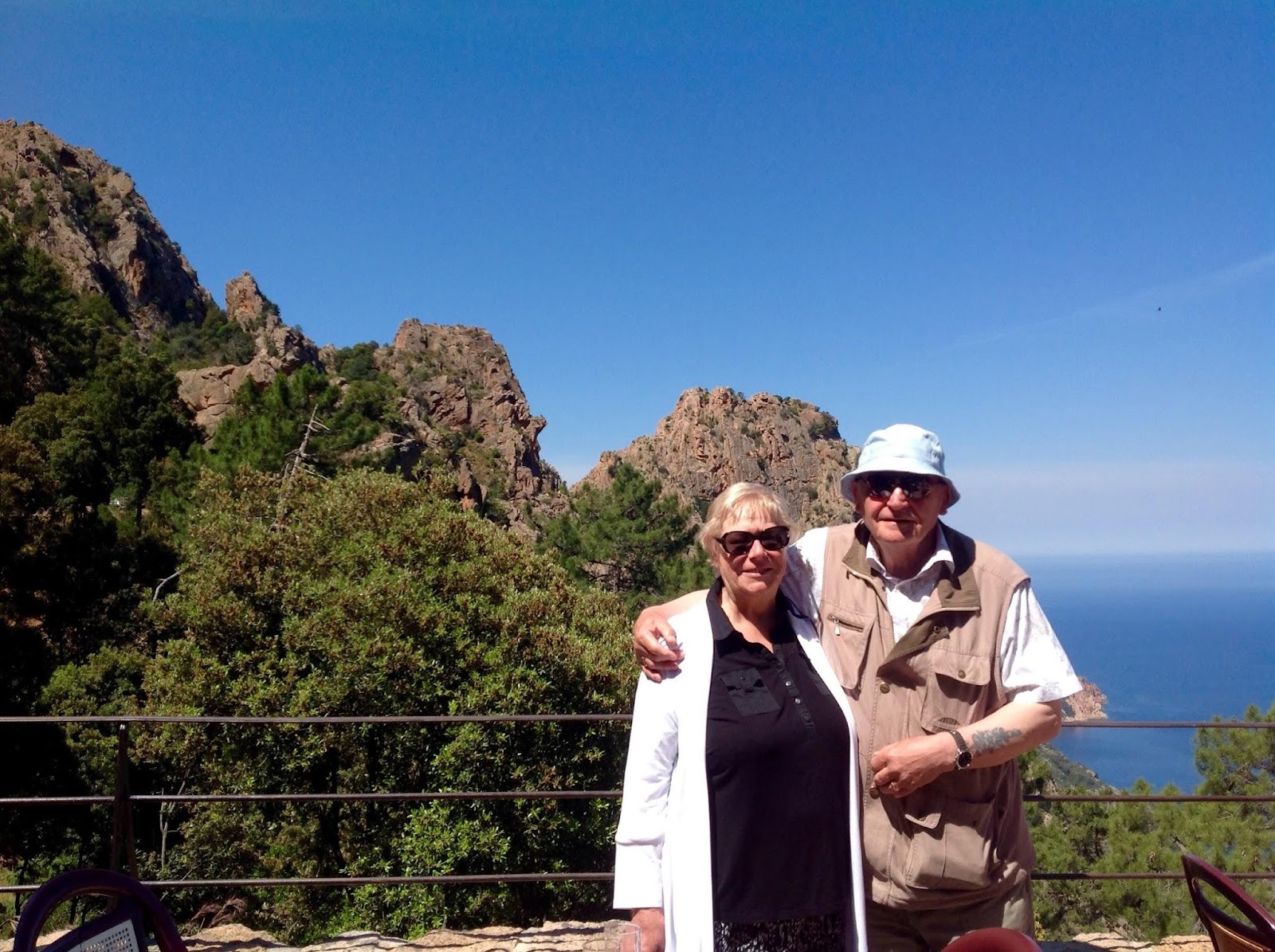
Sadly, at present it seems it will be a long time before we are able to go on our travels again. Love ♥️ and Peace ☮️ from John and Margaret
🙂🙂🎎.
Magical trip to Gozo
As an antidote to the horrors of this evil Coronavirus pandemic that is sweeping the country. I thought I would relive one of our journeys again.
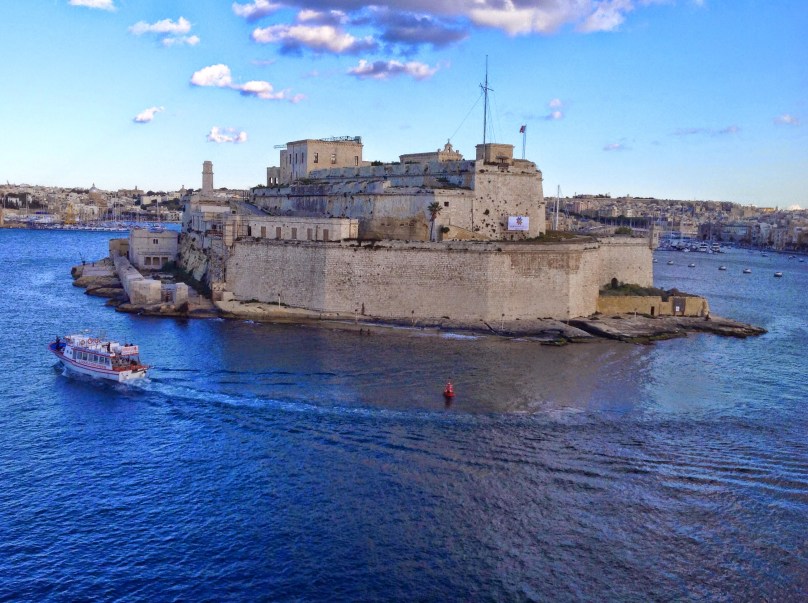
In April 2014, Margaret and I were on a sea cruise, aboard a Saga Cruise ship, one of the destinations we visited was Malta and the off-shore island of Gozo, on an organised excursion.
We boarded a coach from our ship in the harbour, for a 40 minute drive to the ferry crossing, situated in the North of the Malta. Our tour guide was an informative, enthusiastic Maltese lady. As we crossed the island our guide gave us a wonderful running commentary of the history of the two islands. There is a third island that is almost uninhabited.
Malta is the business centre and the tourist destination of these small islands and is obviously a lot more built up and densely populated than Gozo. Most of the industry and the University is located in Malta and the inhabitants of Gozo commute by ferry to work and study, on a daily basis. There are some fortified stone towers spread over the island of Malta. These were used in the days before electronic communication to warn of approaching danger, a fire was lit and the warning spread from tower to tower.
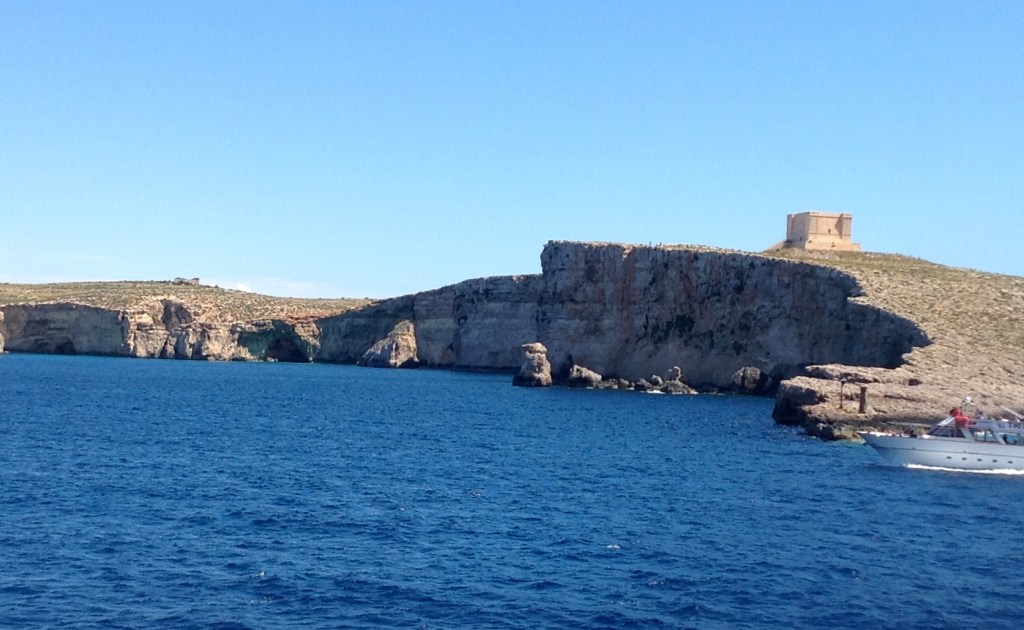
Malta is not as dependant on agriculture as Gozo and is more densely populated.
We boarded a modern passenger ferry for the 20 minute, four mile crossing from Malta to Gozo. There is a wonderful large church overlooking the harbour of Gozo, with a large statue of the virgin Mary built into the rocks.
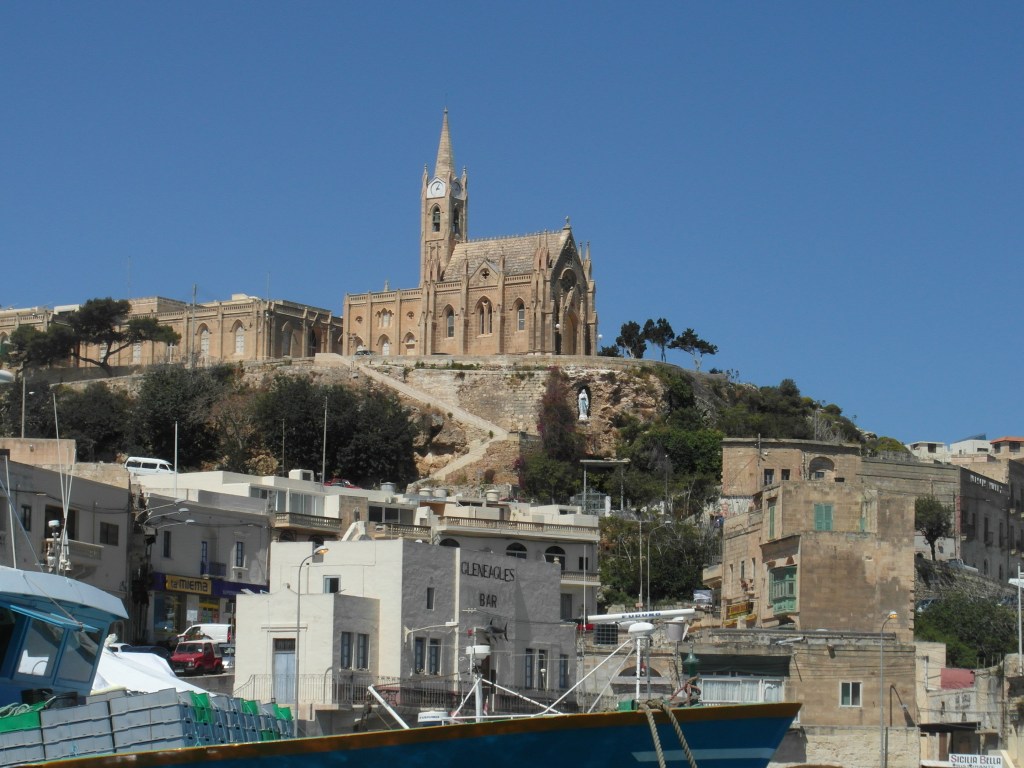
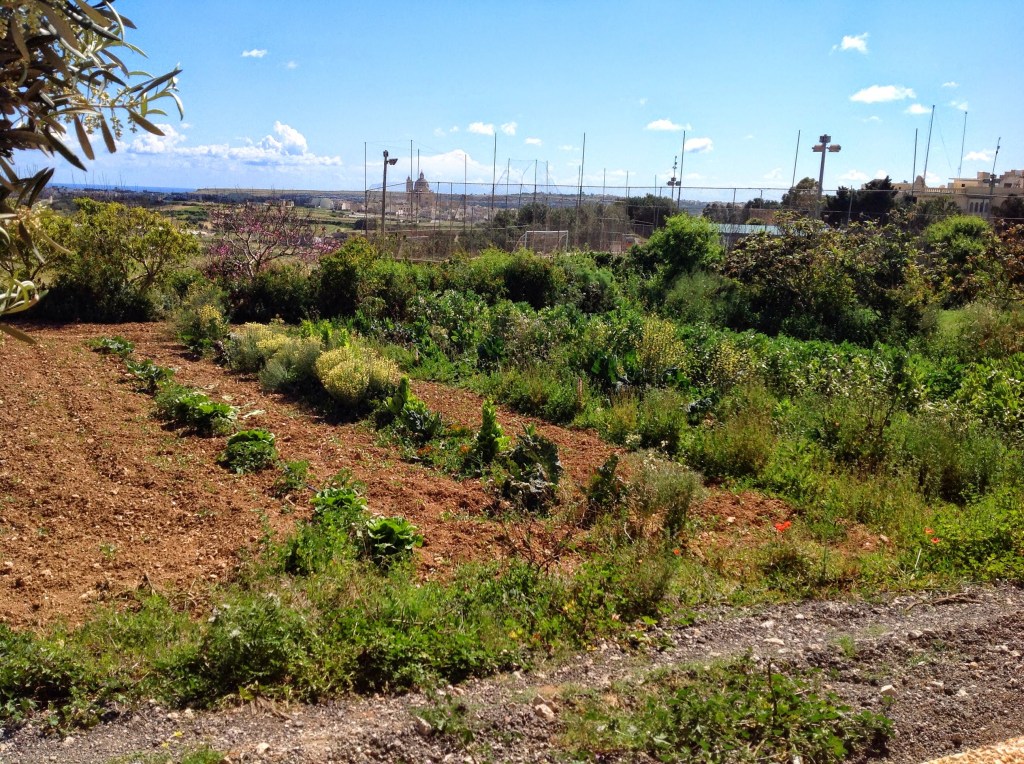
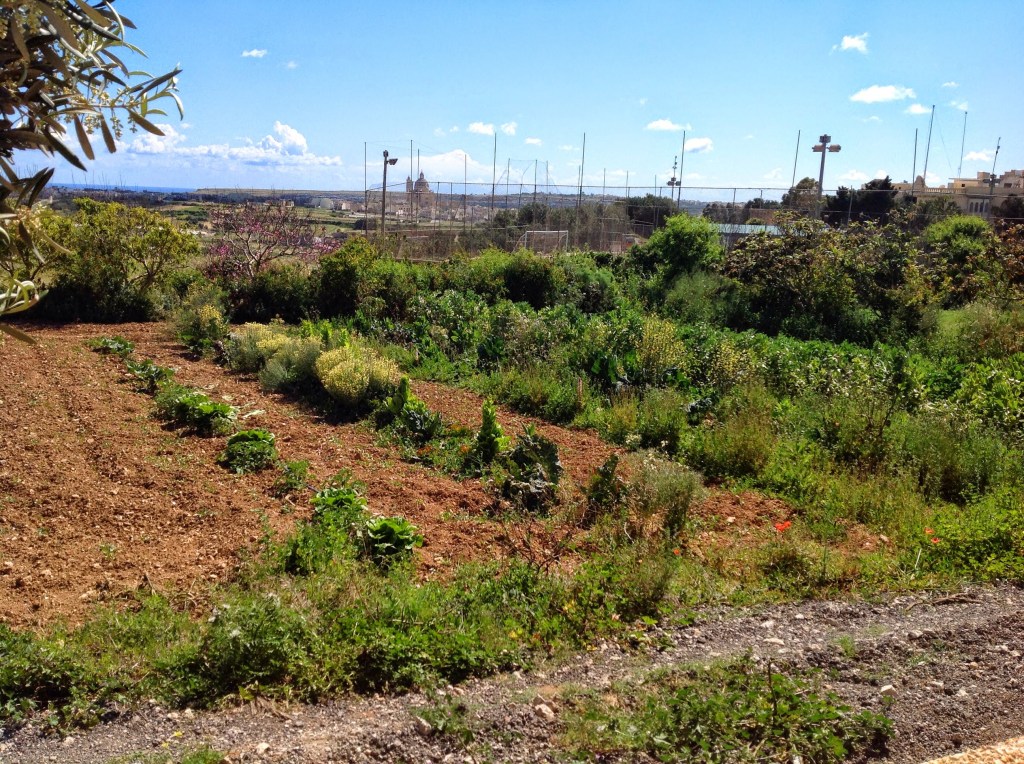
We boarded another coach for our whistle stop tour of the island of Gozo. The scenery on our drive through the island was mainly agricultural and beautiful. There are many small-holdings and the unique stepped method of culture is used everywhere, sadly the young workers commute to Malta to work and for their education and finding labour to work the land is becoming an increasingly difficult problem.
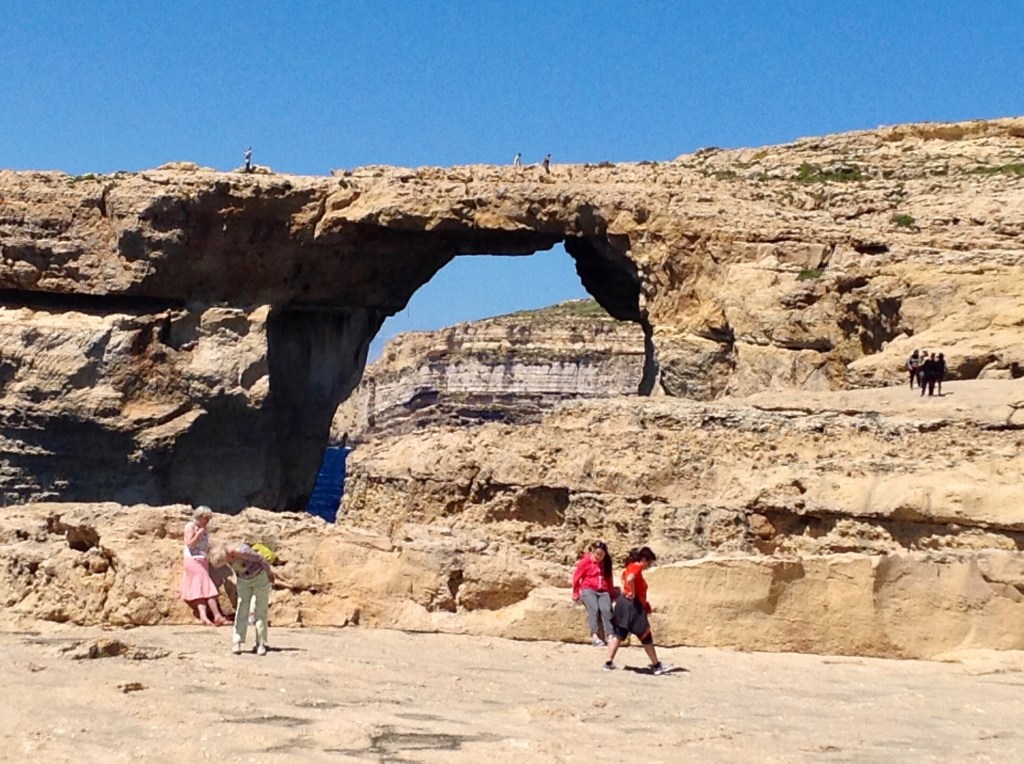
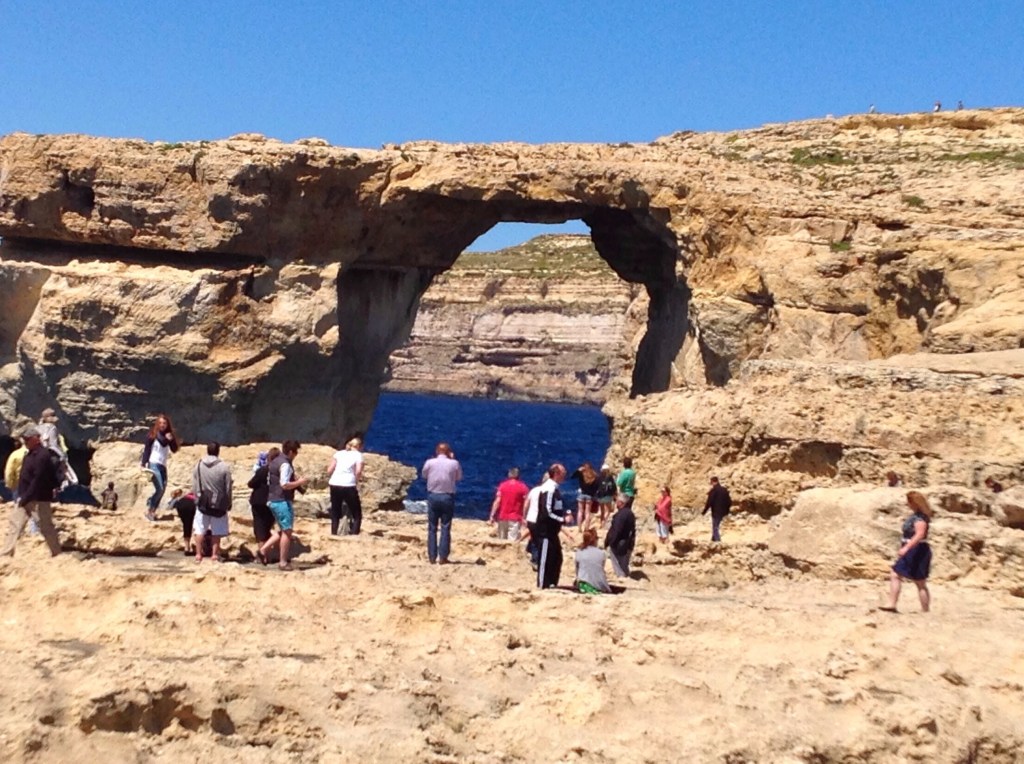
We visited the famous Azure window, a circular ring of rock that is very beautiful to photograph, this area was amazing, the ground underfoot was incredibly uneven, we were actually walking over many limestone fossils dating back thousands of years, from when this whole island was under water.
We then visited the incredible Citadel, an impressive fortress with incredibly thick walls that is situated on a hill. I climbed the hill and took some photographs leaving Margaret to wander around an interesting little street market at the bottom of the hill.
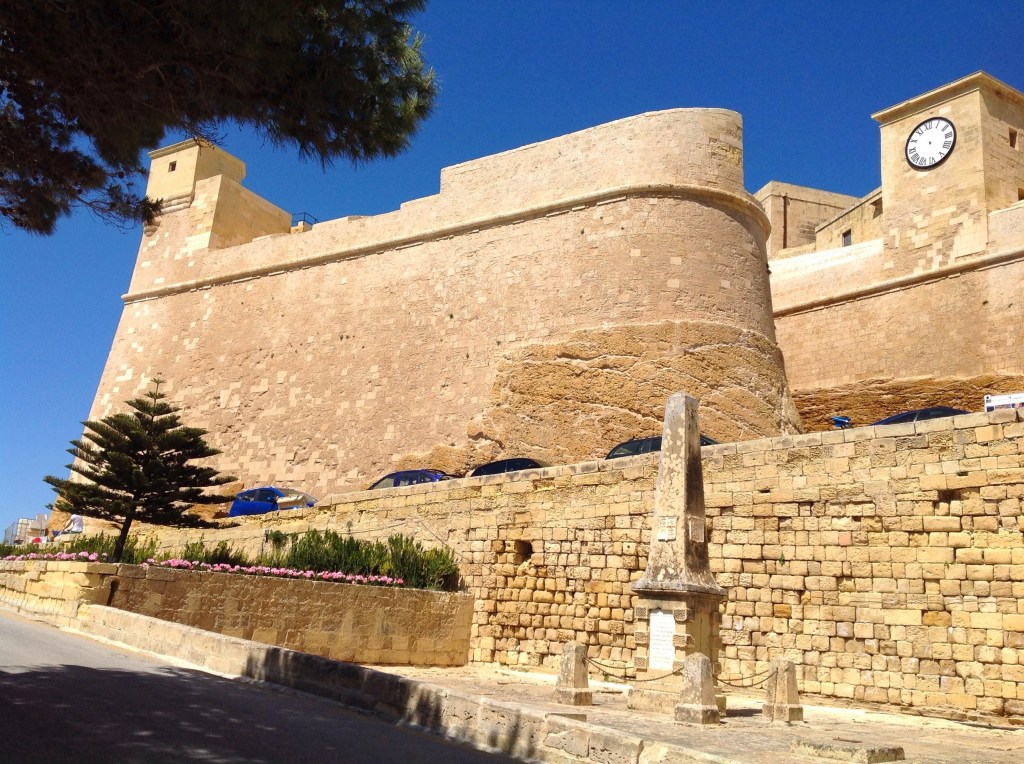
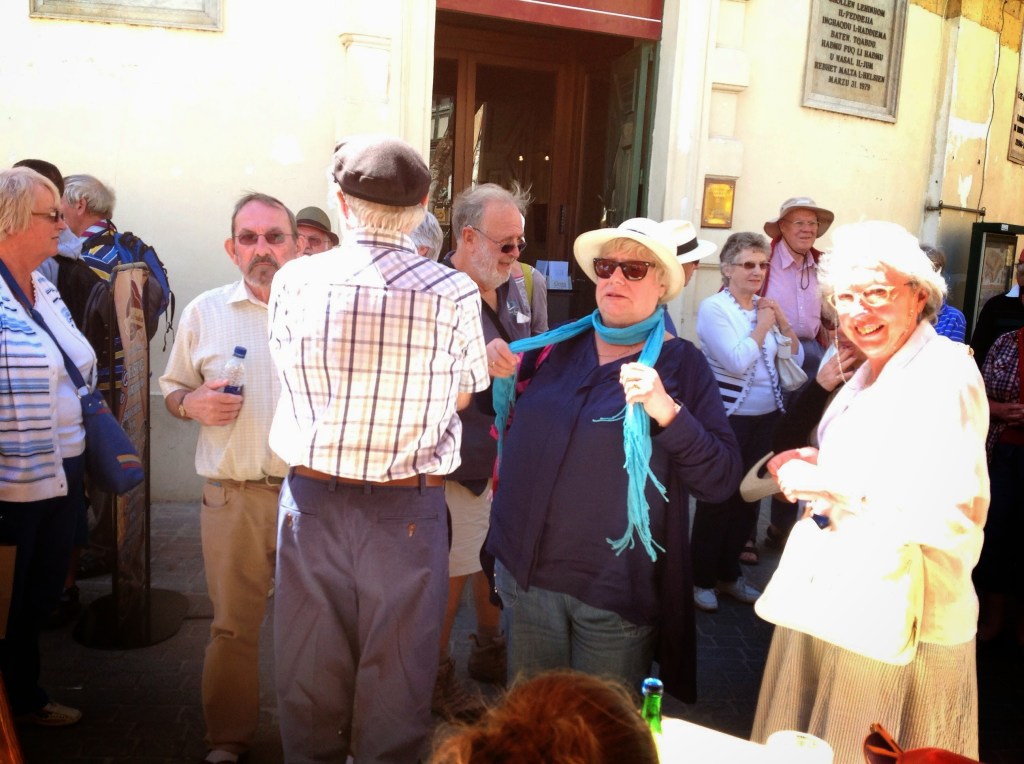
We then boarded our coach again to visit the Gjantija Temples, a World Heritage site, where we viewed the ancient ruins of some incredible buildings constructed of huge blocks of stone, many thousand years before the birth of Christ. They are said to be older than the pyramids of Egypt.
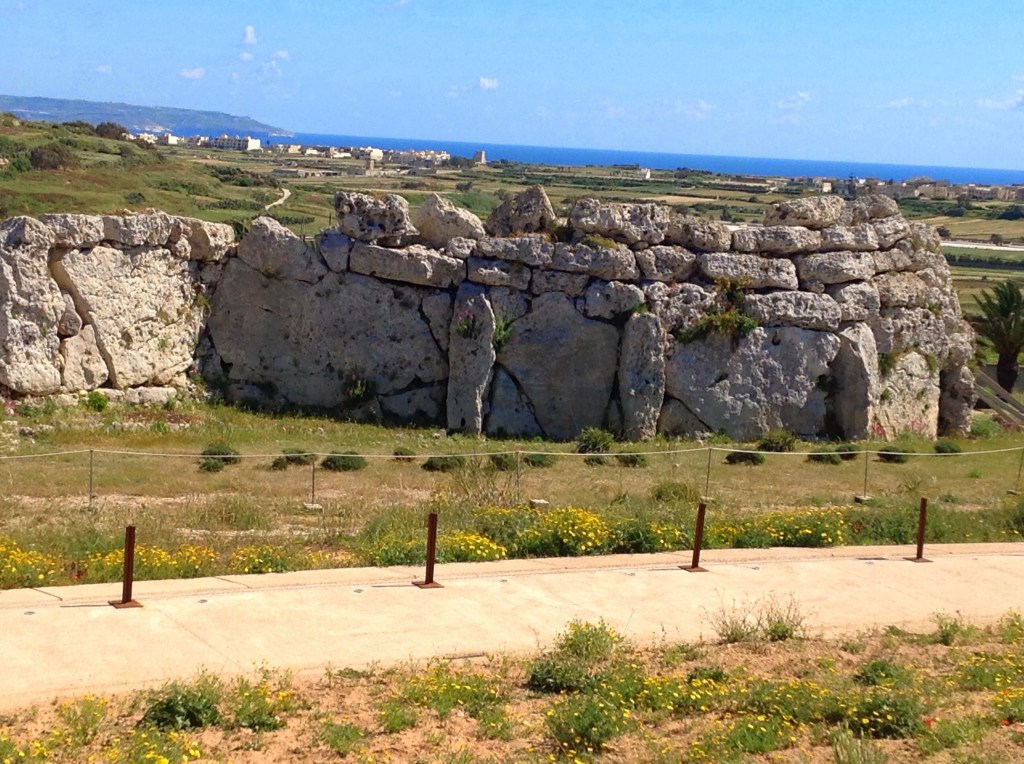
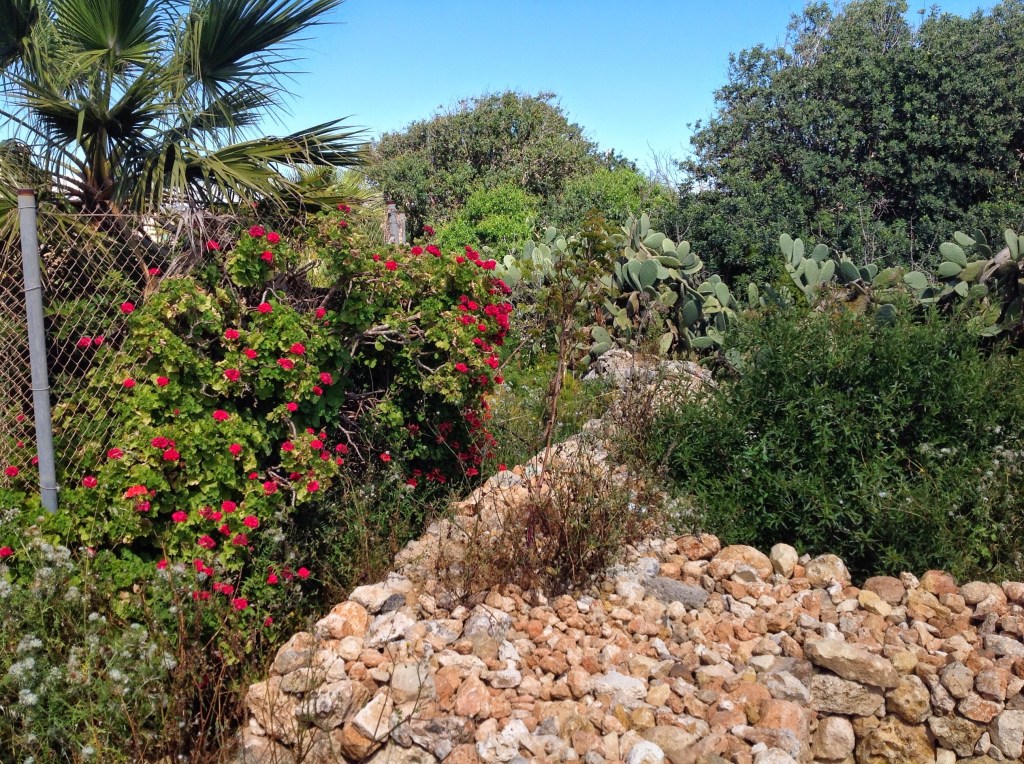
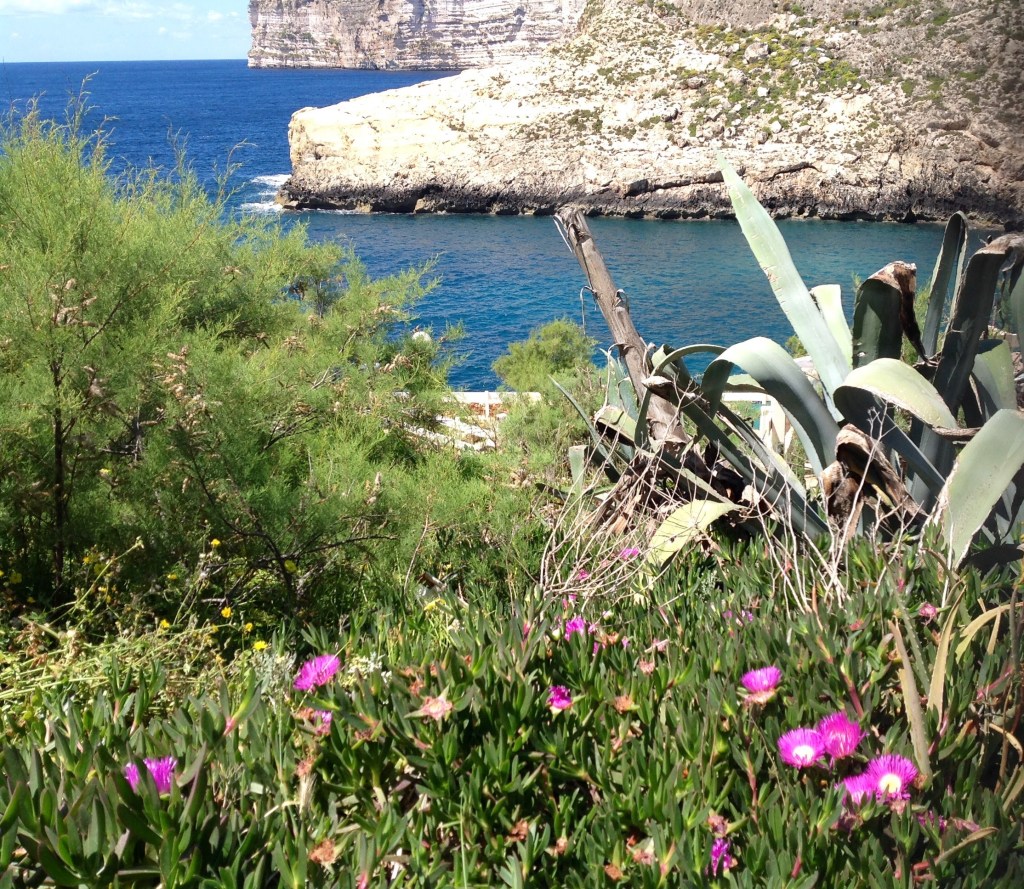
They were situated in a pretty area with flowers everywhere and we took many more photographs.
We boarded our coach to catch our ferry back to Malta with our photographs as wonderful memories and with fond thoughts of the island of Gozo.
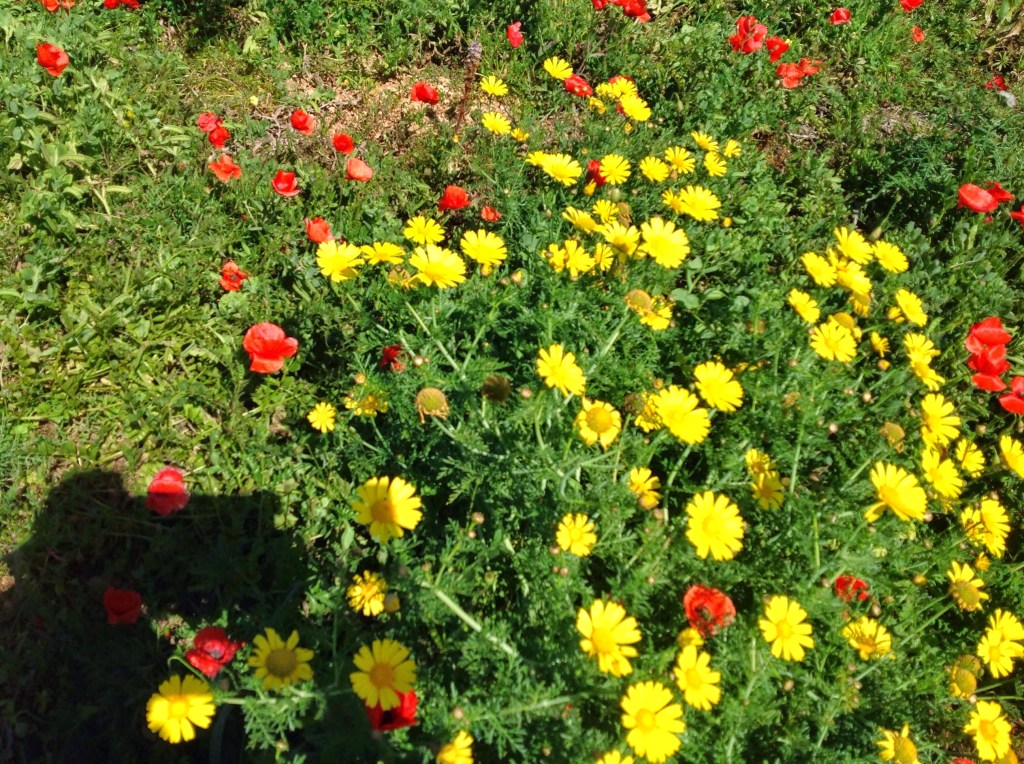
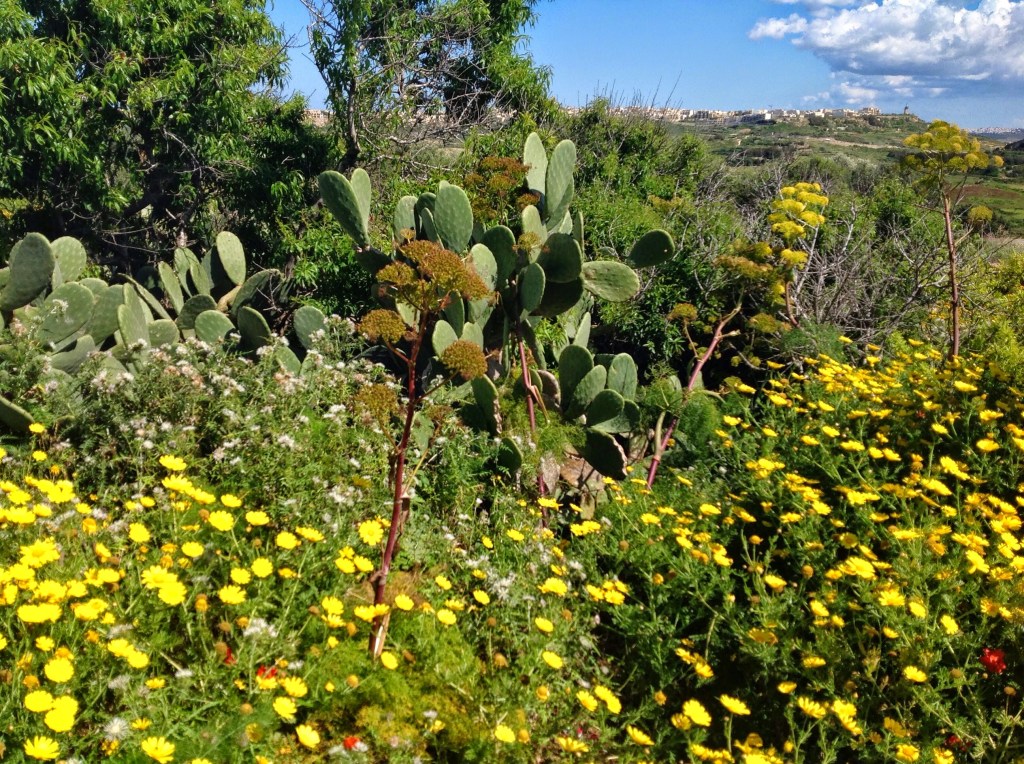
Travelling through Malta on our way back to the ship brought more contrasts between the two islands and we both agreed this has been an unforgettable visit.
Written by John Yeo © All to rights reserved.
.
An Exploration of Thought for the Mindful
Food, Road Trips & Notes from the Non-Profit Underground
An exploration of a world beyond borders...
A daily selection of the best content published on WordPress, collected for you by humans who love to read.
Health, Reflection, and Poetry for the Journey of Life
Where writers gather
Review
Author Aspiring
A place where words come alive
Thoughts and Perspectives From the Mind of a Common Girl
This is Not Going to Turn Out Well
The Art of the Noteworthy — The London Bimestral — ISSN 2979-3378
A counterintuitive support site for writer's block
Science That Works For Us
From Batting to Book Reviews - and everything in between
For those who enjoy fiction
Flash Fiction using Photo Prompts