This is a response to a Flash Fiction prompt from ‘Putting My Feet In the Dirt’, Writing Prompts hosted by ‘M’. Which can be found by following the link below..
This is a response to a Flash Fiction prompt from ‘Putting My Feet In the Dirt’, Writing Prompts hosted by ‘M’. Which can be found by following the link below..
The audience were spellbound as the greatest magician in history started to perform. The cards always fell in the right order for him as the stooge on the stage passed them to him face down. He could predict which card would turn up whenever he shuffled the pack.
‘Would anyone in the audience care to step up and select a card and I’ll pay £50 to anyone who can trip me up.’
Glen was a daredevil sort of chap and leapt forward to volunteer. ‘I’ll do it! I bet I can stop you from making your predictions.’
Walden, the magician smiled and nodded, he had seen so many of this type over the years, he could almost predict what was going through the young man’s mind.
The cards were dealt and Walden was correct every time. All of a sudden the youngster dealt the cards, grabbed the magician by the wrists and held his hands tightly. ‘Now tell me what card is upside down on top of the pack, charlatan’.
‘Walden smiled and replied, ‘Look, you’re holding my hands, two hands are all I’ve got, I’m blindfolded, the card on top is the six of diamonds.’
With that, Walden delivered a well aimed kick to Glens groin, causing him to double over in pain and let his hands free. Walden then turned the card over to reveal he was right.
‘Two hands maybe all I’ve got and all I need, when I play the cards right.
This is a response to a Flash Fiction prompt from ‘Putting My Feet In the Dirt’, Writing Prompts hosted by ‘M’. Which can be found by following the link below..
Grandma Rawlings was an invalid permanently confined to her bed. Little Mary and Peter went for a visit and dashed into her bedroom carrying gifts and sat on the side of her bed.
‘Hallo Granny! They chorused, ‘How are you feeling today?’
‘Fine thanks, you two. Have you been behaving yourselves and being nice to everyone?’
Peter replied, ‘Of course Grandma! We got caught in a shower on the way here, but the sun was shining at the same time.’
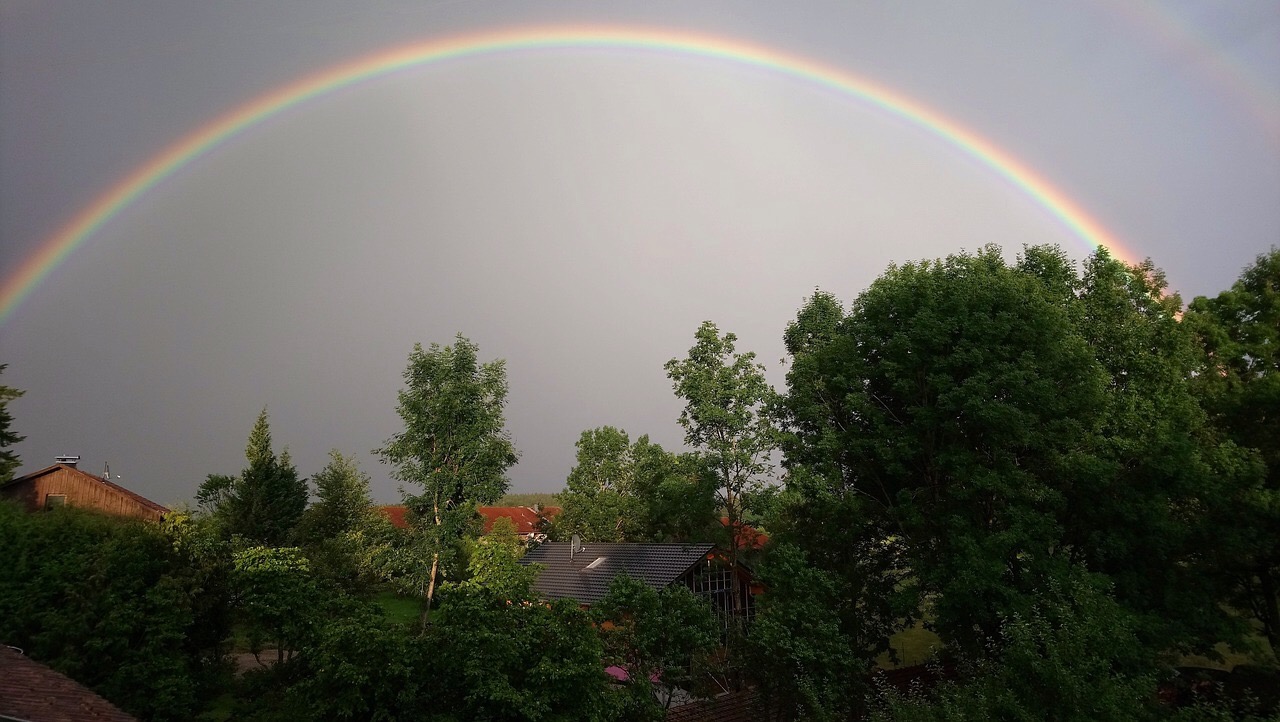
Mary laughingly butted in and said, ‘Hey Granny! Did you see the lovely rainbow today? It was huge and spread right across the sky.’
‘Don’t be silly Mary, that’s not very nice. Your Granny has to stay in bed all of the time. However can she see the rainbow outside?’ Interrupted their Mother, who had just entered the bedroom with a tray containing tea and biscuits.
‘Oh! Don’t worry dear! Don’t blame the children. They’ll never understand that however good they are, niceties don’t bring rainbows.’
At that point their Father smiled and said, ‘Oh yes they do! Look here,’ Then he produced his mobile phone with a beautiful photograph of the rainbow.
The old lady’s face lit up. ‘Oh Thanks!, That’s nice!’
This is a response to a Flash Fiction prompt from ‘Putting My Feet In the Dirt’, Writing Prompts hosted by ‘M’. Which can be found by following the link below..
Jenny Saunders was a star pupil at St Winifred’s school and she was a well thought of young lady by everyone in the whole school. She was an incredible mathematician who studied figures and always had her head in the clouds. It was Mrs, Wilkinson, the English teacher who gave Jenny the nickname of jiggly. Every time she pulled out her pencil case there would be a loud jingle as the coins jingled and jangled whenever the box was picked up. Jenny laughing always said it was her jiggle box everyone smiled at that and for the rest of her schooldays Jenny became known as Jiggly Jenny. One day she went missing from the school, nobody knew where she had disappeared, she just seemed to vanish. Mr Measures, the science teacher was incredibly worried, especially as they’d been working on the mathematical theory of invisibility.
Suddenly there was a jingle jiggly sound from behind the school book cupboard and Jenny appeared, rubbing her eyes.
Write about two people who grow up together, eventually part ways, move to different sides of the country, and somehow still end up unintentionally running into each other very frequently for the rest of their lives.
LIFELONG FRIENDS
by John Yeo
St. Judes care home was located in a large house that was once a country mansion. Over 200 young boys aged between 13 and 16, were educated and cared for here. Martin had lost both his parents in a road accident and following a brief stay in a reception centre was allocated a place. The home was a residential school, based on the management and ethics of regular boarding schools.
Martin was overwhelmed with the change in his circumstances and took his time finding his way around and getting to know the ropes. Martin was a quiet boy, keeping himself to himself for the first couple of weeks as he adapted to his new environment. He was 13 years old, a stocky lad with brown eyes and a shock of brown hair that had been cut severely short during his first week at school.
One day after breakfast he was on his way to the school hall for the morning assembly when he came across several boys shouting and tussling. Two larger boys were kicking a smaller lad who was lying on the ground with his hands over his head desperately trying to deflect their punishing boots, Martin instantly ran forward and started pushing the bigger boys to one side, punching wildly, as he took their attention away from the prone form on the concrete path. The smaller lad struggled to his feet and despite a nose that was streaming with blood started to fight alongside Martin. The two bigger boys were taken by surprise at this fight back and were fighting the two smaller boys, suddenly a loud voice from the corridor shouted, ‘Stop that at once!’ Mr Cuttle, one of the housemasters had turned the corner.
The boys all fled in different directions, leaving Mr Cuttle to wonder.
This was how Martin, known throughout the school as Marty met his lifelong friend, Walter, known by everyone as Wally.
Wally was a thin lad, 13 years old, with dark hair and blue eyes. An unusual combination that betrayed his Irish ancestry.
They instantly became inseparable, firm friends and out for revenge on the two bullies.
Marty had the bright idea of discovering who they were, what form they were in and following them, to discover their weaknesses and then strike. Wally was a popular boy, who had been at the school for a couple of months before Marty had arrived.
Two days later, Marty said to Wally,
‘I know who they are, they’re both prefects who have a reputation for being nasty people, they have many friends and we’ll have to be careful how we handle this.’
Wally grinned and said,
’Don’t worry, I have a plan, we’ll trap them behind the bike sheds and teach them a lesson they will never forget. We will let it be known that we have a secret supply of cigarettes stashed there and when they come to check it, we’ll take them by surprise.’
‘Oh yes! Where will we get the cigarettes and how will we surprise them?” asked Marty.
‘Don’t worry! I have the cigarettes and all we need to do is drop a hint to Sneaky that we will be smoking behind the bike shed after dinner tonight. He’s bound to pass it on and we can lie in wait.’ replied Wally.
Everything went off fabulously well and later that night Wally and Marty hid the cigarettes and climbed onto the bike shed roof to watch the fun. As predicted the two prefects arrived and discovered an unopened packet of cigarettes with matches lying on the floor with no one around, there were sounds of someone fleeing from the scene.
The two bullies laughed and nudged each other, ‘They’re scared!’
At that moment a hail of missiles rained down from the bike shed roof and buckets of water were thrown soaking the two prefects.
Wally and Marty leapt off the roof and proceeded to exact their revenge on the two bigger lads, using their fists and their feet.
Blood was everywhere as the bigger boys were beaten and ran for it towards the school building.
The next day found the two bullies with a black eye each and one had a split lip, which looked rather nasty.
Nothing was ever said about this and rumour had it that two prefects had been beaten by some trespassers in the school grounds.
Wally and Marty knew they would never admit to having been beaten up by two much smaller young boys.
Wally and Marty got through their school years getting into many other scrapes together. They went their separate ways after they left school and met up again in the army and many other separate occasions over their lifetimes. Taking care of each other in many strange adventures and circumstances.
The seas were extremely rough on a day our vessel was moored in the picturesque port of La Gomera, one of the Canary Islands.
We were unable to proceed with our journey, due to high winds and rough waters, our Captain decided that caution was the best way forward. The Captain made an announcement informing everyone that we would be staying in this port for the night and heading straight for the port of Funchal, Madeira, not making the planned stop at Santa Cruz, La Palma. Our estimated time of departure would be 06.30am tomorrow. The waves shook the ship from side to side and the sea swell was just too powerful to risk departure. The Captain had decided to stay put for the night, and await a window of opportunity before attempting to leave this very picturesque harbour. Although the powerful wind shook and buffeted the vessel, there was a bright deceptive sunshine beaming through the windows and the ship’s stabilisers did their job. We were quite comfortable on board and I settled down and wrote a poem.
There was a round of applause the next morning when the Captain announced over the tannoy speaker system, he was about to attempt to turn our ship and leave Gomera harbour. There was a moment of silence and general relief as the ship slowly turned and pulled away from the dockside then headed out to the open sea.
‘La Gomera, the second-smallest of the main islands in Spain’s Canary Island chain, is marked by craggy volcanic mountains crisscrossed with hiking trails. In higher altitudes, dense forests of ferns and moss-covered trees grow in the mists of Garajonay National Park. The upper reaches of this densely wooded region are almost permanently shrouded in clouds and mist, and as a result are covered in lush and diverse vegetation: they form the protected environment of Spain’s Garajonay National Park, which was declared a UNESCO World Heritage Site in 1986. The slopes are criss-crossed by paths that present varying levels of difficulty to visitors, and stunning views to seasoned hikers. The central mountains catch the moisture from the trade wind clouds and yield a dense jungle climate in the cooler air, which contrasts with the warmer, sun-baked cliffs near sea level. Between these extremes one finds a fascinating gamut of microclimates; for centuries, the inhabitants of La Gomera have farmed the lower levels by channelling runoff water to irrigate their vineyards, orchards and banana groves.’



 NICETIES DON’T BRING RAINBOWS